


Edwardian Bamboo Stand
An edwardian bamboo stand brings lightweight charm and exotic character to an interior, combining natural cane with lacquered panels.
Edwardian Bamboo Stand
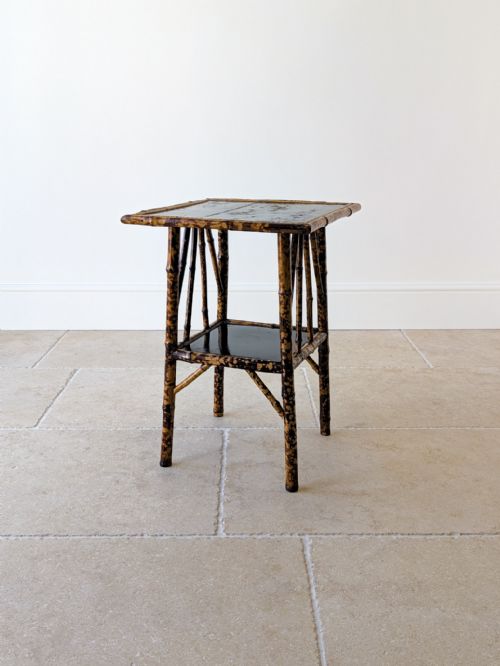
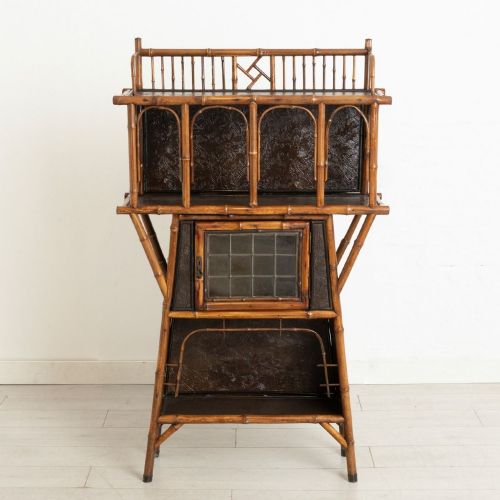
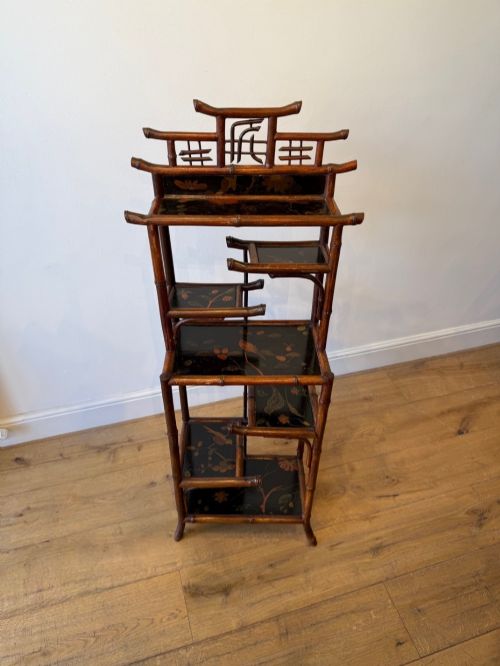
When you search for an edwardian bamboo stand, you find items spanning the Victorian, Edwardian, and early twentieth-century periods, alongside nineteenth-century examples. The selection includes side tables, hall stands, occasional tables, display cabinets, display shelves, magazine racks, book stands, and display racks.
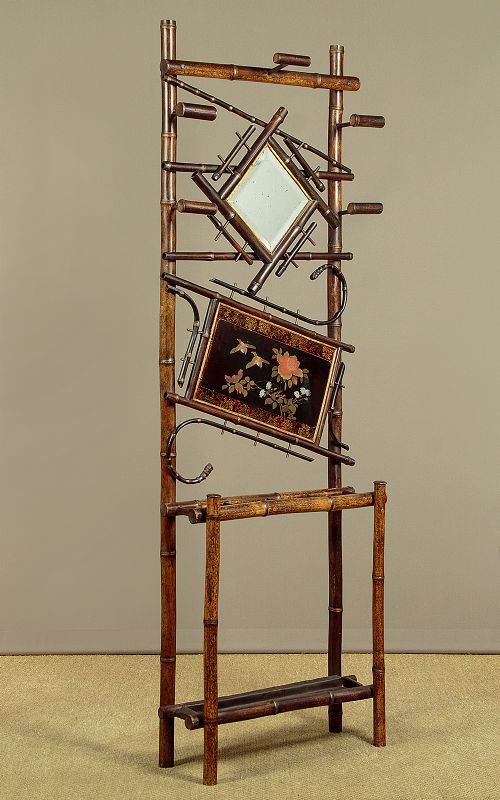
The version you are most likely to meet on this page is a two-tier side table or a hall stand furnished with lacquer panels, mirrors, or embossed paper. These pieces often draw on Aesthetic Movement, Anglo-Japanese, Victorian Chinoiserie, and Arts and Crafts styles.
Makers such as Leonard Wyburd working for Liberty and Co, London, produced notable examples during the eighteen-nineties. Alongside bamboo, the evidence records pieces constructed from wood, oak, glass, metal, mirror glass, and hessian.
How they were made
Construction relies on natural bamboo stems paired with wooden components, particularly for table tops and structural frames. Joinery methods secure the hollow cane poles together to form lightweight yet rigid furniture.
Decoration often incorporates Japanese-inspired lacquer panels, painted surfaces, and chinoiserie motifs applied to shelves and backing boards. Additional elements such as mirror glass, embossed paper, and metal fixtures complete the construction.
Some hall stands double as fishing goods storage, proving that even Victorian anglers appreciated a tidy hallway.
What varies in quality
Quality separates through the integrity of the bamboo framing and the execution of the decorative panels. Superior examples exhibit tightly bound joints, stable construction, and well-preserved lacquer work.
The refinement of the design elevates certain pieces, such as those attributed to Liberty and Co, above standard domestic production. Finer items integrate materials like mirror glass and painted chinoiserie panels with greater artistic precision.
Leonard Wyburd·Liberty and Co
The Edwardian Bamboo Stand Glossary
- Anglo-Japanese
- A nineteenth-century design style blending British furniture forms with Japanese artistic motifs. It heavily influenced the production of bamboo stands and cabinets.
- Aesthetic Movement
- A late nineteenth-century movement prioritising visual beauty over narrative or moral themes. This philosophy championed the use of bamboo and oriental decoration.
- Chinoiserie
- European artistic interpretation of Chinese decorative styles. It appears on lacquered panels fitted to tables and hall stands.
- Canterbury
- A low piece of furniture featuring partitions for holding sheet music, books, or magazines. The evidence includes bamboo examples adapted for this purpose.
Edwardian Bamboo Stand: Frequently Asked Questions
What is an edwardian bamboo stand?
An edwardian bamboo stand is a light piece of occasional furniture constructed from natural cane, often incorporating lacquer panels or shelves.
These items range from small side tables and display shelves to hall stands equipped with mirrors and umbrella racks.
How were these stands used originally?
In period homes, bamboo hall stands welcomed visitors in entrance halls by holding umbrellas, sticks, and hats.
Occasional tables and display shelves served in drawing rooms to exhibit ornaments, books, and small decorative objects.
How do I style a bamboo stand at home?
A bamboo stand suits a hallway, living room, or conservatory where its lightweight frame creates an airy feel.
Pair a lacquer-panelled side table with plants or ceramics to highlight its Aesthetic Movement origins.
How do I date a bamboo stand?
Dating relies on stylistic clues, construction methods, and materials associated with the late Victorian and Edwardian eras.
Pieces bearing attribution to firms like Liberty and Co typically date to the closing decades of the nineteenth century.