


Adjustable Wooden Music Stand
An adjustable wooden music stand brings mechanical ingenuity and rich timber together to hold scores at precisely the right angle.
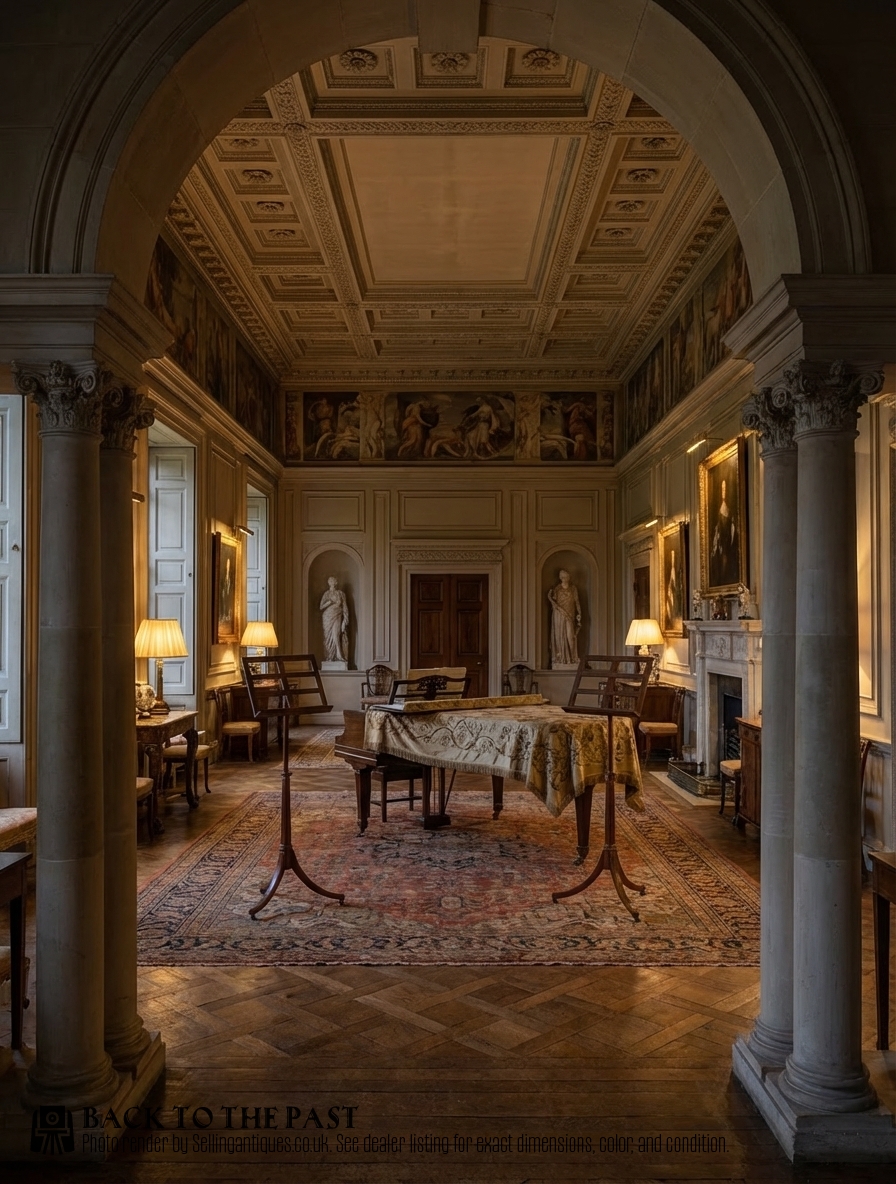
Adjustable Wooden Music Stand
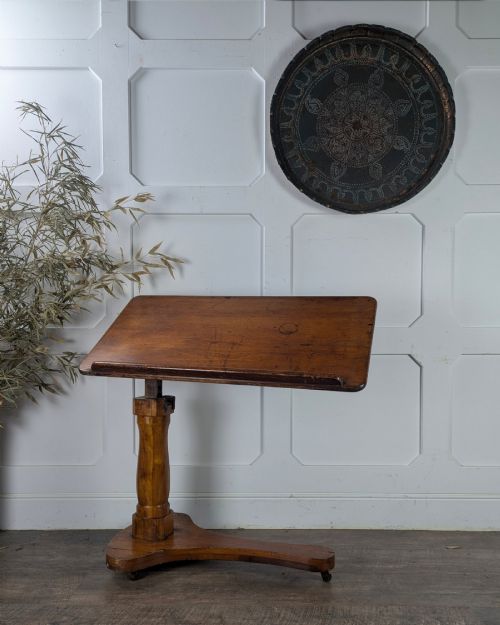
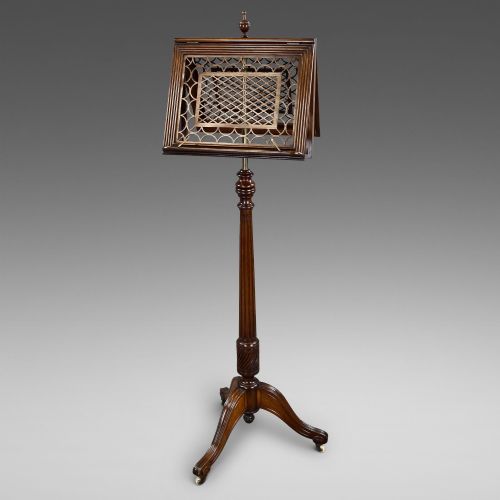
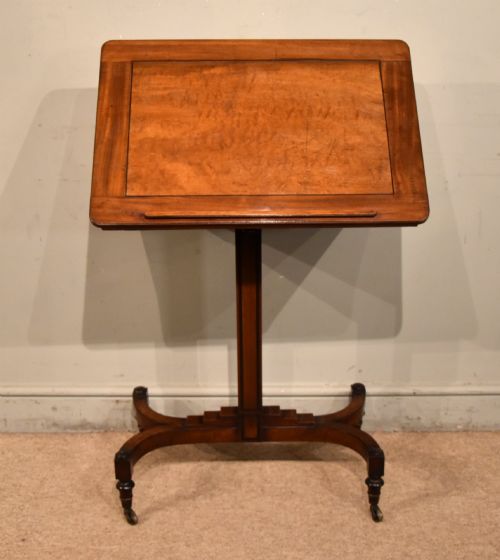
An adjustable wooden music stand is a functional piece of antique furniture designed to support books, sheets, and lectures at a comfortable height and tilt. The pieces grouped under this phrase span forms such as reading tables, lecterns, and freestanding tripod duet stands. They appear in periods ranging from the Georgian and Regency eras through the Victorian and Edwardian decades, reflecting shifting domestic habits.
Mahogany and walnut form the core of what you encounter, alongside oak, pine, satinwood inlay, and gonçalo alves. You will find single stands alongside broader duet formats built for two musicians to share a single score. Brass fittings and iron mechanisms frequently supplement the timber frames to allow for height adjustment and tilting desks.
How they were made
Cabinetmakers constructed these stands using dense hardwoods like mahogany and walnut, often turning columns on a lathe and carving tripod bases with substantial claw or scroll feet. Fretted music desks required precise joinery and delicate fretwork to lighten the visual weight while securely holding heavy folios.
Makers integrated brass ratchets, screws, and sliding stems to govern the adjustable height and angle of the desk. Inlaid details such as satinwood bands or burr walnut veneers demonstrate secondary decorative techniques applied to the primary timber carcass.
Listings span eight distinct periods, stretching from the Georgian era through to the early twentieth century.
What varies in quality
Quality rests in the rigidity of the adjustable mechanism and the stability of the central column and base. A superior stand holds its position firmly without slipping, while lesser examples suffer from worn ratchets or loose joints that require constant tightening.
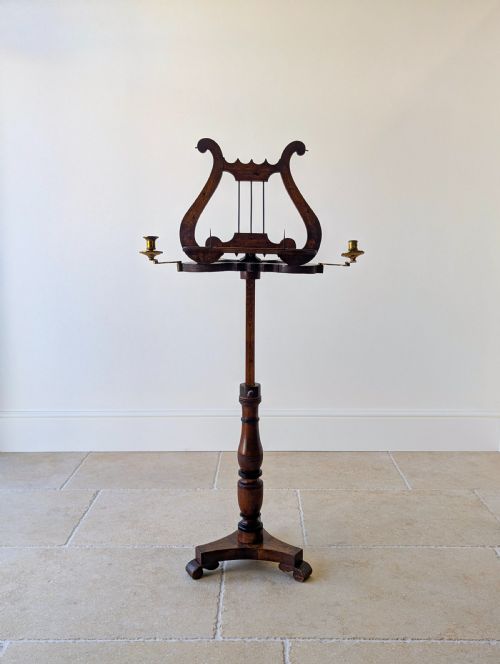
The choice of timber and the fineness of the carving also separate standard utility stands from finer examples. Figured mahogany, burr walnut, and intricate lyre-form or fretted music desks indicate a higher tier of craftsmanship intended for a formal parlour.
The Adjustable Wooden Music Stand Glossary
- Duet stand
- A wider music stand designed to hold a shared score for two players. These often feature adjustable double desks.
- Lectern
- A freestanding stand with a sloping top designed for reading or holding a large volume. They appear frequently in oak and mahogany.
- Lyre-form
- A desk or central support shaped like the classical musical instrument. This motif appears widely on Regency and Victorian stands.
- Gonçalo alves
- A richly figured exotic hardwood also known as zebrawood. It is prized for its dramatic grain patterns in nineteenth-century furniture.
- Ratchet mechanism
- The mechanical rack and tooth system concealed behind the desk to control the angle of tilt. Fine versions operate smoothly and lock securely.
Adjustable Wooden Music Stand: Frequently Asked Questions
How do I adjust the height on these stands?
Most antique stands rely on a sliding central wooden or brass column secured by a thumbscrew or a brass collar. Loosening this fixture allows the upper shaft to rise or fall before tightening back into place.
Some examples use internal ratchets or weighted counterbalances to hold the desk at the desired elevation. Care should be taken to support the weight of the desk while adjusting the mechanism.
Were these stands used exclusively for music?
While musicians utilised them for practice and recitals, many nineteenth-century households used them as reading stands in libraries and studies. They were equally suited for holding sermons, newspapers, or heavy reference folios.
The inclusion of a duet format points directly to musical performance, whereas flat reading tables served individual readers.
How do I date an adjustable wooden music stand?
Dating relies on combining the timber choice, the style of the base, and the type of metal hardware used in the mechanism. Georgian and Regency pieces favour finely turned mahogany columns with tripod supports, while Victorian examples often introduce carved walnut and more complex brass ratchets.
Later Edwardian and twentieth-century pieces display simpler pine or oak construction with utilitarian iron fittings.