





Adjustable Lectern Table
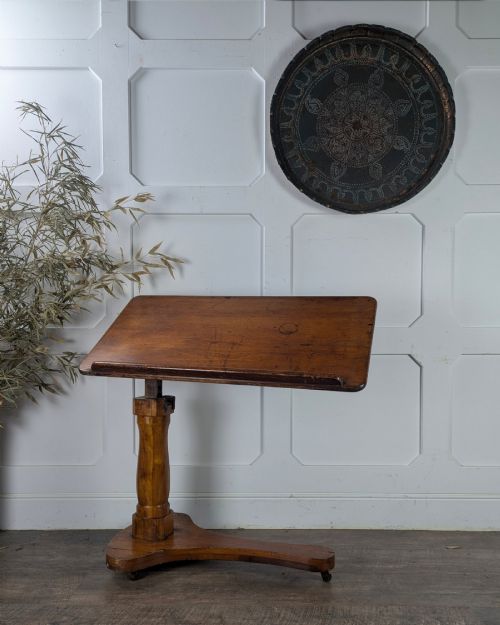
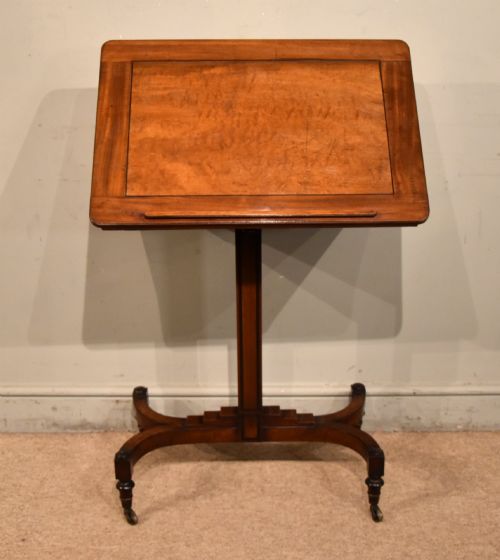
An adjustable lectern table combines a reading stand and a versatile surface, designed to hold books and music at a custom angle.
Adjustable Lectern Table
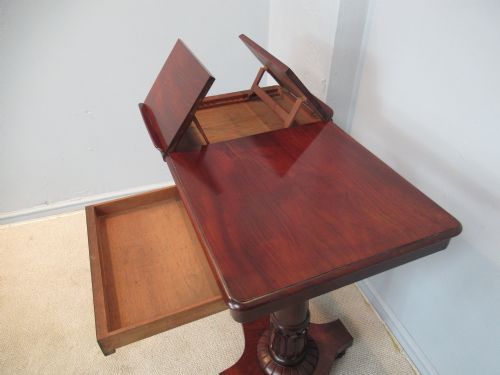
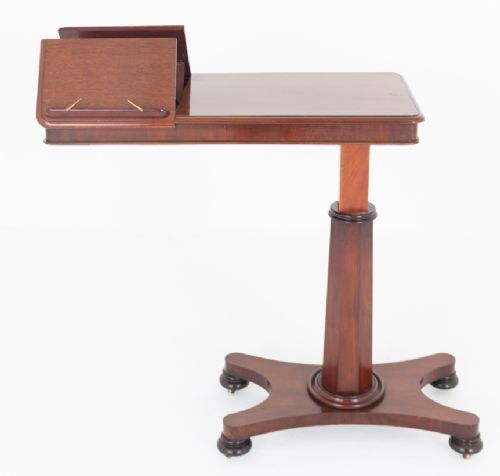
An adjustable lectern table serves multiple domestic and professional roles, functioning as a reading stand, music stand, or occasional table depending on its mechanism. These pieces frequently appear from the Regency, William IV, and Victorian periods, alongside Edwardian and early twentieth-century examples.
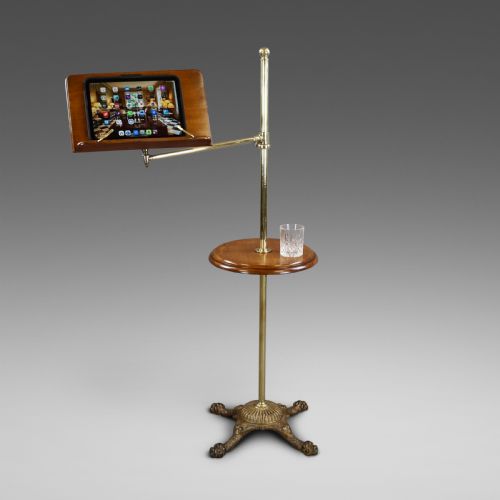
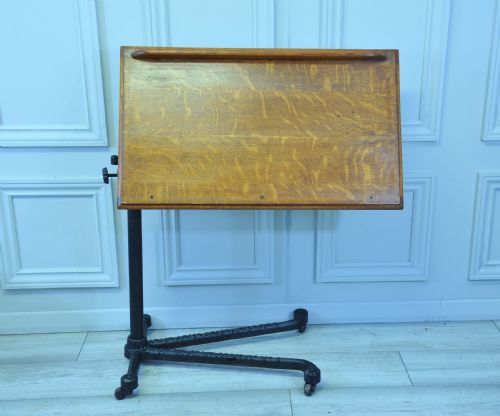
The primary form involves a top with an adjustable book rest mounted on a pillar or standard, often shifting between a flat surface and an inclined desk. Buyers encounter mahogany and rosewood variants most often, alongside oak, pine, brass, and cast iron.
Construction and Materials
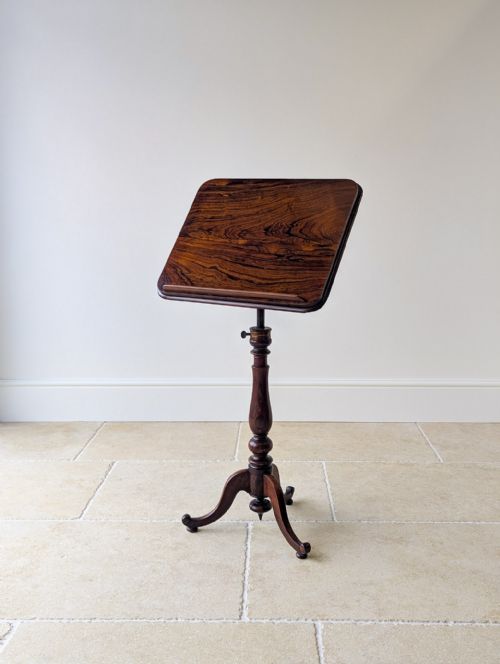
Cabinet makers utilised dense timbers such as mahogany and rosewood for the tops and columns, bringing out the grain through polishing. Oak and pine also appear, particularly in pieces designed for utilitarian or domestic use.
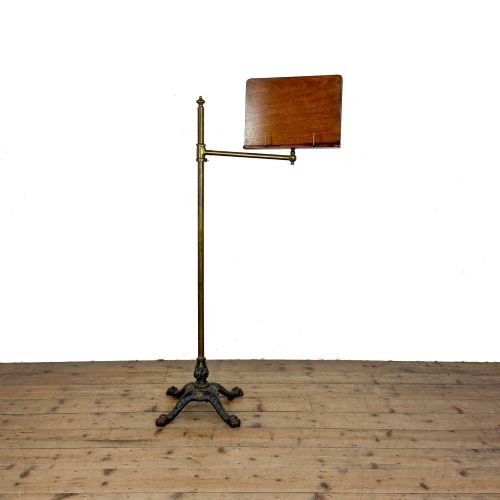
Adjustable mechanisms rely on brass ratchets, screw screws, and iron ratchets to secure the reading rest at the desired angle. Cast iron and brass components provide weight and stability to the heavy pedestals and bases.
Listings feature mahogany, rosewood, oak, and pine, supported by brass and cast iron adjustment mechanisms.
Distinctions in Execution
The sophistication of the mechanical adjustment mechanism dictates the upper tier of these pieces, where smooth movement and secure locking demonstrate superior craftsmanship. Patent mechanisms by known makers set a higher standard for engineering than standard domestic iterations.
Timber selection and secondary framing quality divide fine examples from simpler ones, with finely figured mahogany and rosewood indicating higher workshops. The integration of double-sided reading surfaces or metamorphic capabilities further elevates a piece.
Carters Of London·Leveson London·John Carter·Jones and Willis
The Adjustable Lectern Table Glossary
- Lectern
- A reading desk with a sloping surface designed to hold a book or manuscript at a height and angle for standing or seated use. These often feature adjustable ratchets.
- Metamorphic
- A descriptive term for furniture that transforms from one form into another, such as an occasional table converting into a reading stand.
- Campaign
- A style of furniture designed for portability and dismantling, frequently seen in nineteenth-century tables with folding or adjustable components.
- Ratcheting
- A notched mechanism that allows the book rest to be held securely at various inclined angles.
Adjustable Lectern Table: Frequently Asked Questions
What is an adjustable lectern table used for?
These tables provide a flexible surface for reading books, scores, and papers at a comfortable angle. The adjustable top moves between flat and tilted positions to suit the user.
Historically, they served in libraries, music rooms, and parlours as multi-purpose reading and occasional tables.
How do I date an adjustable table?
Dating relies on timber choices, leg styles, and the design of the iron or brass adjustment mechanism. Regency and William IV pieces show specific column and base turnings in mahogany or rosewood.
Later Victorian and Edwardian examples often incorporate cast iron components or pine frames alongside simpler mechanical ratchets.
Can these tables be used as normal desks?
Many examples function as standard occasional tables when the reading rest lies completely flat. Raising the lectern section transforms the surface for holding books or sheet music.
Double-sided variants allow two people to read simultaneously or provide an extended surface area.
What woods were used for these stands?
Mahogany and rosewood dominate the earlier nineteenth-century examples, chosen for their rich colour and durability. Oak and pine appear more frequently in later pieces from the Edwardian era.
Metal elements such as brass and cast iron appear in the structural mechanisms and bases to support the weight of the adjustable tops.