



Academic Realism Oil Portrait
Academic realism oil portrait pieces capture subjects with precise technique, offering collectors a direct link to nineteenth-century and mid-century figurative traditions.
Academic Realism Oil Portrait
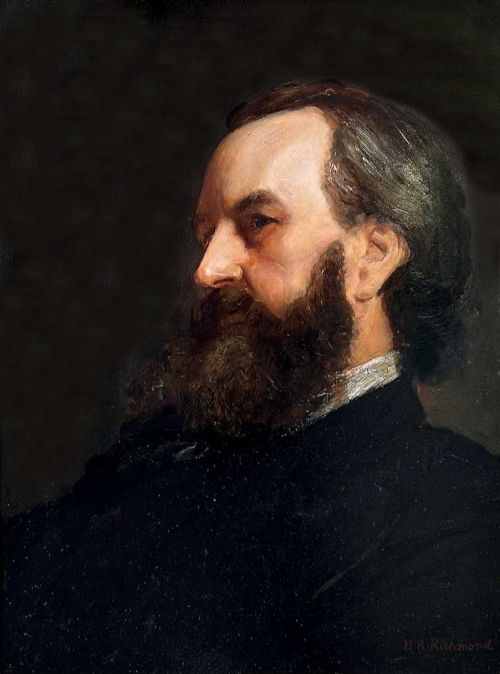
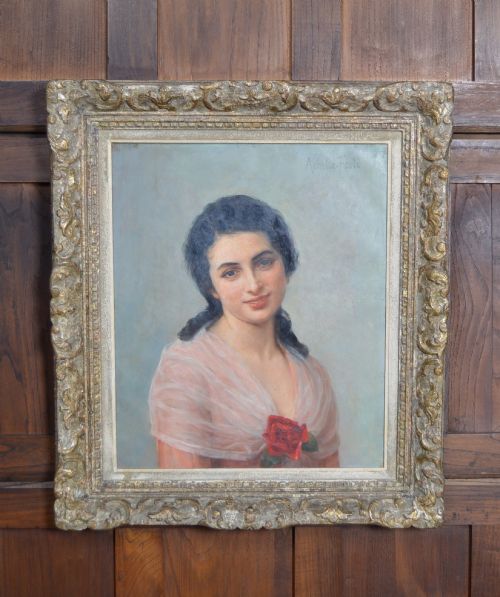
An academic realism oil portrait represents human and animal subjects with careful attention to anatomical detail, texture, and expression. These works span the Victorian era, the nineteenth century, and mid-century British realism, reflecting formal training in European studios.
The selections here include framed canvases and panels depicting gentlemen, young women, actors, and domestic animals. Many bear signatures and dates from artists working across France, Italy, Vienna, and Britain.
Buyers will encounter both intimate genre studies and character portraits framed in period materials like giltwood and gesso. Each piece demonstrates the disciplined brushwork and narrative focus characteristic of academic painting.
Materials and methods
Artists painted primarily in oil on canvas or panel, building up rich surfaces through layered pigments that allowed for subtle tonal gradations. This medium supported the smooth blending and lifelike rendering demanded by academic standards.
Canvases were stretched over wooden supports and frequently housed in ornate frames constructed from wood, gesso, and plaster, often finished with giltwood surfaces to complement the artwork.
Academic Realism Oil Portrait Retail Price Guide 2026
Typical asking prices for academic realism oil portrait among the pieces listed under this phrase on Sellingantiques today, from the lower quarter to the upper quarter. They describe what is for sale here now, not the wider market.
Several portraits capture subjects in moments of gentle distraction, including a cat sharing the frame and a pet dog keeping a watchful eye.
Distinctions in craftsmanship
Quality rests in the precision of the drawing, the handling of light and shadow, and the psychological depth of the sitter. Superior examples demonstrate confident brushwork and anatomical accuracy that bring the subject to life.
The preservation of the original oil surface and the integrity of the period frame contribute significantly to the standing of a piece. Works retaining their original giltwood or gesso framing offer a more complete historical context.
Vittorio Reggianini·William Blake Richmond·Charles Zacharie Landelle·Ferdinand Victor Leon Roybet·Hans Temple·Pierre Louis Joseph De Coninck·Arthur Spooner·Geza Vastagh·Alfred Seifert·George R Havelka
The Academic Realism Oil Portrait Glossary
- Academic Realism
- A style of painting governed by the rules of European art academies, emphasising precise technique, lifelike representation, and classical composition. This approach prioritises anatomical accuracy and narrative clarity over expressive abstraction.
- Oil on Canvas
- A traditional painting medium consisting of pigments bound with drying oils applied to a woven fabric support. This combination allows for deep colour saturation and gradual blending.
- Giltwood
- Wood that has been treated with a thin layer of gold leaf or gold paint, commonly used for decorative antique picture frames. It provides a luminous border that enhances the tones within the painting.
- Panel
- A rigid support for a painting, typically made of wood, used frequently before and alongside canvas. Panels offer a stable surface that prevents the flexing associated with fabric supports.
- Gesso
- A plaster-like mixture applied to wood or canvas as a base for painting or as a sculptural medium for ornate frame mouldings. It creates a smooth, absorbent ground for subsequent gilding or finishing.
Academic Realism Oil Portrait: Frequently Asked Questions
What is an academic realism oil portrait?
An academic realism oil portrait is a figurative artwork created using traditional oil paints on canvas or panel, following the rigorous standards of European art academies. These pieces focus on accurate anatomy, detailed textures, and lifelike expressions.
They document historical subjects, from Victorian gentlemen to Viennese actors, capturing individual character through disciplined brushwork and careful tonal control.
How should I care for an oil painting?
Keep oil paintings away from direct sunlight and steady temperature fluctuations to prevent the canvas and paint from drying out or cracking. Dust the surface gently with a soft, dry brush without applying pressure.
Ensure the hanging environment remains dry to protect both the canvas and the original wooden or giltwood frame from moisture damage.
How can I identify the period of a portrait?
Period identification relies on a combination of sitter attire, hair styling, framing materials, and artist signatures or dates recorded on the canvas. Victorian and nineteenth-century works often feature distinct clothing styles and ornate gesso frames.
Examining the stretcher bars, canvas weave, and any inscriptions on the reverse can provide further evidence regarding the date of creation.
Were these portraits used in homes?
Yes, these portraits served as personal mementoes, family likenesses, and decorative statements in nineteenth and twentieth-century domestic interiors. Wealthy patrons commissioned them to display social standing, cultural interests, or likenesses of esteemed figures.
Genre portraits of Italian women or domestic animals also functioned as aesthetic additions to formal reception rooms and studies.