


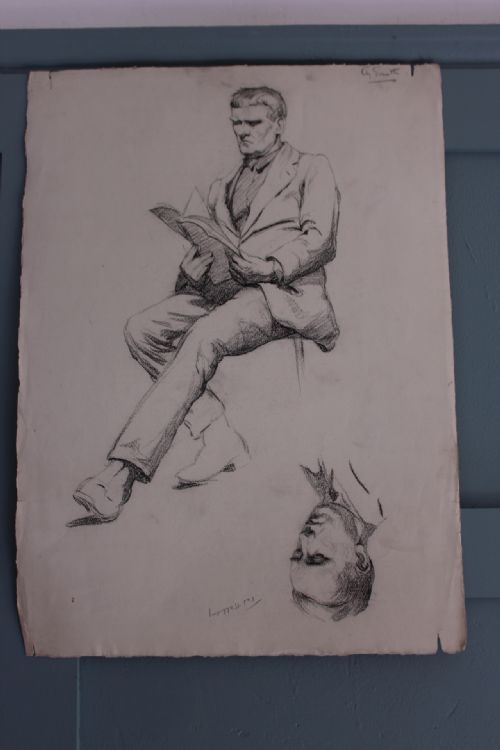


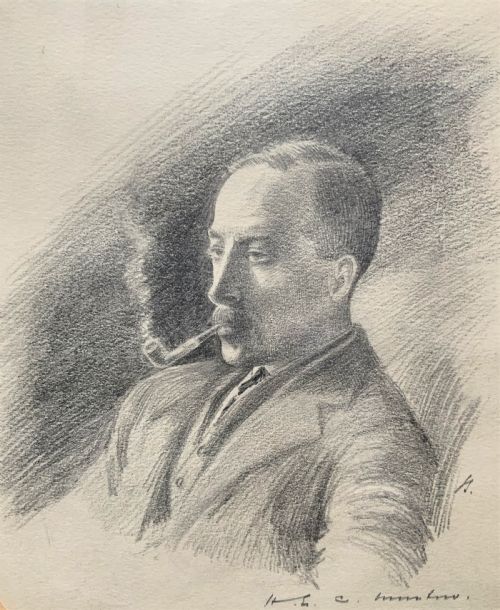


Academic Pencil Portrait Drawing
An academic pencil portrait drawing captures likeness through meticulous draughtsmanship, offering buyers a direct connection to historical portraiture.
Academic Pencil Portrait Drawing
An academic pencil portrait drawing represents a study of the human face and figure, executed with formal training and careful observation. Buyers looking for an academic pencil portrait drawing will encounter works originating from the nineteenth and early twentieth centuries, spanning periods such as Victorian, Edwardian, and Modern British.
The selections available here include framed art and original drawings depicting subjects ranging from young boys and women daydreaming to notable figures like Dame Ellen Terry and Lady Florence Caroline Dixie. These pieces frequently manifest styles such as Academic Realism and French Academic, reflecting rigorous studio training.
What varies in quality
The distinction between ordinary and exceptional works rests upon the precision of the draughtsmanship and the psychological depth captured in the sitter's expression. Superior examples demonstrate a masterly understanding of light and shadow, articulating bone structure and texture with absolute economy of line.
Condition and provenance further differentiate these drawings, particularly regarding the preservation of the paper and the integrity of the media. Works that retain their original framing and documentation concerning the sitter or artist offer greater historical clarity.
Several drawings preserve the quiet introspection of sitters caught mid-thought, from daydreaming women to gentlemen pausing for a smoke.
Augustus John·Reginald G. Eves·Theobald Chartran·Ernest Borough Johnson·Cecil CP Lawson
The Academic Pencil Portrait Drawing Glossary
- Academic Realism
- A style of painting and drawing produced under the influence of European academies of art, emphasising traditional techniques, anatomical precision, and finished detail. This approach ensures strict adherence to established rules of composition and proportion.
- Graphite
- A form of crystalline carbon used as a marking medium in pencils, valued for its smooth application and range of tonal values from silvery grey to deep black. It allows artists to achieve subtle shading and fine lines.
- Chalk
- A soft, earthy material used for drawing, providing dense opaque marks that contrast effectively with graphite or charcoal. Artists utilise it to apply highlights and create soft tonal transitions on tinted paper.
- Studio drawing
- An artwork produced within the controlled environment of an artist's workspace, often serving as a preparatory study, a life drawing exercise, or an independent portrait. These pieces frequently record the daily practice of historical draughtsmen.
Academic Pencil Portrait Drawing: Frequently Asked Questions
What defines an academic pencil portrait drawing?
An academic pencil portrait drawing is a detailed likeness created using formal artistic methods, typically emphasising anatomical accuracy and tonal shading.
These works reflect rigorous studio training from periods spanning the nineteenth and early twentieth centuries.
How should I display historical drawings at home?
Historical drawings require protection from direct sunlight to prevent the paper and media from fading over time.
Displaying them behind glass in stable indoor environments helps preserve the delicate graphite, charcoal, and chalk surfaces.
Can I identify the sitters in these portraits?
Many portraits identify their subjects through inscriptions, signatures, or historical documentation associated with the artist and sitter.
Some pieces depict notable figures such as writers, explorers, and actors, while others record anonymous individuals from the studio or family life.
What materials were used by period draughtsmen?
Draughtsmen primarily utilised graphite, pencil, charcoal, and chalk applied to various grades of paper.
These materials were chosen for their ability to render fine details, subtle shadows, and striking tonal contrasts.