
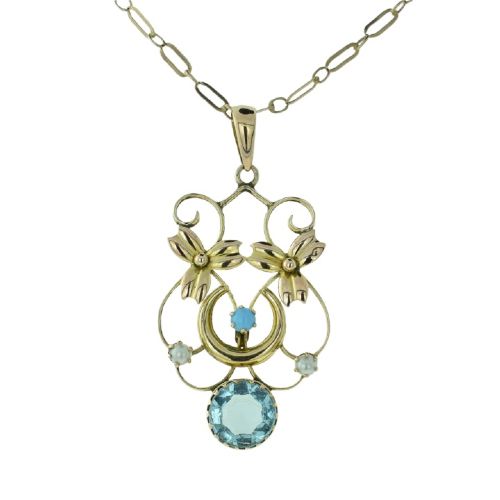
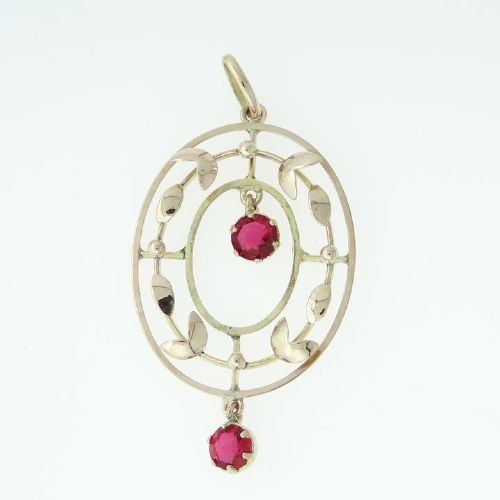
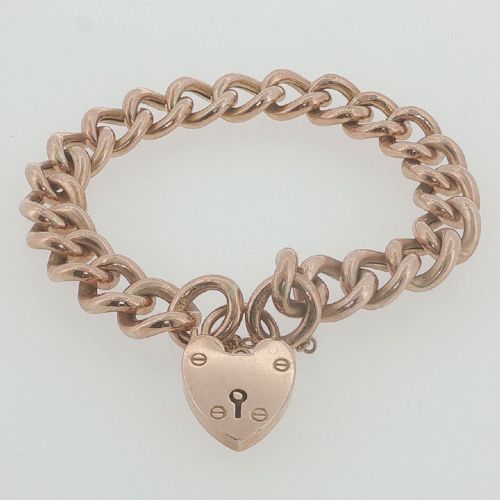
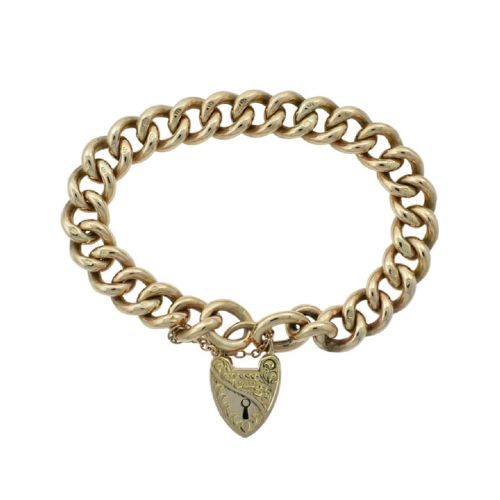
9ct Rose Gold Jewellery
9ct rose gold jewellery brings together warm-toned antique rings, heavy curb chain bracelets and gemstone-set pendants spanning the Victorian and Edwardian periods.
9ct Rose Gold Jewellery
When you search for 9ct rose gold jewellery, you encounter a distinct selection of wearable items created primarily during the late nineteenth and early twentieth centuries. The pieces on this page span the Victorian, Edwardian, and Art Deco periods, alongside the 1920s and 1930s. Bracelets, rings, lockets, and necklaces dominate the selection.
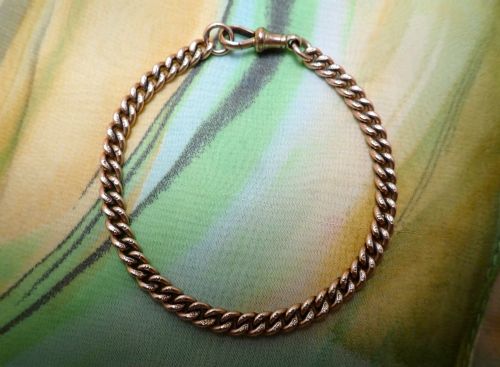
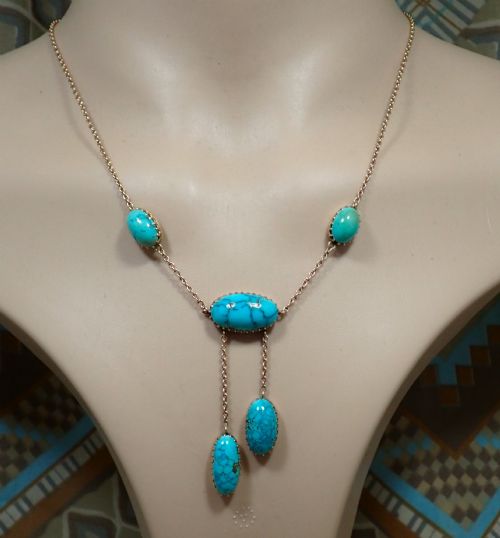
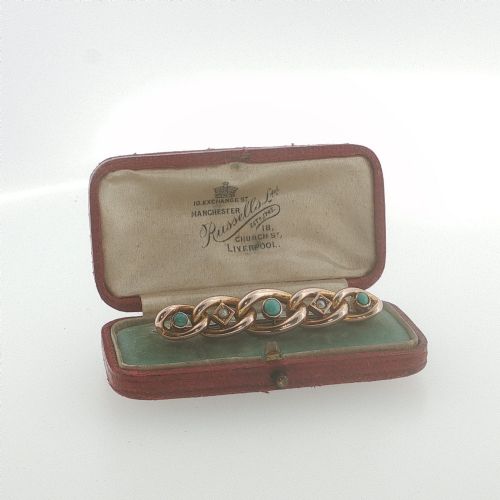
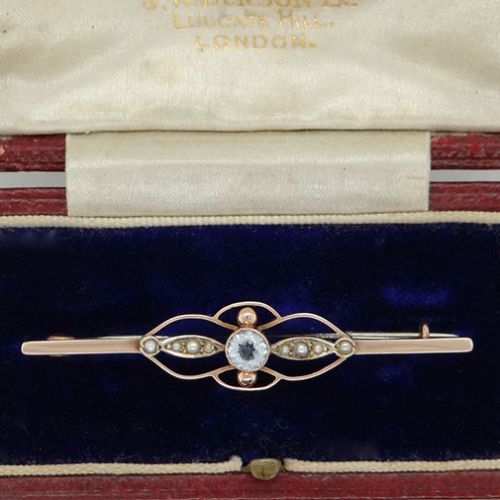
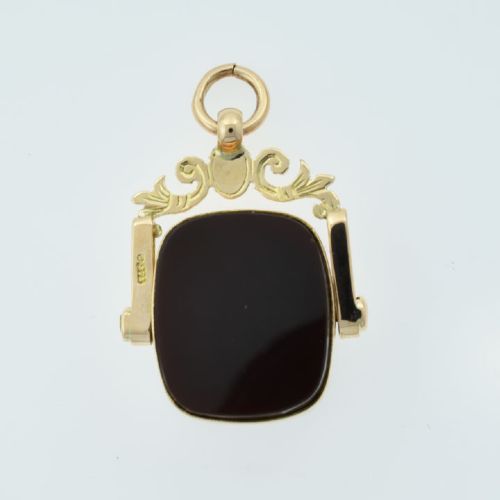
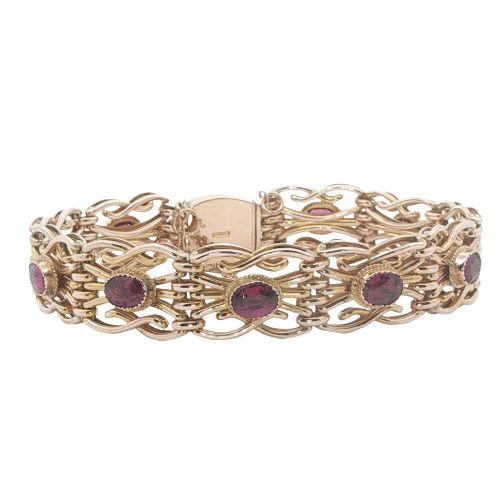
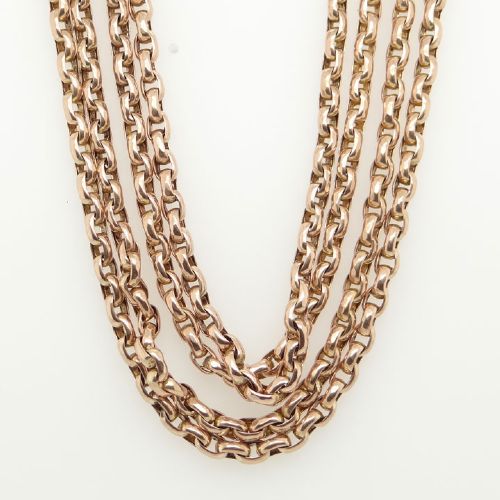
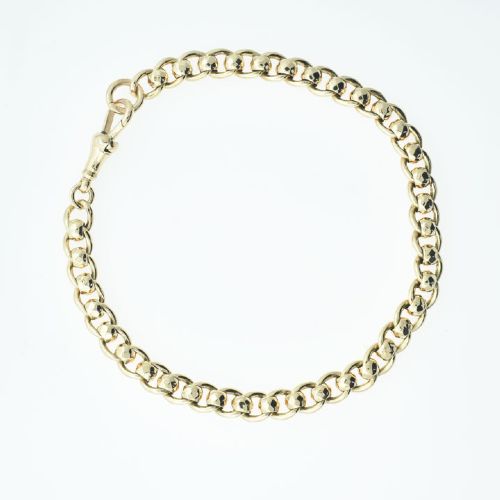
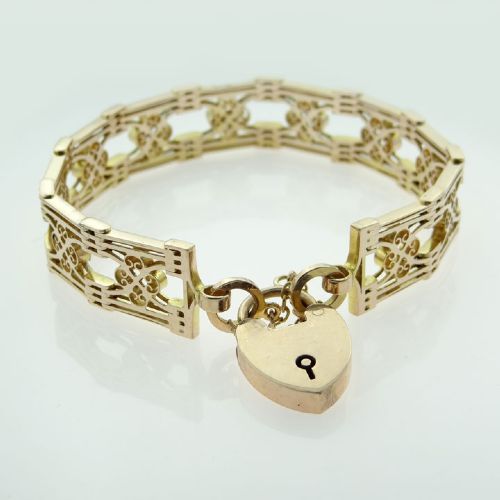
Gate bracelets with heart padlocks, heavy curb link bracelets, and long guard chains frequently appear among the offerings. Gemstone-set rings, turquoise and seed pearl brooches, and swivel fobs also represent the forms typical of these past decades. These items reflect the domestic metalworking traditions of British workshops from the era.
How they were made
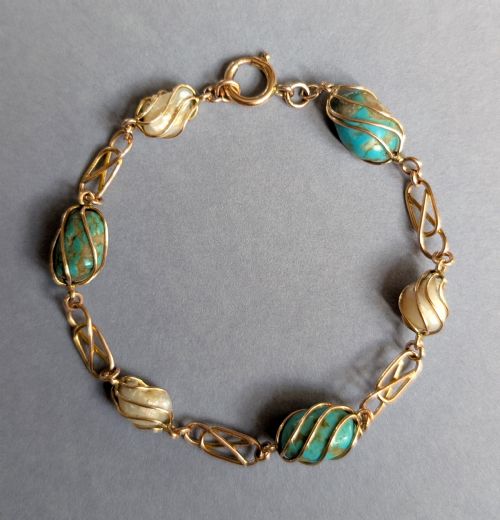
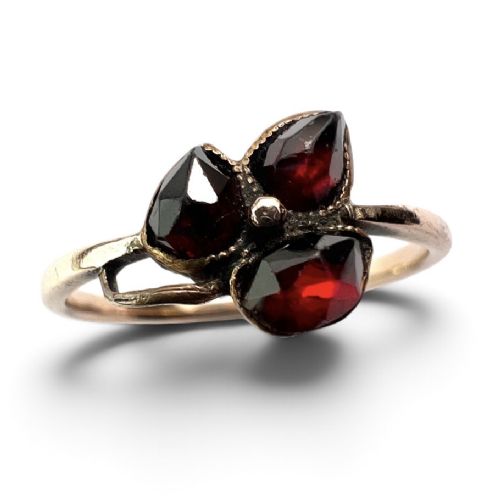
Items in 9ct rose gold utilise an alloy containing gold mixed with copper to achieve its characteristic pinkish hue. Metalsmiths combined this warm alloy with natural stones such as turquoise, almandine garnet, seed pearls, and aquamarine. Many chains and bracelets incorporate solid links formed by hand or stamped in workshop settings.
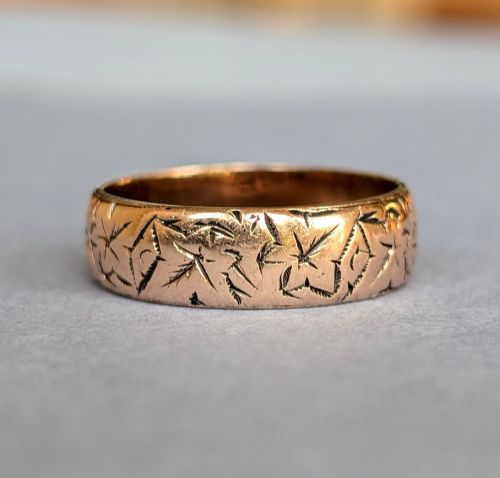
Engraving techniques appear across signet rings, bangles, and curb links, often executed by hand with geometric or floral motifs. Pieces like lockets and pendants utilise hinges, glass fronts, and hollow components alongside solid construction. Hallmarks struck into the metal indicate assay offices such as Chester and Birmingham alongside specific dates.
What varies in quality
The standard of 9ct rose gold jewellery depends upon the weight of the metal and the integrity of its construction. Heavier curb link bracelets and robust gate bracelets with original heart padlocks demonstrate substantial manufacturing. Lighter hollow items rely on shell construction that requires careful handling during daily wear.
Artisanal execution distinguishes finer items from standard commercial production. Crisp hand engraving on signet rings and bangles elevates a piece, while well-matched turquoise cabochons and secure seed pearl settings indicate careful lapidary work. Intricate link patterns such as fancy gate designs or stars and bars display higher levels of bench skill.
The 9ct Rose Gold Jewellery Glossary
- 9ct Rose Gold
- An alloy composed of thirty-seven point five percent gold combined with copper and other metals to produce a warm reddish hue. This material was widely utilised in British jewellery manufacturing throughout the Victorian and Edwardian eras.
- Albert Chain
- A short or long watch chain designed to be secured to a waistcoast buttonhole, often featuring a T-bar and decorative fob. These chains frequently convert into modern necklaces or wrap-around bracelets.
- Gate Bracelet
- A flexible bracelet constructed from parallel metal bars linked together to resemble a miniature garden gate. They typically fasten with a heart-shaped padlock clasp.
- Guard Chain
- An exceptionally long chain originally worn around the neck to secure a pocket watch or locket. Their generous length allows them to double or triple around the wrist or neck.
- Turquoise
- A hydrous phosphate of copper and aluminium valued for its robin-egg blue colour, frequently set into Victorian and Edwardian rings and brooches. Antique examples often feature natural matrix running through the stone.
9ct Rose Gold Jewellery: Frequently Asked Questions
How do I wear an antique guard chain?
Guard chains offer versatile styling options due to their substantial length.
You can loop the chain multiple times around your neck as a layered necklace or wrap it around your wrist to create a heavy bracelet effect.
How do I care for 9ct rose gold jewellery?
Maintenance requires gentle cleaning with warm water, mild soap, and a soft cloth.
Avoid harsh chemical dips, particularly on pieces containing softer organic gems like seed pearls or turquoise cabochons.
How can I date my antique jewellery?
Dating relies on examining hallmarks stamped directly onto the metal surface by official assay offices.
Letters and symbols indicate the specific year of testing, while style elements like turquoise cluster settings point towards the Victorian or Edwardian periods.