
9ct Rose Gold Bracelet
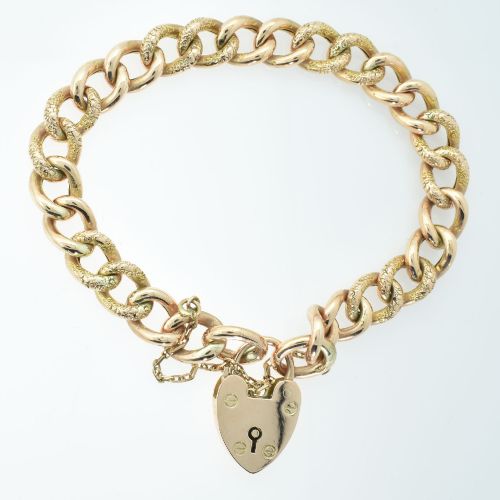
A 9ct rose gold bracelet brings a distinct warm coppery glow from the Victorian and Edwardian eras to the wrist.
9ct Rose Gold Bracelet
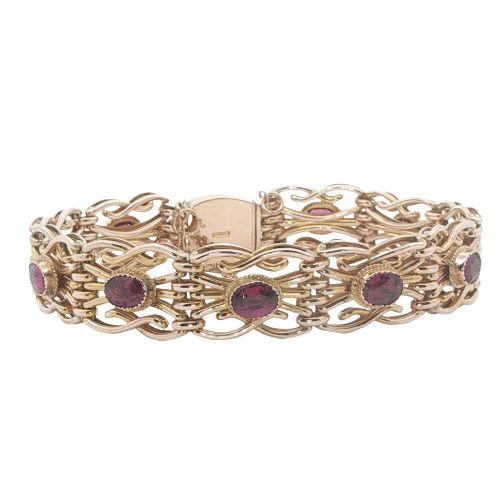
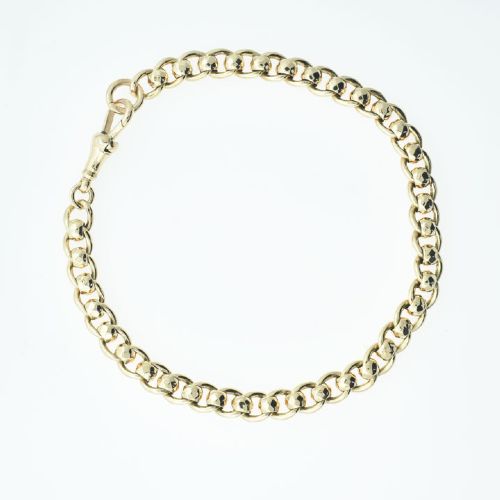
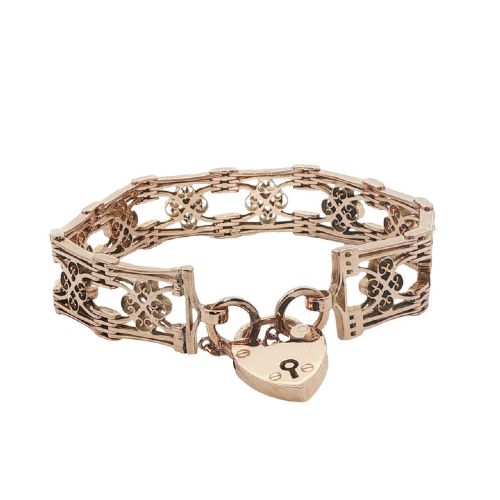
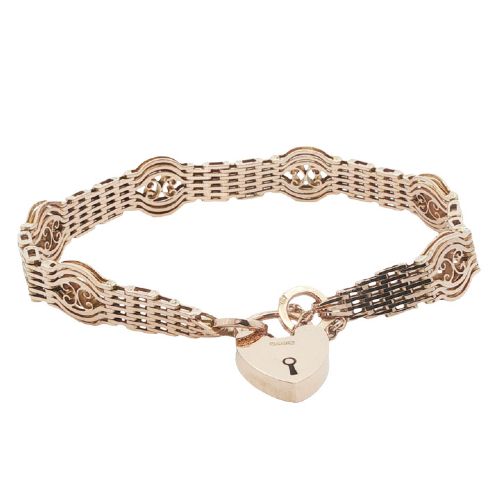
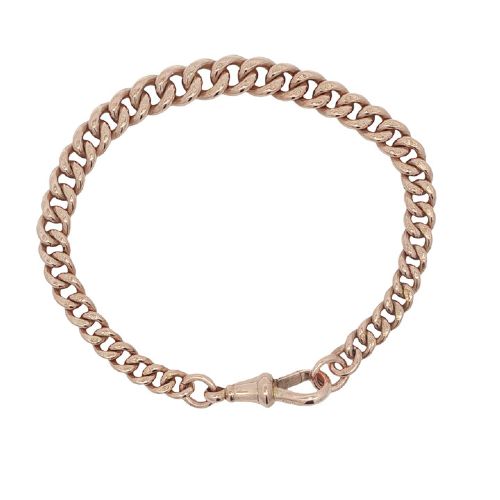
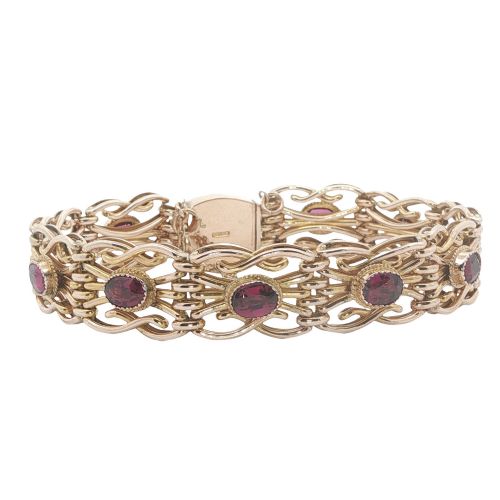
A 9ct rose gold bracelet spans several characteristic nineteenth and twentieth-century forms, with curb link chains and gate bracelets appearing most often on this page. These pieces originate primarily from the Victorian and Edwardian periods, stretching from the late nineteenth century through to the 1920s.
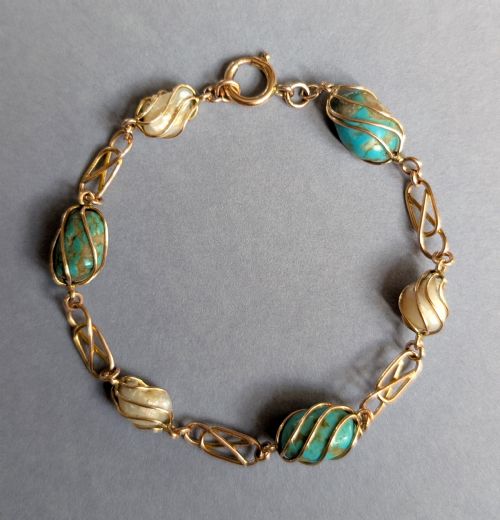
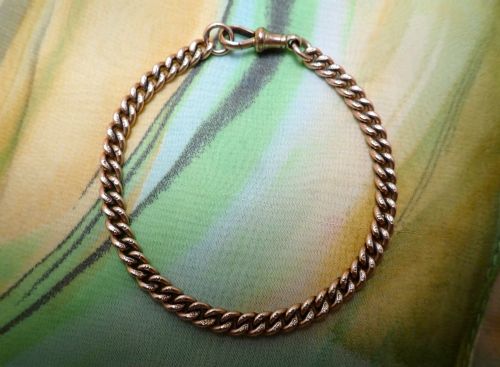
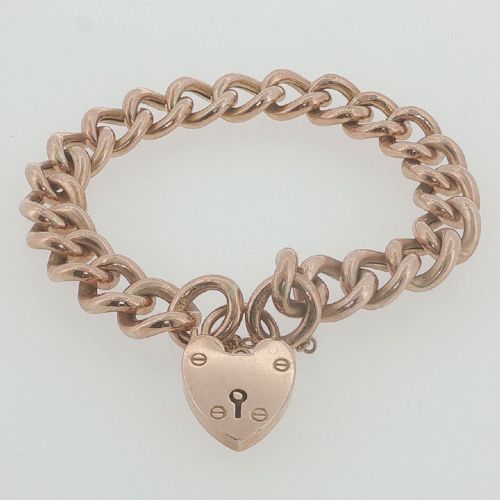
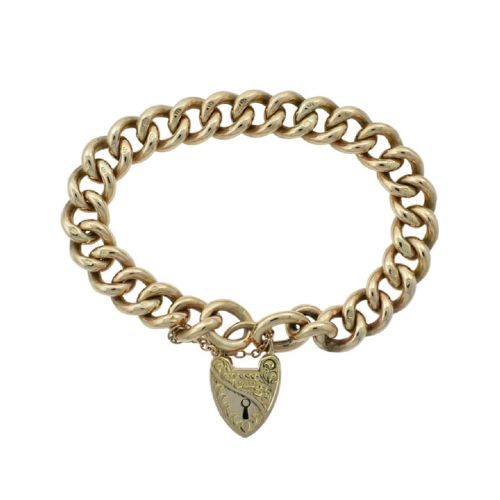
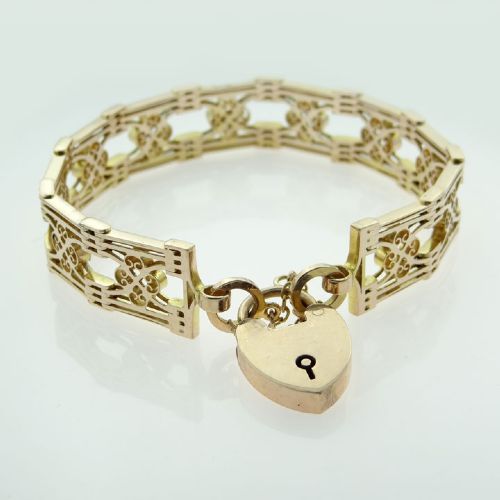
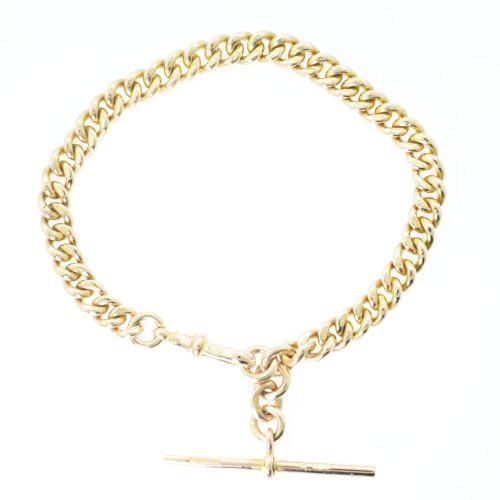
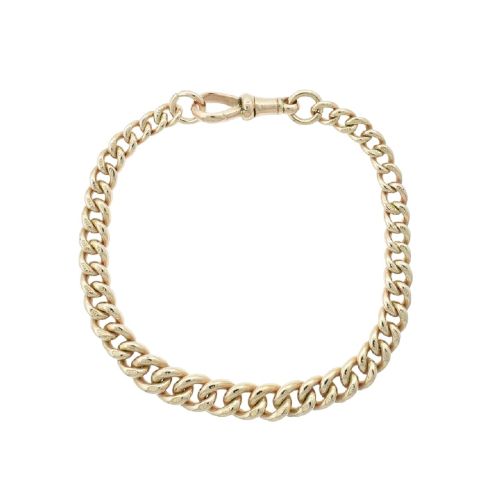
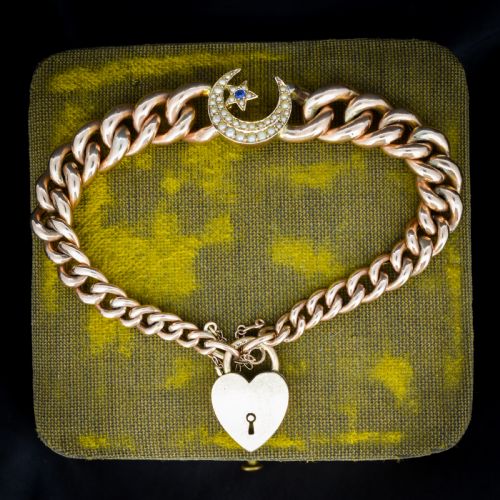
Many examples incorporate secure fasteners such as heart padlocks, dog clips, or T-bars, reflecting their origins as watch chains adapted for the wrist. Alongside heavy curb links and multi-bar gate designs, buyers regularly encounter pieces set with gems including turquoise, seed pearls, almandine garnets, and sapphires.
How they were made
Construction relies upon 9ct rose gold, utilised either as solid links or hollow forms designed to give substantial visual weight without excessive heaviness. Artisans employed hand engraving, pierced work, and applied wire decoration to articulate the metal surfaces.
Gemstones such as opals, moonstones, and almandine garnets are typically rub-over or star-set into the gold framework. Padlocks and clasps often carry hallmarks indicating regional British assay offices and dates of manufacture.
Several bracelets started life as pocket watch chains before finding a second career swinging from nineteenth-century wrists.
What varies in quality
The distinction between standard examples and the upper tier rests upon the integrity of the construction and the crispness of the hand engraving. Solid links and heavier gram weights command greater regard than hollow counterparts that show thinning from wear.
Design complexity also defines the scale, as intricate multi-bar gate links, matched gemstone sets, and fully articulated fancy link patterns demand higher levels of early goldsmithing skill.
Smith and Pepper
The 9ct Rose Gold Bracelet Glossary
- Curb link
- A chain formed of interlinked, slightly twisted uniform curbs that lie flat against the wrist. This form provides a robust foundation for heavy padlocks.
- Gate bracelet
- A style composed of parallel vertical metal bars connected by central links, resembling a miniature garden gate. They frequently feature a heart padlock fastening.
- Albert chain
- A pocket watch chain adapted for wear as a bracelet, typically equipped with a T-bar at one end. They appear in single or graduated formats.
- Dog clip
- A spring-loaded swivel clasp utilised to secure watch chains and charm bracelets. It allows the attached pendant or padlock to pivot freely.
- Almandine garnet
- A deep red variety of garnet commonly set into Victorian and Edwardian gold jewellery. It provides a dark, rich contrast to the warm rose metal.
9ct Rose Gold Bracelet: Frequently Asked Questions
How do I wear a antique padlock bracelet?
These pieces fasten securely around the wrist using the integrated heart-shaped padlock, which snaps onto a designated ring or link. Many owners wear them daily as standalone statement pieces.
Care should be taken with older spring mechanisms inside the padlocks and dog clips. Removing the bracelet during heavy manual tasks preserves the integrity of the links.
Are these bracelets solid gold?
The listings comprise items fashioned from 9ct rose gold, encompassing both solid links and hollow constructions designed for lightweight wear. Hallmarks stamped onto the metal often indicate the specific standard and assay office.
Solid variations offer greater durability over time, whereas hollow versions provide a larger visual presence with reduced weight on the wrist.
What period do most of these come from?
The majority of pieces date from the Victorian and Edwardian eras, spanning the late nineteenth century up through the 1920s. Stylistic cues like floral hand engraving and gemstone choices align with these periods.
Later mid-century examples from the 1950s and 1960s also appear, demonstrating a continuation of traditional gate link and charm bracelet forms.
Can I add charms to an albert bracelet?
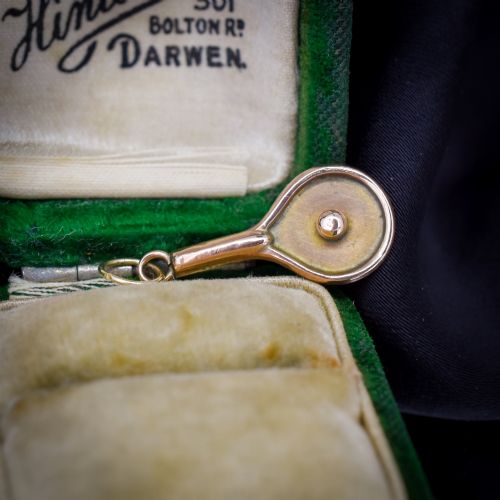
Albert bracelets and curb chains historically accommodated pocket watches and dangling fob seals using dog clips and jump rings. This makes them well suited for securing additional antique charms.
Ensuring that any added charms match the 9ct rose gold standard maintains visual consistency across the piece.