
Vintage Rose Gold Chain
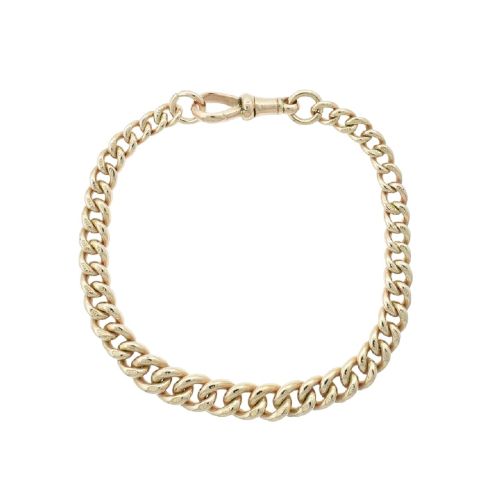
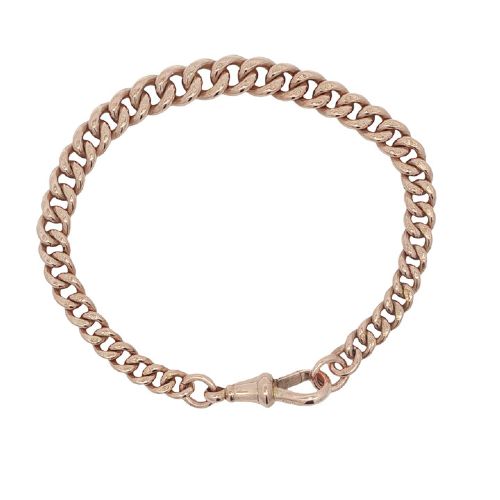
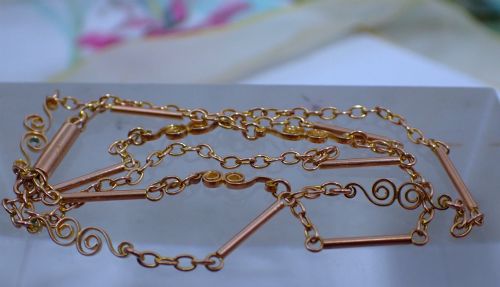
A vintage rose gold chain carries the warm, distinctive hue of nineteenth and twentieth-century gold, shaped into substantial watch chains, gate bracelets and necklaces.
Vintage Rose Gold Chain
A vintage rose gold chain encompasses both necklaces and substantial pocket watch chains adapted for contemporary wear. These pieces originate predominantly from the Victorian, Edwardian and 1920s periods, reflecting the robust manufacturing standards of their respective eras.
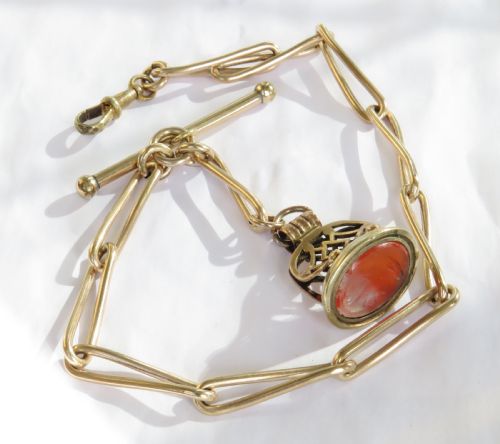
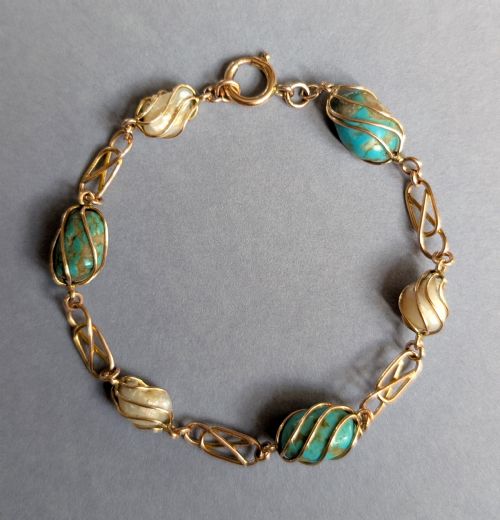
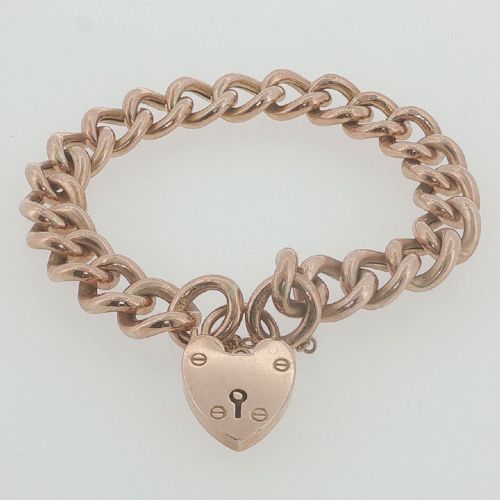
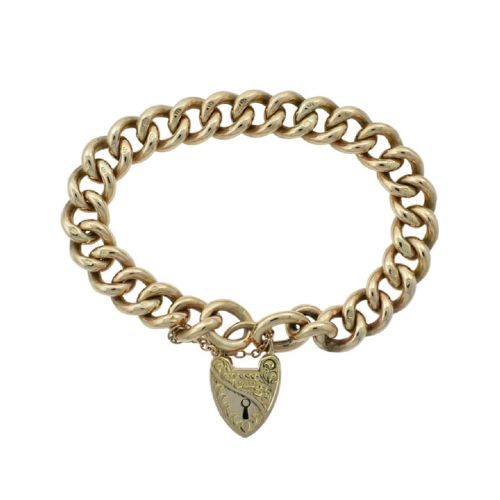
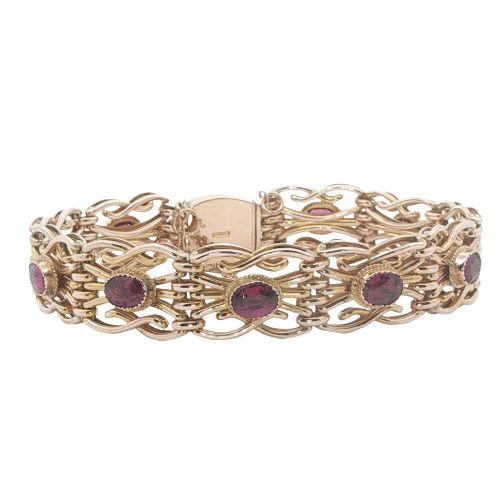
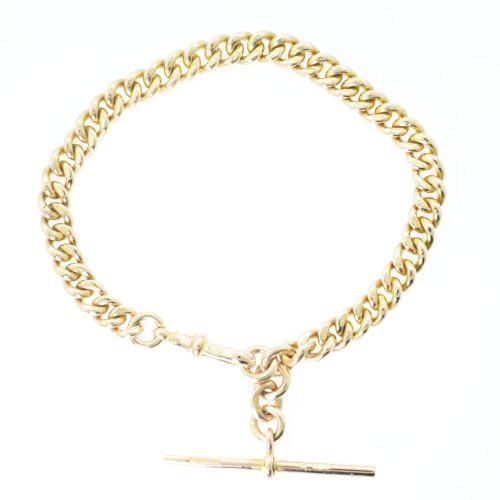
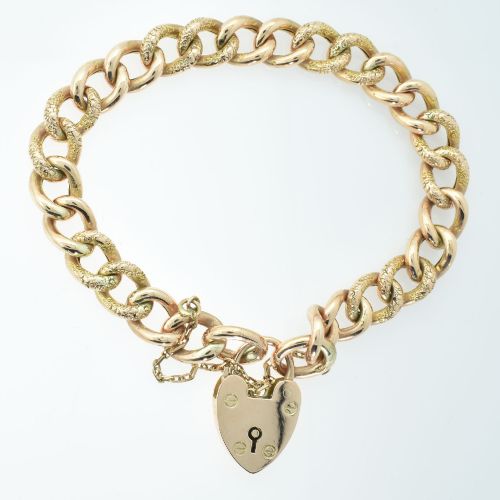
Buyers searching this phrase encounter numerous variations, from heavy curb link bracelets secured with heart padlocks to long Albert chains fitted with T-bars and dog clips. Materials span 9ct rose gold, solid rose gold, and rolled gold, occasionally accented with gemstones such as almandine garnets, turquoise and pearls.
Materials and Construction
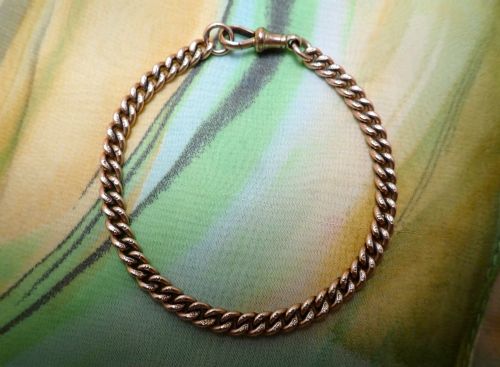
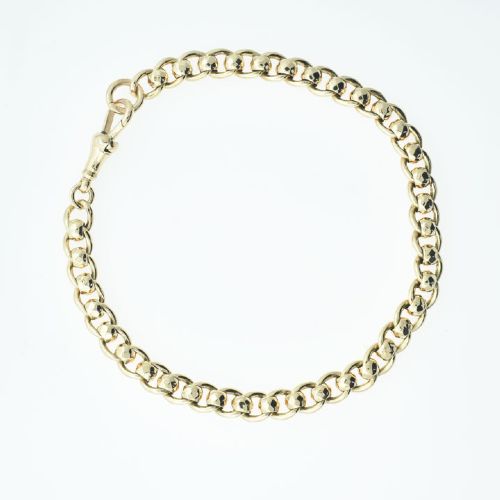
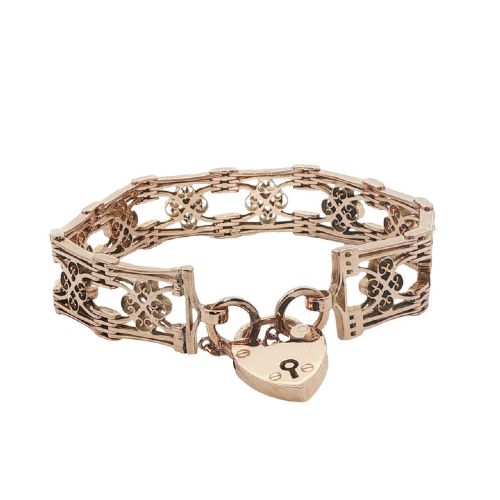
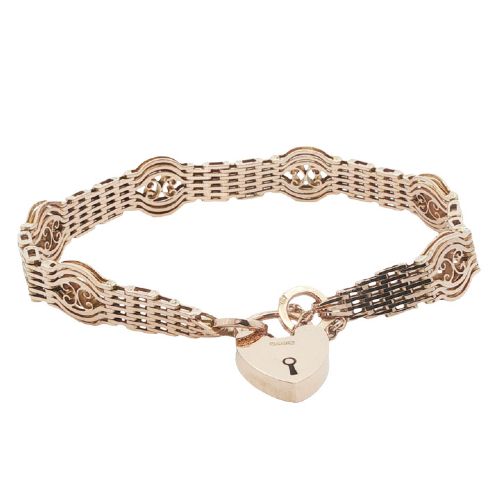
The construction relies heavily on 9ct rose gold and rolled gold, providing durability alongside the signature coppery warmth of the alloy. Individual links are formed into distinct patterns including curb, gate, trombone, fetter and knot, or fancy link designs.
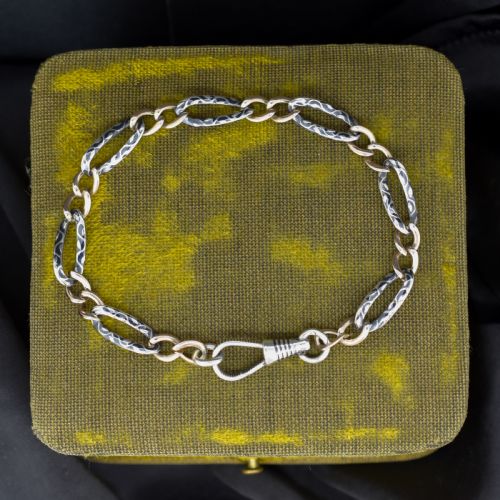
Many chains incorporate functional components integral to their manufacture, such as heart padlocks, dog clips, rollerballs and T-bars. Surface ornamentation often includes half-engraved detailing, star and bar motifs, or niello work alongside silver and gold combinations.
The inventory spans the Victorian, Edwardian, 1920s, and 1940s periods, incorporating materials such as 9ct rose gold, sapphire, diamond, niello, and silver.
Evaluating Quality and Craftsmanship
Quality in these pieces rests upon the integrity of the individual links and the original fastening mechanisms, such as working dog clips and secure padlocks. Weight and gauge heavily influence the feel, with heavier graduated Albert chains representing sturdier fabrication.
The precision of hand-engraving and the preservation of original components, including T-bars and fobs, distinguish finer examples. The integration of gemstones like sapphires, diamonds, rubies and pearls further elevates specific pieces.
The Vintage Rose Gold Chain Glossary
- Albert chain
- A heavy watch chain designed to attach to a pocket watch, featuring a T-bar at one end and a swivel clasp or dog clip at the other. They are frequently worn today as necklaces or wrapped bracelets.
- Gate bracelet
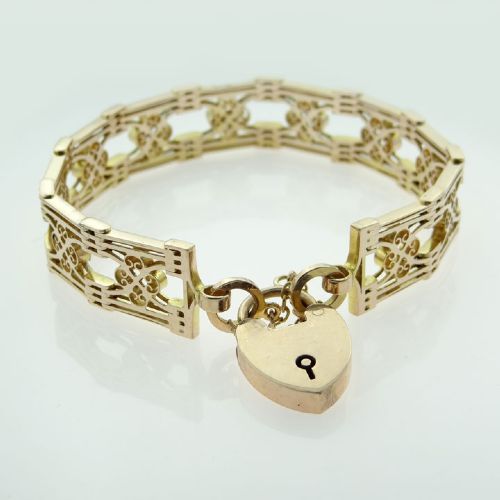
- A wide, flexible bracelet constructed from stacked parallel metal links connected by vertical bars, often secured with a heart padlock. This style originated in the Victorian era and remained popular through the Edwardian period.
- T-bar
- A small horizontal metal bar attached to the centre of a watch chain, used to secure the chain through a waistcoat buttonhole. In contemporary wear, it serves as a decorative pendant drop.
- Dog clip
- A spring-loaded swivel clasp utilised on watch chains to attach pocket watches or fobs. It provides a secure fastening method characteristic of antique silver and gold chains.
- Niello
- A black metallic alloy of sulphur, silver, lead and copper used as an inlay on engraved metal surfaces. It creates contrasting dark decorative patterns against gold or silver backgrounds.
Vintage Rose Gold Chain: Frequently Asked Questions
How do I wear a pocket watch chain as a necklace?
Pocket watch chains are frequently worn as necklaces by fastening the dog clip directly to one of the links or to the T-bar itself. This allows the T-bar to hang centrally as a decorative drop.
Alternatively, longer chains can be doubled around the neck or wrapped multiple times to create a layered bracelet.
What is the difference between solid and rolled rose gold?
Solid rose gold contains a specific proportion of gold alloy throughout the entire piece, maintaining its composition and colour over decades of wear. Rolled gold consists of a thin layer of gold mechanically bonded to a base metal core.
Rolled gold items offer the appearance of solid gold while typically being lighter in weight.
How do I date a antique rose gold chain?
Dating relies on hallmarks stamped onto the metal, specific link styles such as gate or curb patterns, and accompanying hardware like heart padlocks or dog clips. Victorian and Edwardian pieces often display distinct hallmarks indicating assay offices like Birmingham along with specific manufacturing years.
Stylistic shifts toward geometric patterns also identify later 1920s examples.
What are heart padlocks used for on bracelets?
Heart padlocks function as the primary clasp mechanism on Victorian and Edwardian gate and curb link bracelets. These padlocks are often fully functional, opening via a small spring mechanism, and sometimes display decorative engraving or gemstone settings.
They act as both a secure closure and a prominent visual centrepiece.