



8 Seater Refectory Table
An 8 seater refectory table anchors a room for gatherings, offering long timbers and solid construction shaped by decades of shared meals.
8 Seater Refectory Table
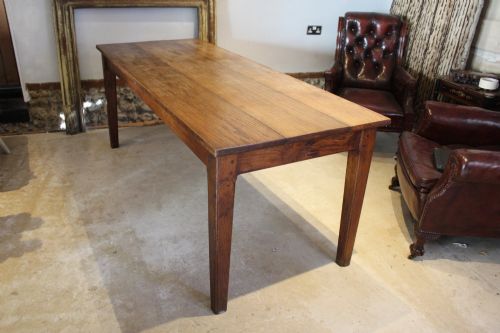
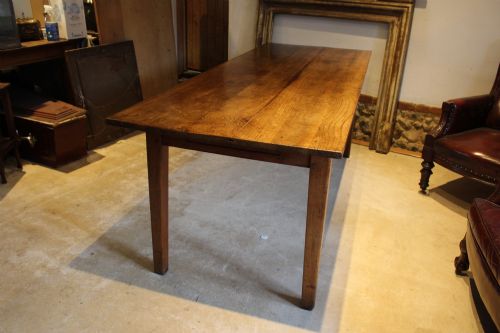
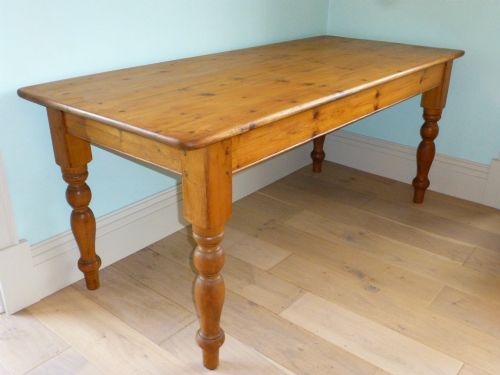
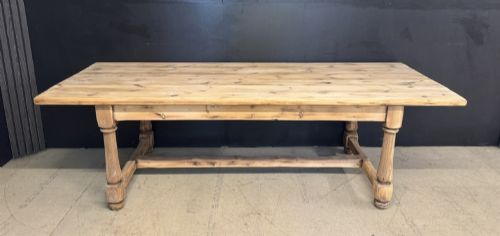
An 8 seater refectory table meets the demand for substantial dining furniture designed to accommodate family and guests comfortably. The pieces seen here span from the nineteenth century through the early twentieth century, drawing on styles such as Victorian, Arts and Crafts, and French Provincial.
Makers of these large dining surfaces utilised durable woods to create substantial platforms for daily use. Oak appears most frequently, alongside pine, ash, cherrywood, mahogany, and fruitwood, often built in regional farmhouse or Jacobean revival idioms.
Materials and construction
Carpenters relied primarily on solid oak and pine for the heavy tops and structural frames of these tables. Joinery techniques prioritised rigidity, using stretcher bases and thick timber planks to support expansive lengths without sagging.
Secondary timbers such as ash, chestnut, and fruitwood occasionally form the tops or underframes. Surfaces received wax or natural finishes to protect the grain while maintaining a matte, tactile quality.
8 Seater Refectory Table Retail Price Guide 2026
Typical asking prices for 8 seater refectory table among the pieces listed under this phrase on Sellingantiques today, from the lower quarter to the upper quarter. They describe what is for sale here now, not the wider market.
Several tables show old wax buildup in the grain where generations of elbow grease left their mark.
Distinguishing quality
Quality rests in the selection of timber planks and the integrity of the joinery rather than surface decoration. Tables constructed from thick, quarter-sawn oak display stable grain patterns that withstand heavy daily demands.
Proportion and structural balance separate simpler kitchen boards from finer dining pieces. Well-fitted stretchers and uniform leg turnings indicate deliberate craftsmanship executed by experienced regional joiners.
The 8 Seater Refectory Table Glossary
- Refectory table
- A long narrow dining table traditionally used in communal dining halls. Modern adaptations retain the elongated proportions and sturdy underframe.
- Stretcher
- A horizontal beam connecting the legs of a table to provide lateral stability. These structural supports run low near the floor or higher beneath the top.
- Quarter-sawn
- A method of milling logs that produces vertical growth rings on the board face. This cut yields stable timber less prone to warping.
- Jacobean Revival
- A nineteenth-century style imitating seventeenth-century English furniture forms. Pieces typically feature heavy turned legs and dark oak finishes.
- Farmhouse table
- A utilitarian dining surface built for domestic utility using regional timbers. These boards display honest construction without elaborate ornamentation.
8 Seater Refectory Table: Frequently Asked Questions
How many people does an 8 seater refectory table actually fit?
An 8 seater refectory table provides adequate legroom and surface area for eight diners. The length typically ranges from two metres upwards to accommodate chairs along both sides and ends.
Actual seating capacity depends on the width of the chairs used and the placement of the table legs or stretchers.
What is the difference between an oak and pine farmhouse table?
Oak tables offer high density and resistance to dents, developing a deep patina over generations of use. Pine provides a softer, lighter alternative with a distinct knots-and-grain texture.
Both materials serve domestic dining well, though oak suits formal reception spaces while pine leans toward country kitchens.
How do I date an antique refectory table?
Dating relies on examining tool marks, timber selection, and construction hardware underneath the top. Hand-sawn boards and pegged joinery generally point to nineteenth-century production.
Stylistic cues like Arts and Crafts chamfering or Jacobean Revival turnings narrow the period of manufacture further.
Are these tables suitable for daily family use?
These tables were originally built for heavy daily use in kitchens and dining rooms. Solid timber construction ensures they endure constant wear from meals and gatherings.
Routine maintenance involves applying natural wax to preserve the finish against moisture and everyday spills.