
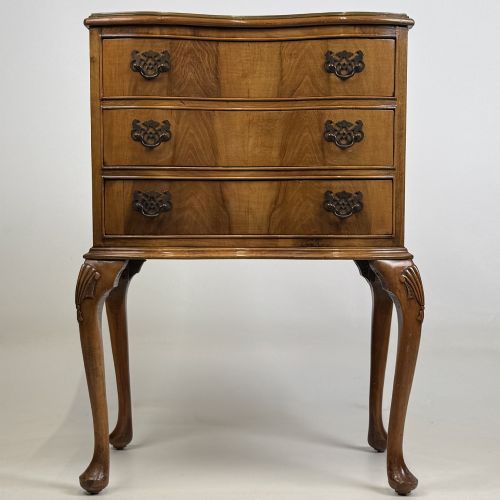


20th Century Walnut Drawers
These 20th century walnut drawers bring rich figure and practical storage to a room, ranging from Edwardian chests to 1930s bow fronts.
20th Century Walnut Drawers
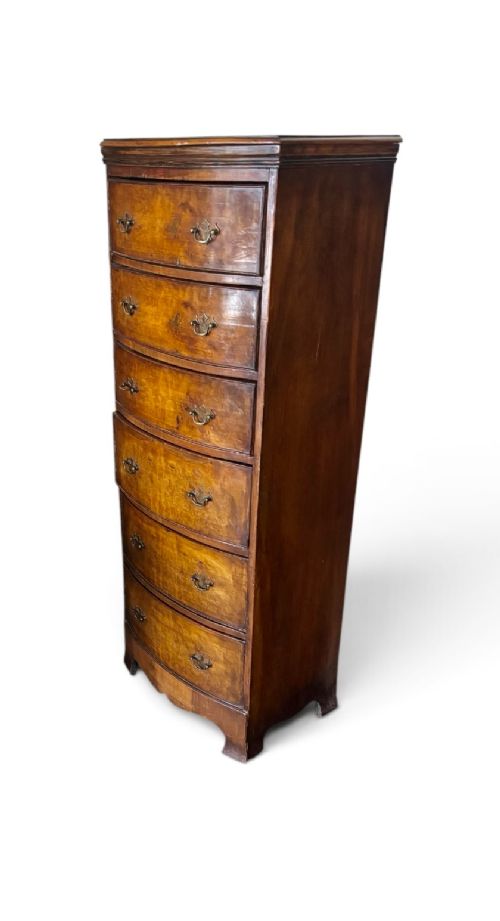
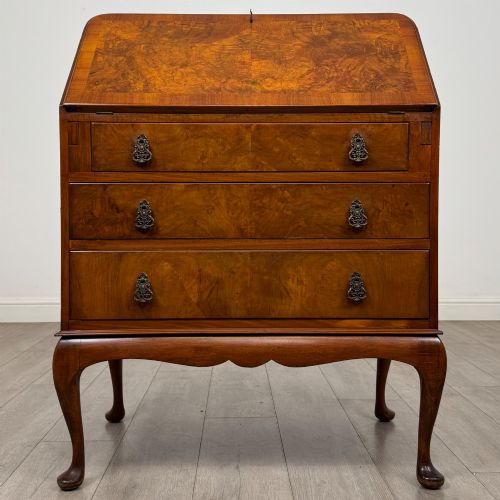
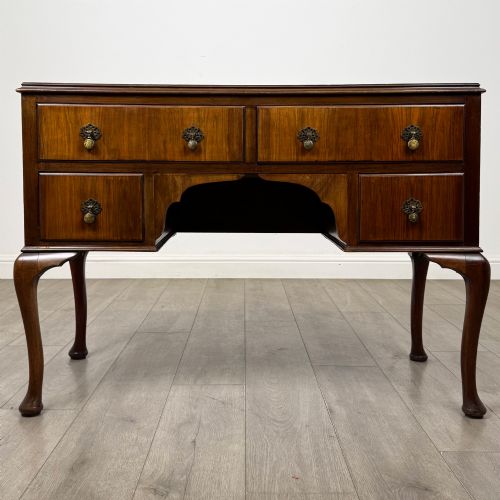
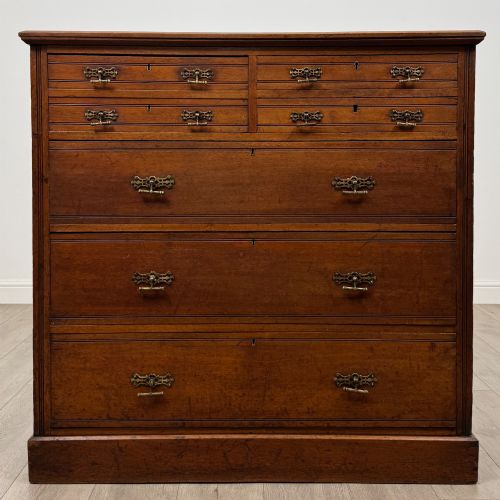
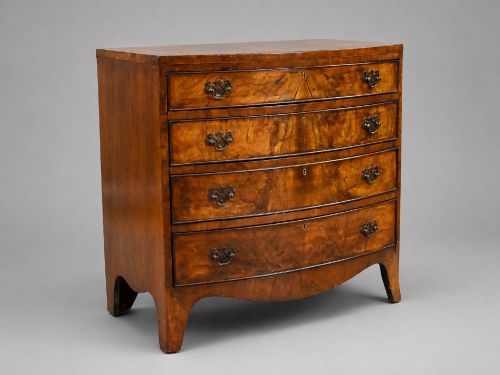
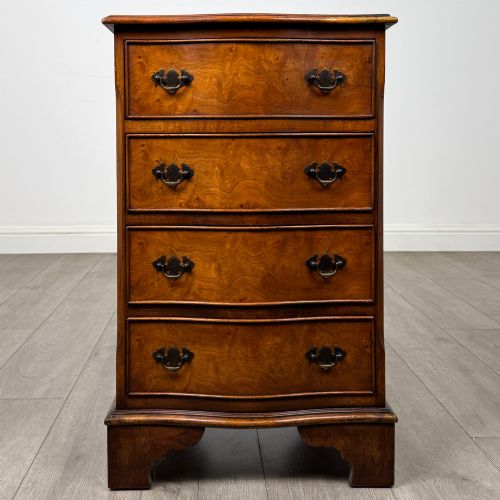
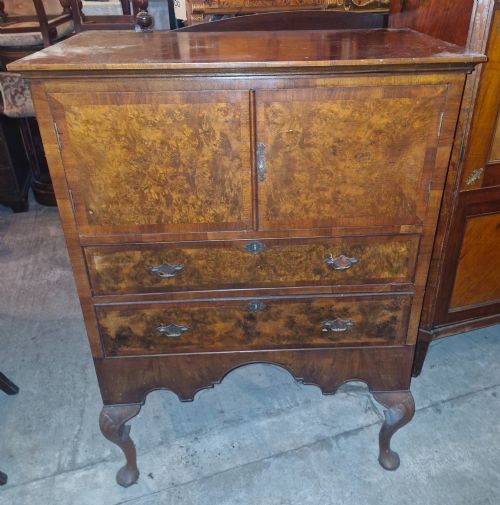
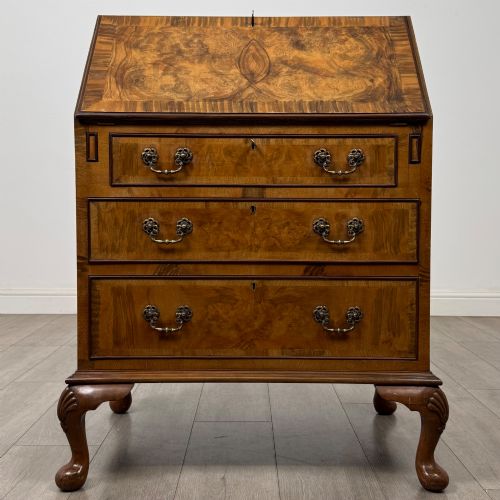
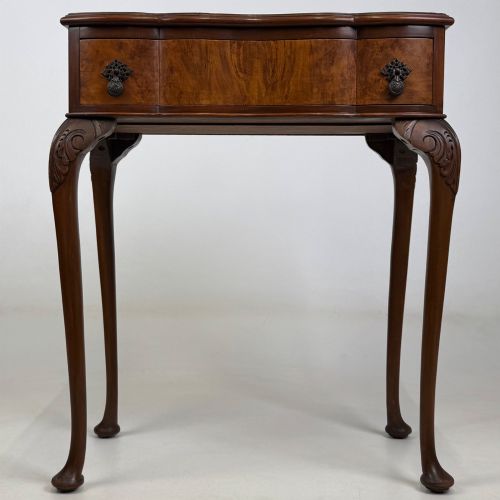
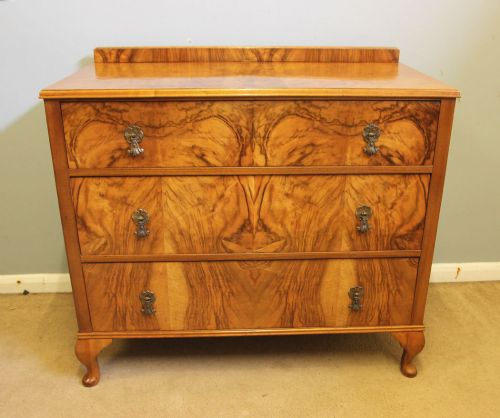
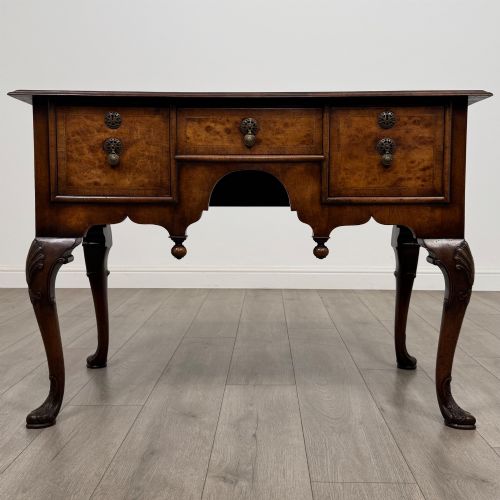
When you search for 20th century walnut drawers, you encounter a selection of case furniture spanning chests of drawers, writing bureaus, cabinets, and writing tables. The pieces originate from Edwardian workshops as well as later decades up to 1930, capturing various revival aesthetics.
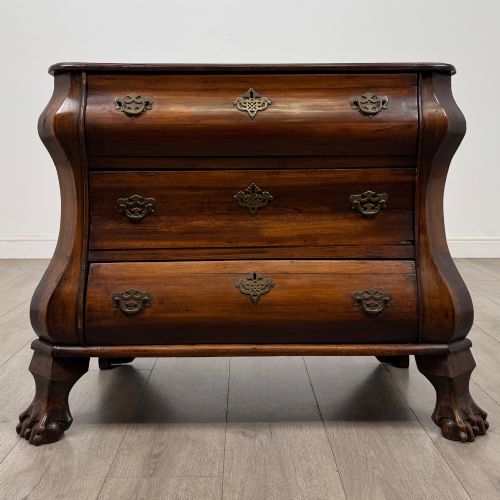
Edwardian examples appear frequently on this page, often rendered in figured or burr walnut with styles drawing on Queen Anne, Georgian, and Dutch Baroque traditions. Alongside standard chests, you find specialised writing bureaus, tallboys, commodes with marble tops, and compact side tables.
Makers such as Jas Shoolbred contributed to this output alongside continental European workshops from Sweden, Italy, and France. The forms range from bombe and serpentine profiles to straight-fronted narrow chests and bow fronts.
How they were made
Cabinet makers utilised walnut timber, frequently applying burr walnut or figured walnut veneers to carcases constructed from secondary woods like mahogany and oak, with occasional elm components.
Materials recorded across these listings include walnut, burr walnut, figured walnut, walnut veneer, brass, oak, mahogany, elm, and marble.
What varies in quality
The choice of veneer sets the tone, where richly figured burr walnut displays intricate grain patterns that elevate the visual presence compared to plain walnut boards.
Construction methods and cabinet-making execution distinguish workshop output, particularly in the precision of dovetail joints, drawer operations, and the crispness of carved or shaped elements like serpentine and bombe profiles.
Jas Shoolbred
The 20th Century Walnut Drawers Glossary
- Burr walnut
- A veneer taken from the growth excrescence on a walnut tree, yielding highly decorative, swirling grain patterns.
- Tallboy
- A tall chest of drawers, often constructed in two stacked sections to provide substantial vertical storage.
- Bombe
- A swelling, outwardly curving chest shape associated with continental European revival styles.
- Brushing slide
- A pull-out shelf positioned above the top drawer, traditionally used for folding clothes or writing notes.
20th Century Walnut Drawers: Frequently Asked Questions
How do I identify Edwardian walnut chests?
Edwardian walnut chests generally date from the early part of the century and often incorporate revival styles such as Queen Anne or Georgian influences. They frequently feature figured walnut veneers and traditional brass hardware.
Makers of this era produced diverse formats including narrow chests, bureaus, and side tables alongside standard drawer configurations.
What is a bureau desk?
A bureau combines a sloping writing flap that folds down to reveal small interior compartments with a set of drawers underneath. These pieces served as compact writing stations in homes.
Examples from the early 20th century often utilise burr walnut or figured walnut veneers across the fall-front surface.
Where were these pieces made?
While many pieces originate from British workshops and firms like Jas Shoolbred, the selection also includes continental European examples from countries such as Italy, France, and Sweden.
Each regional origin brings distinct decorative touches, from marble-topped commodes to bombe silhouettes.
How do I care for walnut veneer?
Walnut furniture benefits from stable indoor environments away from direct sunlight and excessive heat sources, which can dry out timber and veneer.
Regular dusting with a soft, dry cloth preserves the finish without requiring heavy polishes.