

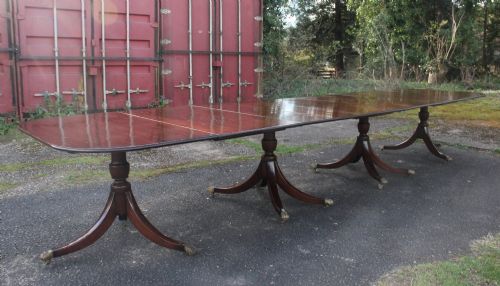
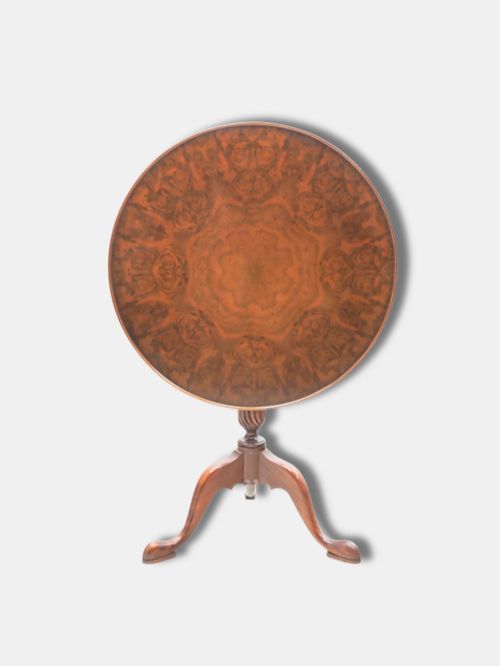
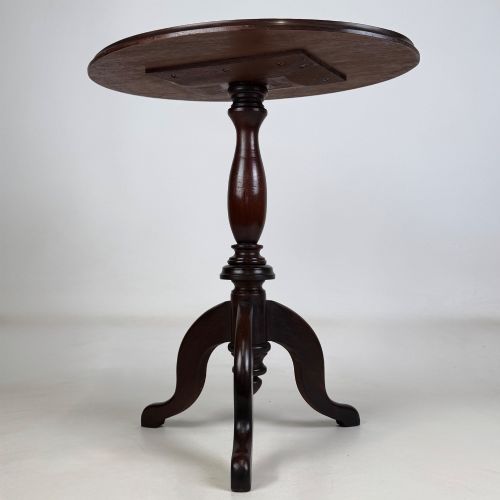
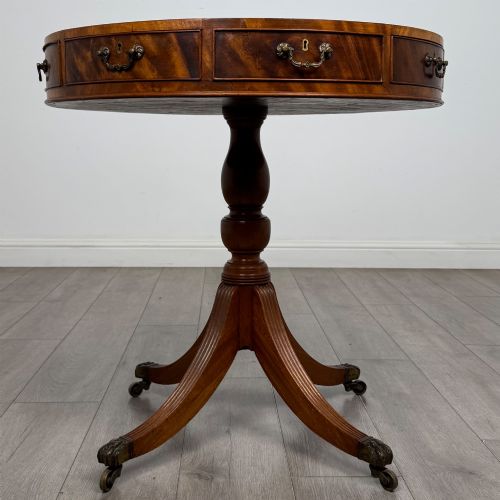


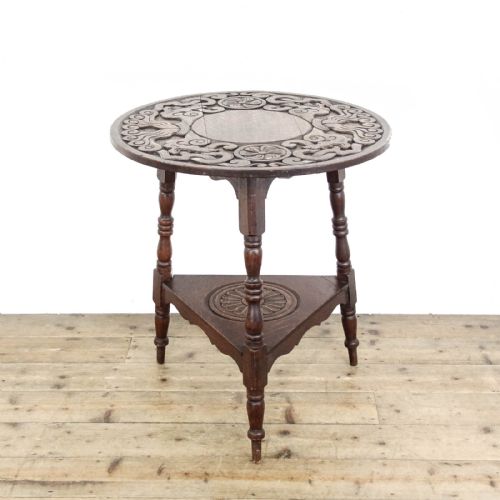


20th Century Tripod Table
A 20th century tripod table is a sturdy three-legged stand that brings both functional surface space and period character into a room.
20th Century Tripod Table
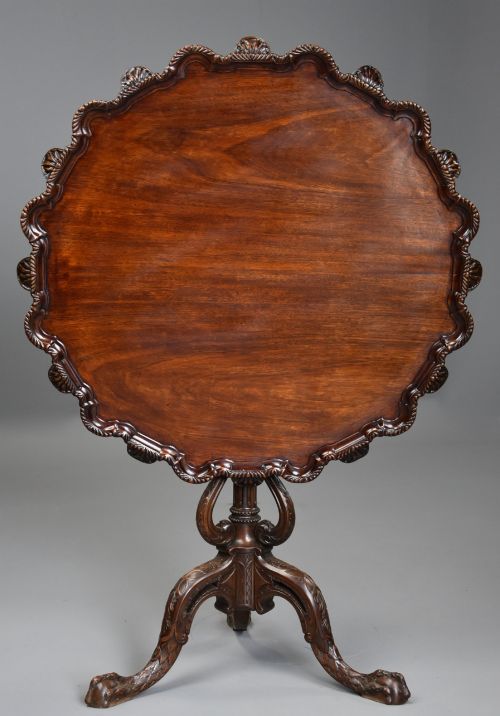
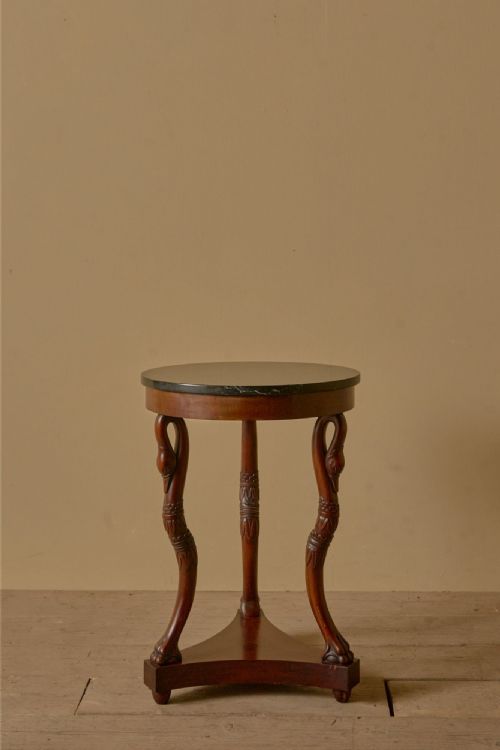
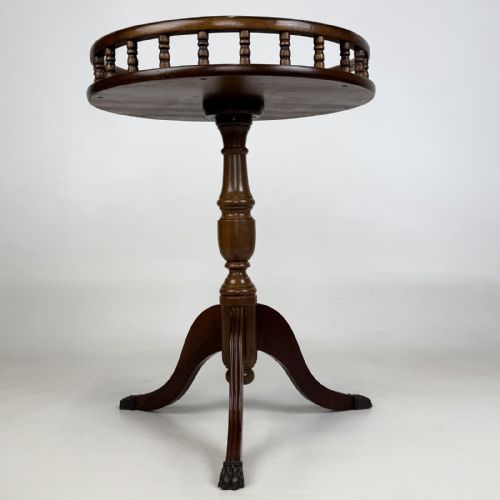
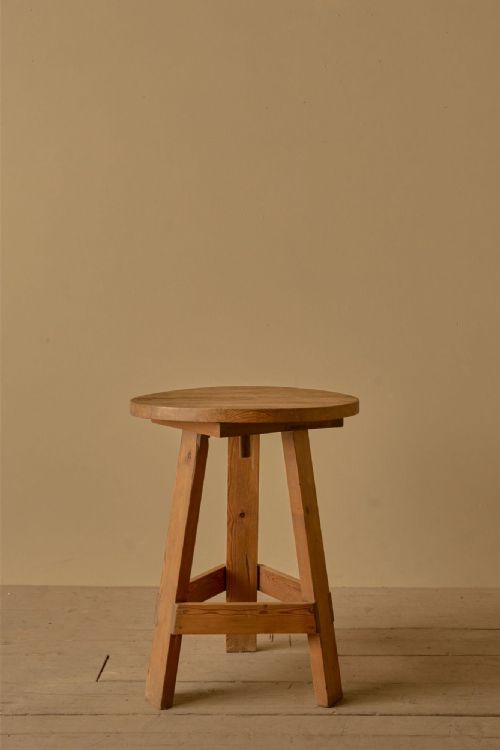
A 20th century tripod table encompasses diverse forms from compact wine tables to sculptors stands and occasional tables. These pieces draw heavily on earlier design movements, frequently appearing in Georgian, Regency, and Chippendale revival styles alongside rustic utilitarian formats.
The selection ranges across several decades of the twentieth century, capturing Edwardian craftsmanship as well as later 1920s and 1930s production. Buyers encounter round, star-shaped, and oval tops supported by single central pillars resting on three individual legs.
Materials and construction
Makers utilised solid hardwoods such as mahogany, walnut, oak, beech, and teak, often applying burr walnut or burr oak veneers to tabletops for decorative grain patterns. Pine and birch also appear alongside mixed metals including brass, copper, and iron.
Joinery methods rely on traditional cabinet-making techniques, integrating turned central pedestals with pegged or dowelled leg joints. Surfaces feature carved details, raised galleries, inlaid motifs, and tilt-top mechanisms allowing the top to pivot vertically.
20th Century Tripod Table Retail Price Guide 2026
Typical asking prices for 20th century tripod table among the pieces listed under this phrase on Sellingantiques today, from the lower quarter to the upper quarter. They describe what is for sale here now, not the wider market.
Listings feature items dated across the Edwardian era, 1900, 1910, 1920, 1930, and 1950 in styles spanning Georgian Revival to rustic utilitarian.
Factors that distinguish quality
The standard of timber selection and the precision of the carved details dictate the overall tier of the piece. Tables featuring figured veneers and cleanly executed revival styles demonstrate greater craftsmanship than utilitarian variants.
Structural stability at the junction where the three legs meet the central column remains a primary indicator of build integrity. Superior examples maintain firm joints and smooth movement in tilt-top mechanisms without wobble.
WAS Benson
The 20th Century Tripod Table Glossary
- Tripod table
- A small standalone table supported by a central pillar and three legs. This format gained popularity in the eighteenth century and saw frequent revival periods throughout the twentieth.
- Tilt-top mechanism
- A hinge under the tabletop that allows the surface to fold flat when not in use. This design originally saved space in smaller domestic rooms.
- Veneer
- A thin layer of decorative wood applied over a secondary timber base. Burr veneers showcase complex, swirling grain patterns gathered from tree growths.
- Raised gallery
- A low wooden rim projecting above the edge of the tabletop. This feature prevents small items or glassware from rolling off the surface.
20th Century Tripod Table: Frequently Asked Questions
How do I identify a revival style?
Revival pieces borrow decorative vocabulary from earlier eras, such as the cabriole legs of Queen Anne furniture or the carved mahogany details associated with Chippendale designs. Makers in the twentieth century reinterpreted these historical motifs using contemporary woodworking machinery.
Examining the underside of the top and the internal joint construction usually clarifies whether a piece is an early twentieth-century interpretation or an eighteenth-century original.
Where should I place a tripod table?
These compact tables fit easily beside armchairs, in narrow hallways, or as freestanding pedestals in corners to hold lamps and decorative objects. Their small footprint makes them adaptable additions to living spaces where floor area is restricted.
Because the three-legged base provides steady contact on uneven floors, they sit securely without rocking.
What woods were commonly used?
Makers relied heavily on dense hardwoods like mahogany and walnut for formal revival tables, often enhancing the visual appeal with burr veneers on the top surface. Oak, beech, and pine appear in more rustic or utilitarian formats.
Metal components such as brass, copper, and iron also feature in specific industrial or arts and crafts designs from the period.