


20th Century Lake Landscape
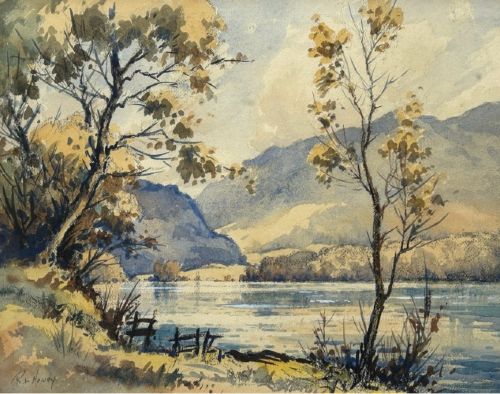
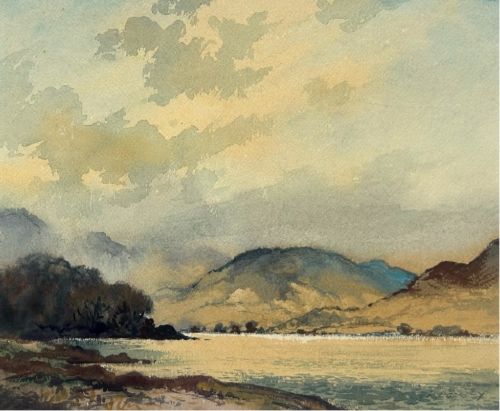
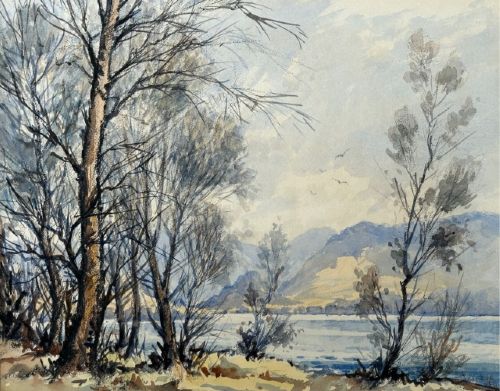
These 20th century lake landscape works capture still waters and rural shores through the eyes of British and European painters.
20th Century Lake Landscape
A 20th century lake landscape records inland waters, rural shores, and mountain valleys across Britain, France, and Italy. These works capture specific topographical views from Cumbria, the English Lake District, and continental waters.
Watercolours on paper and oils on canvas or board dominate this selection. Artists ranging from named regional painters to continental impressionists record scenes from the 1900s through the 1960s.
Mid-century British school watercolours and early 20th-century impressionist oils form the core of these listings. Buyers find both intimate depictions of Cumbrian tarns and expansive European lake views.
How these paintings were made
Artists apply oil paint to canvas, card, or wooden board, building texture with gesso and layered brushwork. Watercolour pigment on paper relies on fluid washes and ink line work to define topographical details.
Framed works incorporate wooden surrounds that protect the delicate paper or canvas surfaces. Support materials vary from heavy watercolour paper to stretched canvas and rigid boards.
Materials in these listings include canvas, paper, oil paint, watercolour pigment, wood, and gesso.
What varies in quality
The strength of composition and clarity of light separate ordinary topographical records from accomplished artistic interpretations. Direct observation of atmospheric weather conditions elevates certain views above standard regional documentation.
The handling of pigment, whether through fluent watercolour washes or rich oil impasto, determines the visual depth of the scene. Hand-signed signatures and documented local provenance add contextual weight to individual paintings.
Robert Leslie Howey·Claude Muncaster·George Harrison·Antoine Bouvard·Percy Lancaster·Claude H Rowbotham·Augustus William Enness·Angus Rands·John Arthur Dees·Hubert Lindsay Wellington
The 20th Century Lake Landscape Glossary
- Watercolour
- A paint consisting of pigment suspended in a water-soluble vehicle. It is typically applied to paper to create translucent colour washes.
- Impressionism
- A 19th and 20th-century art style focusing on accurate depiction of light in its changing qualities. Artists utilise visible brush strokes and open composition.
- Topographical landscape
- An artwork depicting a specific real-world place with geographic accuracy. These views record recognizable mountains, lakes, and local buildings.
- Gesso
- A paint mixture consisting of a binder mixed with chalk, gypsum, or pigment. It prepares rigid boards and canvases for oil painting.
20th Century Lake Landscape: Frequently Asked Questions
Where were these lake scenes painted?
The works record locations across the English Lake District, including Grasmere, Derwentwater, and Windermere. Other pieces depict continental waters in France and Italy.
Cumbrian valleys and Cumbrian tarns appear frequently in the British watercolours. European examples feature French gardens and Italian lake shores.
How do I care for a watercolour?
Watercolour paintings require protection from direct sunlight to prevent the pigments from fading over time. Glazing with conservation glass shields the delicate paper from moisture and atmospheric damage.
Displaying works away from direct heat sources preserves both the paper support and the original frame. Acid-free backing materials prevent yellowing behind the glass.
What periods do these paintings cover?
The selection spans from the early 1900s through the 1960s, covering multiple decades of landscape painting. Early pieces date from the turn of the century.
Mid-century works reflect post-war British and European artistic movements. The dates range across the decades, encompassing 1900, 1920, 1930, 1950, and 1960.
Are these paintings signed by the artist?
Many examples feature original signatures or monograms applied by the painter. Signed pieces often include inscribed titles or location notes on the front or reverse.
Some historical works remain unsigned or carry indistinct signatures while retaining strong stylistic attribution. Documentation on the reverse provides additional context for unsigned boards.