




20th Century Coffer
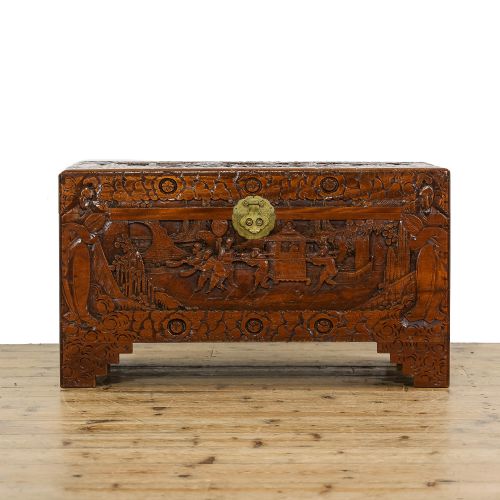
A 20th century coffer offers sturdy domestic storage forged from decades of practical craft, ranging from plain oak panels to carved camphor wood.
20th Century Coffer
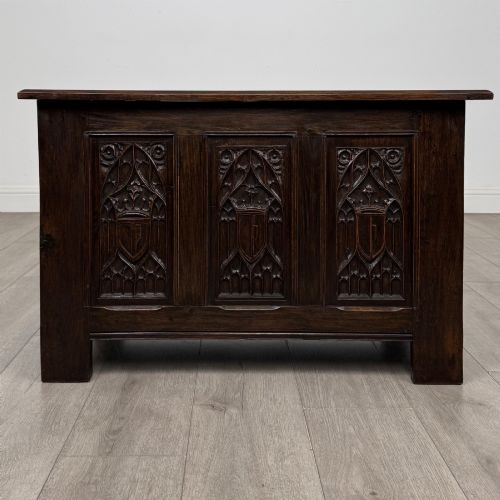
A 20th century coffer brings together heavy domestic storage chests and blanket boxes made from the Edwardian era through to the interwar decades. The pieces gathered here draw on regional traditions, spanning simple pine farmers chests, Arts and Crafts oak designs, and imported camphor wood trunks.
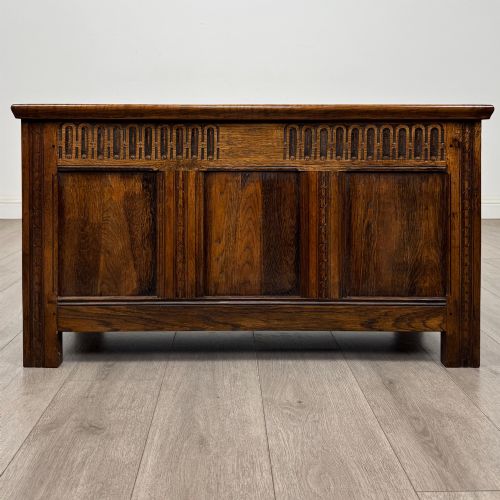
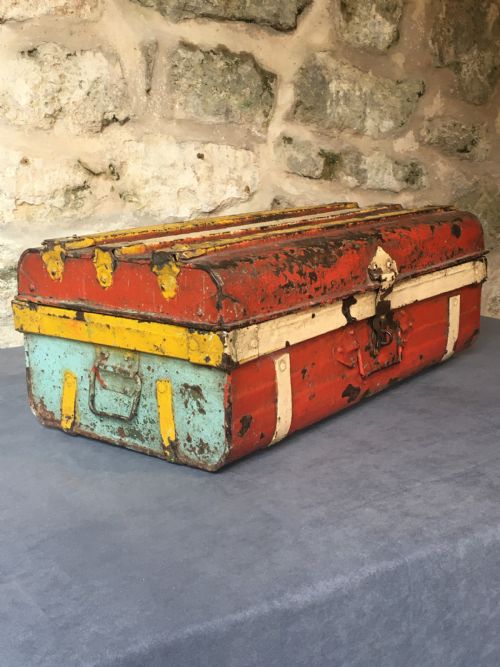
The version most commonly met on this page is the solid oak panelled coffer, alongside painted storage boxes and travel trunks. These domestic items served to hold household linens, woollens, and personal luggage before built-in wardrobes became standard in homes.
Makers and workshops from this period adapted older vernacular forms using contemporary materials like brass fittings and iron hardware. Buyers find both British country house styles and various international pieces including Chinese export items and Middle Eastern inlaid trunks.
Materials and construction
Makers relied heavily on solid hardwoods and softwoods, predominantly oak, pine, and camphor wood, joined using traditional panelled construction methods. Grain patterns and natural timber tones were often left exposed or finished simply with wax.
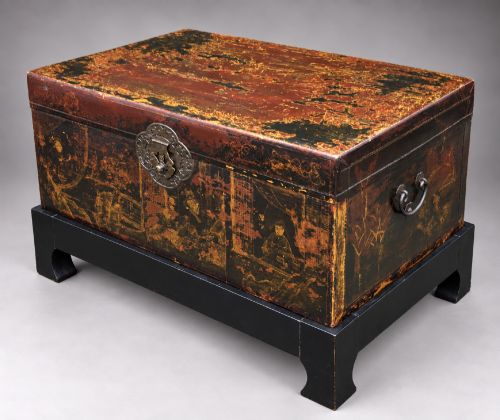
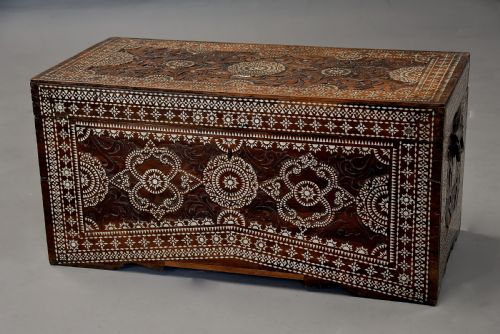
Surface ornamentation varied widely according to origin, utilising hand-carved panels, painted finishes, and lacquer work. Inlaid mother of pearl and brass strapwork frequently accented imported trunks and decorative cabinets.
Iron and brass hardware such as hinges, handles, and lock plates provided structural reinforcement for travelling trunks and heavy log bins. These metal components were forged or cast to withstand frequent transit and daily domestic use.
Camphor chests retain their distinct herbal scent after a century, quietly warding off moths just as they did in Edwardian bedrooms.
Factors in quality
Quality rests upon the integrity of the timber joints and the weight of the primary wood used in the construction. Pieces built with thick oak panels or fragrant camphor wood generally maintain greater structural stability than lighter pine alternatives.
The refinement of surface decoration distinguishes finer examples from utilitarian boxes. Hand-carved relief work, precise mother of pearl inlay, and well-executed lacquer finishes require high levels of artisan skill compared to plain painted surfaces.
The 20th Century Coffer Glossary
- Cofer
- An archaic spelling often used interchangeably with coffer, denoting a strong box or chest used for storing valuables and textiles.
- Camphor wood
- An aromatic timber frequently utilised for Asian export chests because its natural scent deters moths and insects from woollens.
- Arts and Crafts
- A design movement valuing hand-craftsmanship and simple vernacular forms over mass production, visible in plain oak furniture.
- Chinoiserie
- European decorative style imitating Chinese artistic traditions, often featuring painted lacquer scenes on boxes and cabinets.
- Panelling
- A method of joining wooden boards within a framed structure to allow the timber to expand and contract without splitting.
20th Century Coffer: Frequently Asked Questions
What were 20th century coffers used for?
These chests primarily served to store household blankets, heavy linens, and personal garments in domestic bedrooms and hallways. Travellers also relied on reinforced variants like steamer trunks for long journeys.
Over time, many adapted to act as general storage boxes, low coffee tables, or decorative focal points in country house interiors.
How do I care for an oak coffer?
Maintain timber surfaces by applying a traditional beeswax polish sparingly to nourish the grain and prevent the wood from drying out. Avoid placing antique furniture near direct heat sources or in damp environments.
Keep brass and iron hardware clean with a soft cloth, taking care not to let metal cleaners touch surrounding wood.
Are camphor wood chests safe for clothes?
Camphor wood naturally emits a strong, distinct aroma that acts as an effective insect repellent for woollens and stored textiles. This scent is a standard characteristic of Asian export trunks from this era.
If the aroma is too potent upon purchase, airing the interior in a well-ventilated space usually reduces the strength of the scent.
How do I date a 20th century chest?
Examine the construction methods, hardware types, and secondary woods to establish an approximate period within the twentieth century. Edwardian and 1920s pieces often combine machine-cut elements with hand-finished joinery.
Stylistic clues such as Arts and Crafts linenfold carving or Chinoiserie lacquer work also help narrow down the decade of manufacture.