



20th Century Coastal Landscape
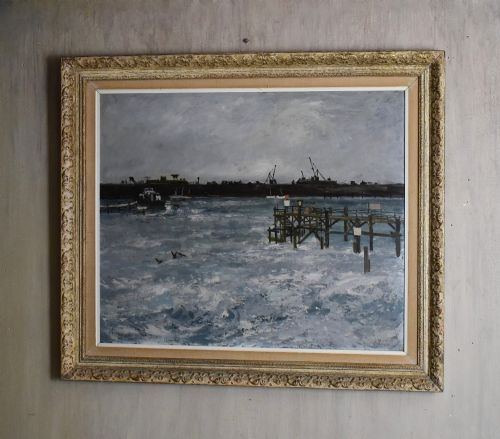
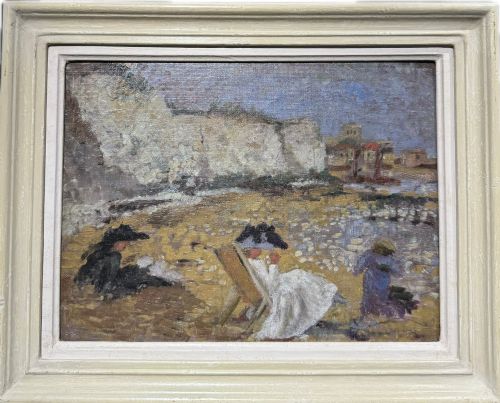
When you search for 20th century coastal landscape, you find works capturing harbours, shores, and maritime scenes through the lens of changing decades.
20th Century Coastal Landscape
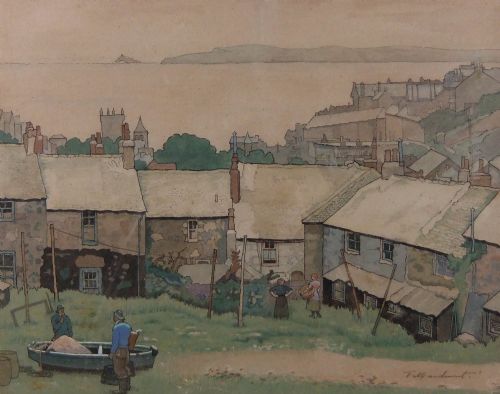
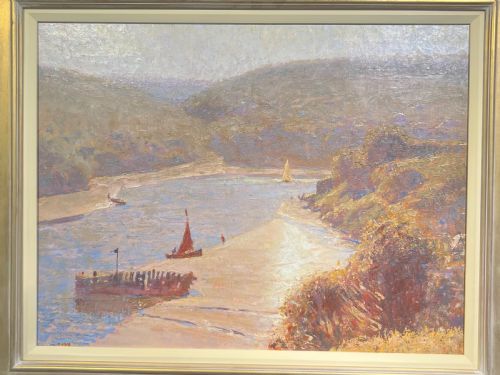
A 20th century coastal landscape encompasses painted scenes of harbours, beaches, cliffs, and estuaries produced across the decades from Edwardian times through to the mid-century. These works document maritime life, fishing ports, and coastal towns from St Ives to the Yorkshire coast and across the Channel.
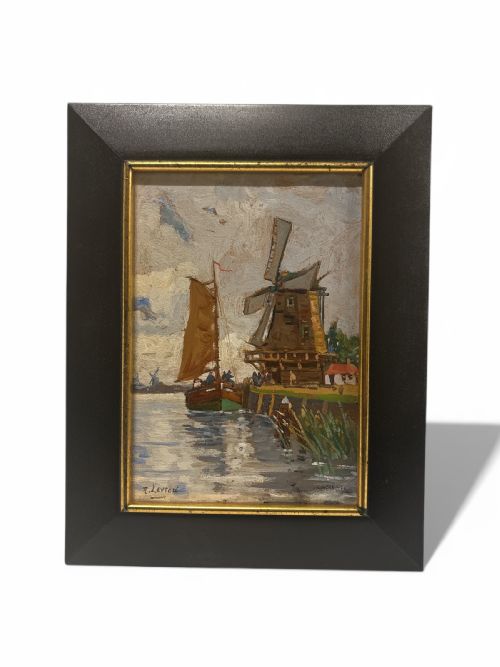
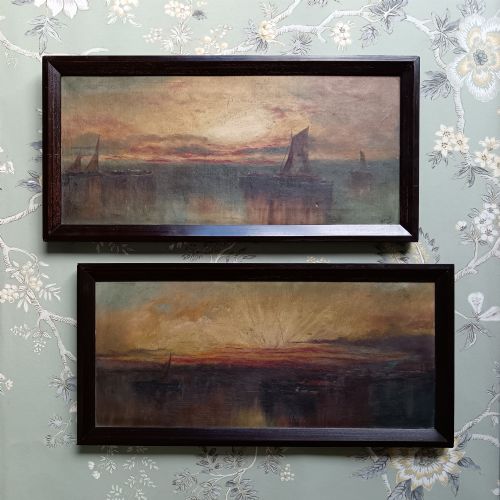
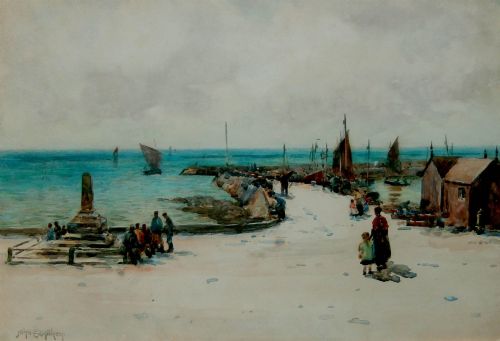
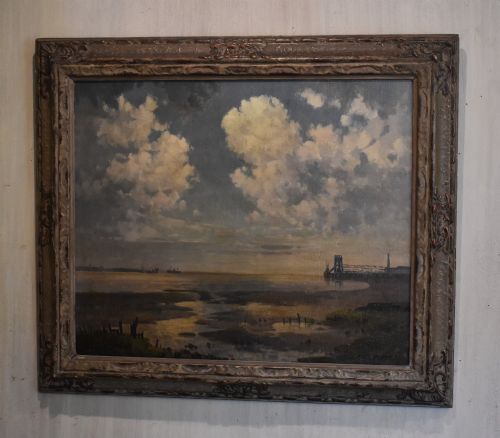
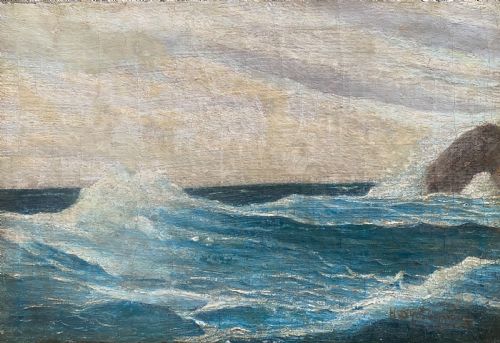
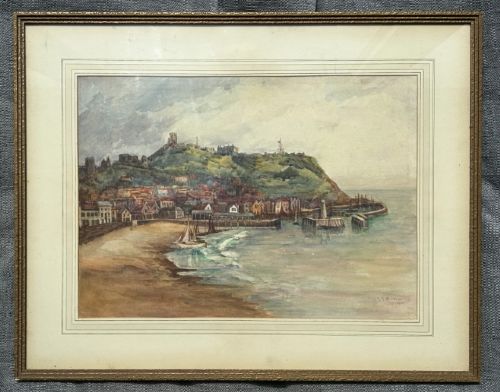
The selections available range from detailed watercolours on paper to textured oil paintings on canvas, board, and wood panels. Impressionist and Post-Impressionist treatments dominate the selection, capturing light on water and the atmosphere of shorelines.
Viewers encounter both British regional scenes and continental coastal views, including French and Italian ports. The works reflect the diverse modernist and traditional approaches taken by artists working throughout the period.
How these coastal works were made
Artists of the period applied oil paint or watercolour onto traditional supports such as canvas, heavy paper, wood panels, and board. Oil paints allowed for thick, textured impasto strokes, particularly useful for capturing crashing waves and moody skies.
Watercolours utilised fluid washes on paper, sometimes accented with gouache to build opacity in highlights of seafoam and whitewashed harbour walls. Frames often consisted of wood or ebonised mouldings selected to complement the maritime subject matter.
An early 20th-century folk art shell diorama preserves the enduring seaside obsession with intricate marine souvenirs.
What varies in quality across these paintings
The strength of a coastal work relies upon the artist's command of light, atmosphere, and spatial depth rather than mere scale or subject matter. Skilled brushwork conveys the movement of water and the shift of weather across a harbour more convincingly than stiff, formulaic rendering.
Context and provenance elevate certain pieces, particularly those tied to established regional art schools like St Ives or exhibited during the artist's lifetime. Materials and preservation also play a role, with stable surfaces and original frames retaining their intended visual impact.
Kenneth Cozens·R Leyton·B Nash·John E Aitken·Clive Browne·Peter Brannan·Thomas Maidment·Cecil Allan Mould·Dubovsky·F A Roylance·George F Pennington·Joseph Edward Hennah·Lokre·Gustave Vidal·Gyrth Russell·George Turland Goosey·Norman Lloyd·William J B Jenkins·Fernando Del Basso·William Tuck·Edward Seago·Florence Hess·John Bell·Donald McIntyre·Leslie Rackham
The 20th Century Coastal Landscape Glossary
- Impressionism
- A style of painting emphasising loose brushstrokes and an open composition, focusing on the accurate depiction of light in its changing qualities.
- Gouache
- An opaque water-based paint that dries to a matte finish, used by artists to add solid highlights to watercolour paintings.
- Impasto
- Paint applied thickly to a canvas or panel, standing out in relief from the plane and capturing physical texture.
- Board
- A rigid backing material, often wood or compressed pulp, utilised by artists as a stable substitute for stretched canvas.
20th Century Coastal Landscape: Frequently Asked Questions
What defines a 20th century coastal landscape?
These works capture shorelines, fishing ports, and maritime views created between 1900 and the 1960s. They employ styles ranging from traditional Edwardian realism to British Impressionism and modernism.
Artists recorded the changing light on water and the daily life of harbours across Britain and continental Europe. The category includes both intimate watercolours on paper and substantial oil paintings on canvas or board.
How were these coastal paintings displayed?
Original framing typically involved wood mouldings, sometimes ebonised or gilded, chosen to complement the tones of the sea and sky. Many works were framed by the artists themselves or by contemporary galleries.
Proper presentation protected fragile paper works behind glass while allowing oil paintings on canvas to breathe in stable atmospheric conditions.
Where did these coastal artists work?
Painters gathered in established coastal colonies such as St Ives in Cornwall, Whitby in Yorkshire, and various Scottish fishing ports. Others travelled to French and Italian rivieras to capture Mediterranean light.
These locations provided immediate access to maritime subjects, working vessels, and distinct coastal topography that attracted plein-air painters.
How do I care for a vintage oil painting?
Display oil paintings away from direct sunlight and steady sources of extreme heat to protect the canvas and pigments. Keep the environment at a stable humidity to prevent cracking in the paint layer or warping of wooden panels.
Dust surfaces gently with a soft, dry brush without applying liquid cleaners or pressure to the impasto.