
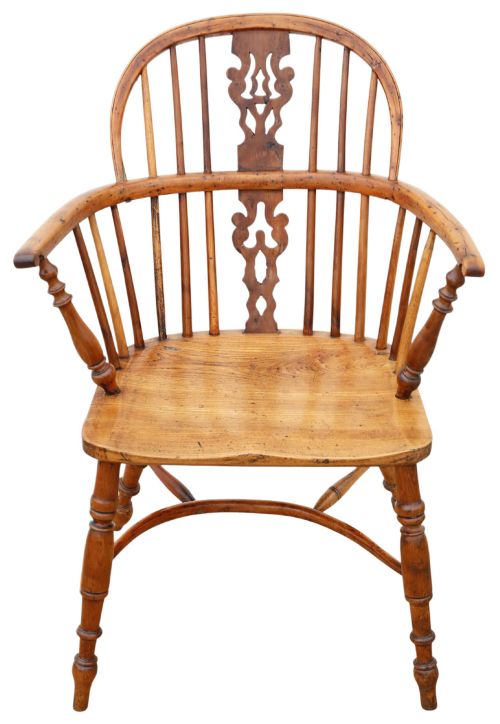
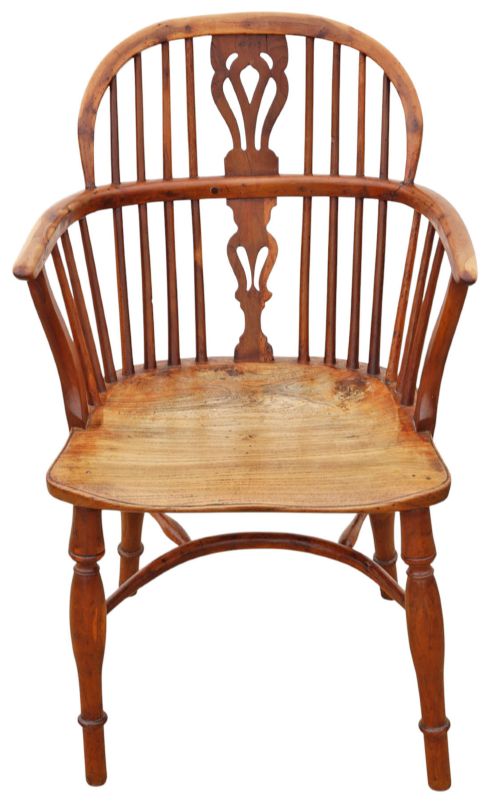
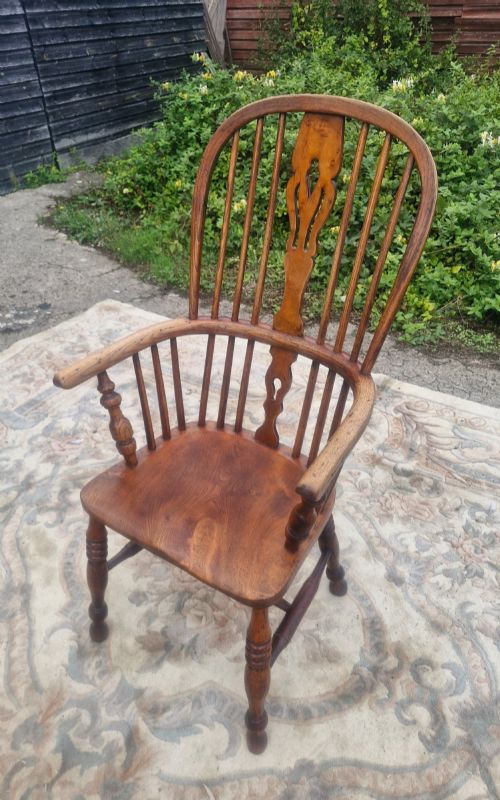

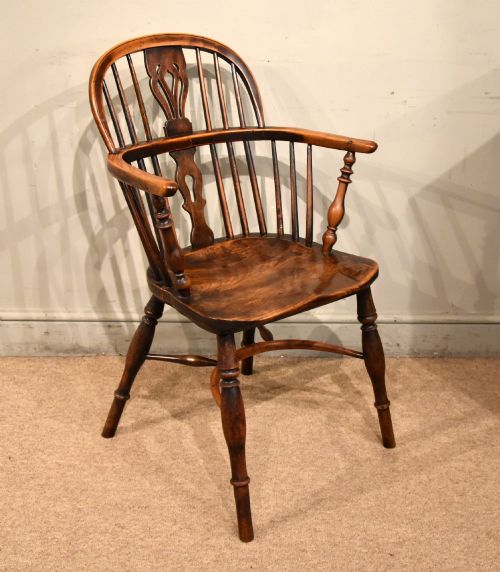
19th Century Yew Windsor Chair
A 19th century yew windsor chair brings tactile warmth and regional craftsmanship into a room through its figured timber and traditional joined construction.
19th Century Yew Windsor Chair
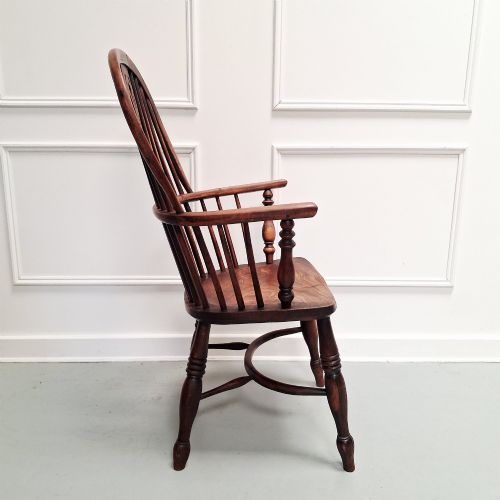
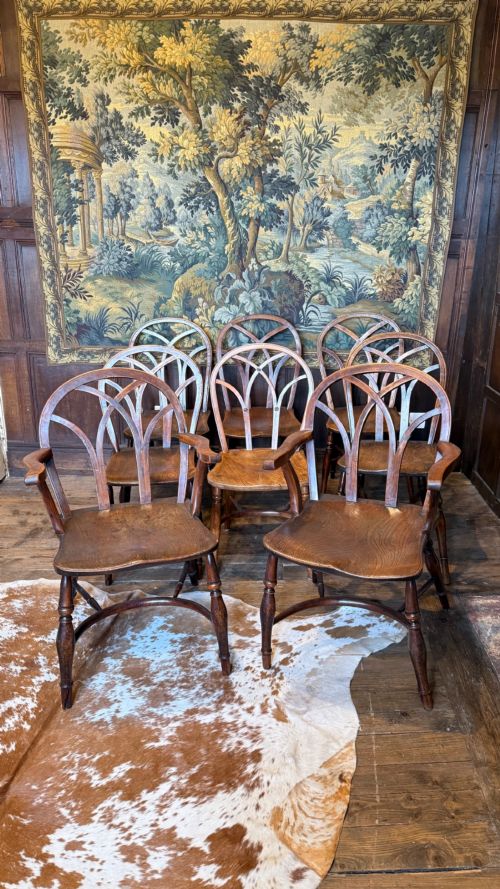
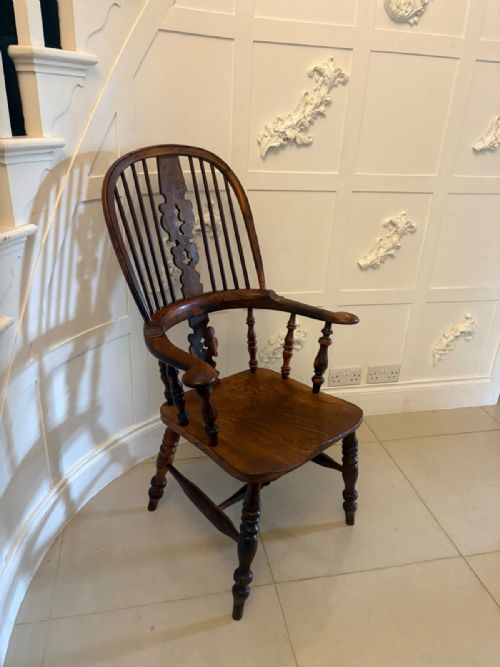
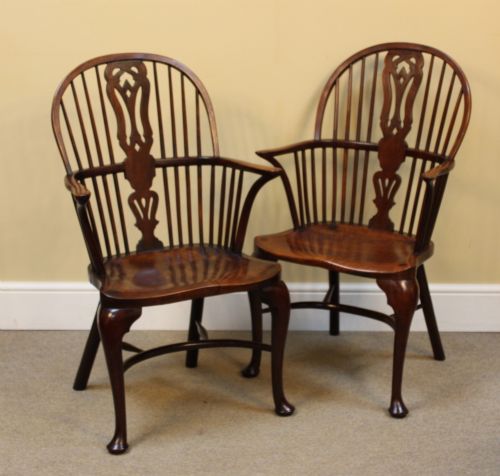
A 19th century yew windsor chair represents a pinnacle of English country furniture, combining a sturdy wooden seat with steam-bent framework. Buyers searching for this phrase encounter sturdy armchairs, carvers, and high-back or low-back variations originating from English regional workshops.
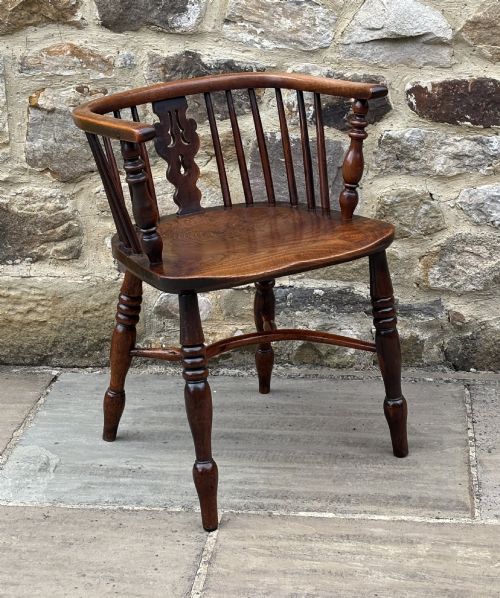
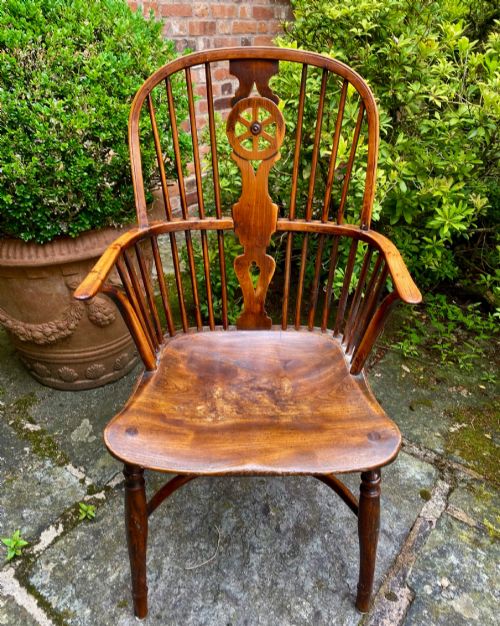
The most common examples on this page pair a rich yew wood upper structure with a solid elm seat, frequently featuring hoop backs, wheel backs, or broad arms. These seating forms developed distinctive local characteristics across English counties during the Victorian and late Georgian periods.
Makers utilised native timbers to construct durable seating designed for everyday domestic use in country houses and farmhouses. Surviving examples include matched sets of dining chairs, child chairs, and robust rocking chairs reflecting vernacular traditions.
Materials and Construction
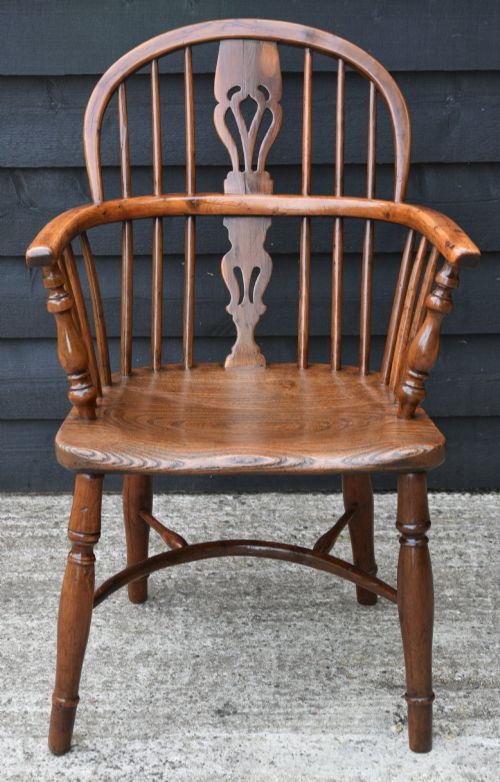
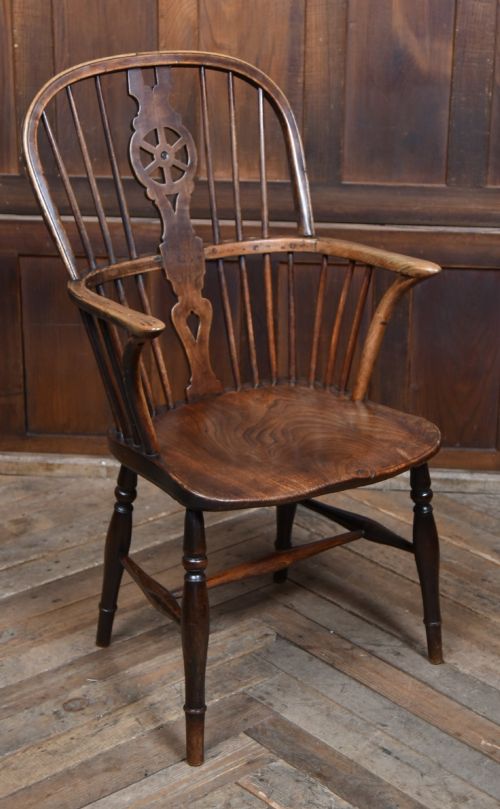
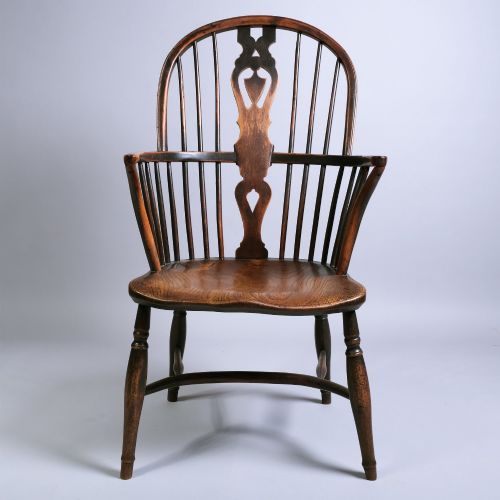
Makers built each 19th century yew windsor chair by wedging spindles and legs directly into a thick, saddle-shaped solid wood seat, usually sculpted from elm. The back bows and arm rails relied on ash or yew subjected to steam-bending techniques to achieve continuous curved geometry.
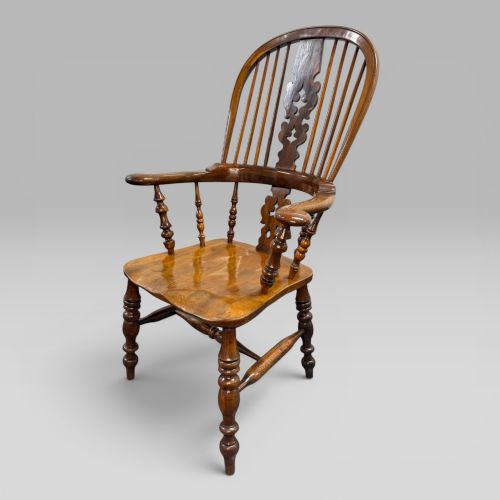
Turned components such as legs, spindles, and crinoline stretchers were shaped on pole lathes using native hardwoods like beech and fruitwood. Selected timber figures, notably burr yew, provided striking decorative grain patterns across the comb-pieces and splats.
Some miniature child-sized Windsor chairs scale down every turning and spindle with absolute precision.
Assessing Quality and Character
The degree of figuration in the timber grain and the complexity of the spindle turning elevate finer examples above standard utility seating. Burr yew sections and well-defined wheel or Gothic tracery splats indicate superior workshop output.
Structural integrity depends on the original wedged joints remaining tight and the elm seat retaining its thickness without deep splitting. Surface character shows through a timeworn patina developed from decades of handling and wax polishing.
J Spencer·Robert Prior·Allsop
The 19th Century Yew Windsor Chair Glossary
- Crinoline stretcher
- A curved underframe joining the legs of a chair to provide rigidity and strength. This hoop-shaped reinforcement is characteristic of many regional English designs.
- Broad arm
- A chair design featuring wide, flat wooden armrests shaped from a single piece of timber. These substantial rests offer pronounced elbow support.
- Hoop back
- A continuous bentwood bow forming the backrest and connecting directly into the seat. This technique distributes weight evenly across the frame.
- Wheel back
- A Windsor chair variation incorporating a pierced central wooden splat carved in the shape of a spoked cartwheel. It represents a decorative refinement popular in the nineteenth century.
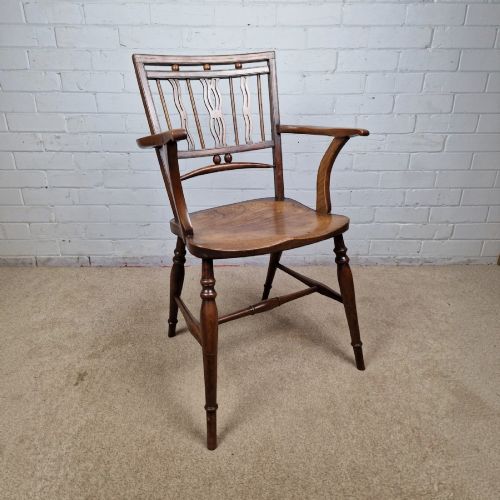
- Mendlesham chair
- A distinctive regional type of armchair originating from Suffolk, featuring a solid wooden splat and prominent arm supports. These pieces often combine yew and elm woods.
19th Century Yew Windsor Chair: Frequently Asked Questions
What is a yew windsor chair?
A yew windsor chair is a traditional wooden seat featuring pegged construction where spindles and legs fit into a solid sculpted seat base. These pieces utilise native British timber and demonstrate regional English woodworking methods.
Craftsmen shaped the curved backs using steam-bent wood while turning the structural supports on lathes. The resulting chairs combine domestic utility with distinctive local artistic styles.
How do I identify a 19th century model?
Nineteenth-century examples display specific design traits such as wheel-back splats, Gothic tracery, and crinoline stretchers beneath the seat. The turning patterns on the legs and the proportions of the hoop backs help distinguish this era from earlier Georgian work.
Examining the wood species reveals typical combinations of yew, elm, and ash that define the period's regional production. Tool marks and construction methods further confirm the age of the piece.
Where were these chairs made?
These chairs were manufactured across various English counties, with distinct regional styles emerging from the Thames Valley, Yorkshire, and East Anglia. Local workshops utilised the hardwoods readily available in their immediate surrounding woodlands.
Certain areas developed signature chair designs, such as the broad-arm variations from northern makers or the refined hoops associated with southern workshops.
How should I care for yew wood?
Maintain the surface by applying natural beeswax periodically to nourish the grain and preserve the historic patina. Keep the furniture away from direct heat sources and rapid temperature fluctuations to prevent timber splitting.
Gentle dusting with a soft cloth protects the finish without introducing moisture or abrasive chemicals to the antique surfaces.