




19th Century Wood Relief
These pieces of 19th century wood relief bring tactile depth and historic narrative directly to your interior walls through disciplined chisel work.
19th Century Wood Relief
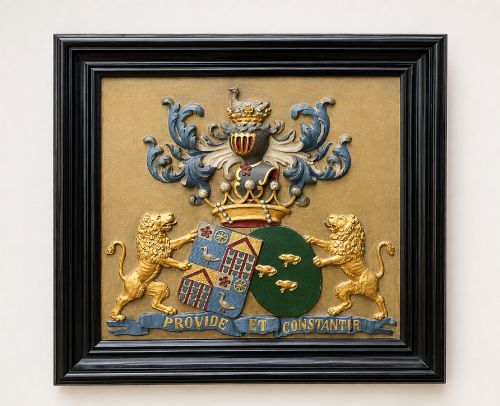
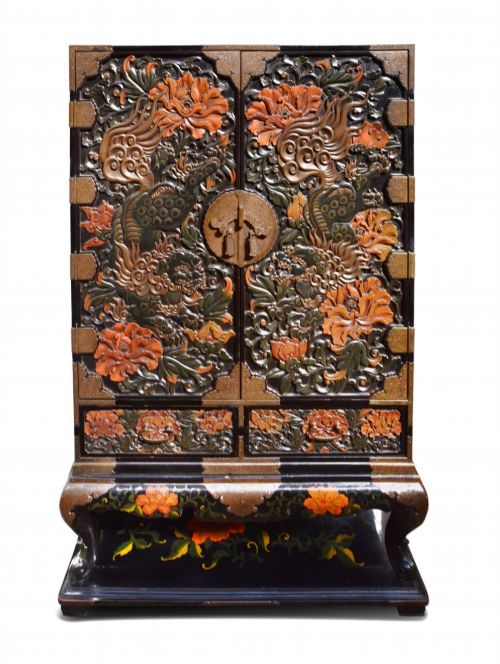
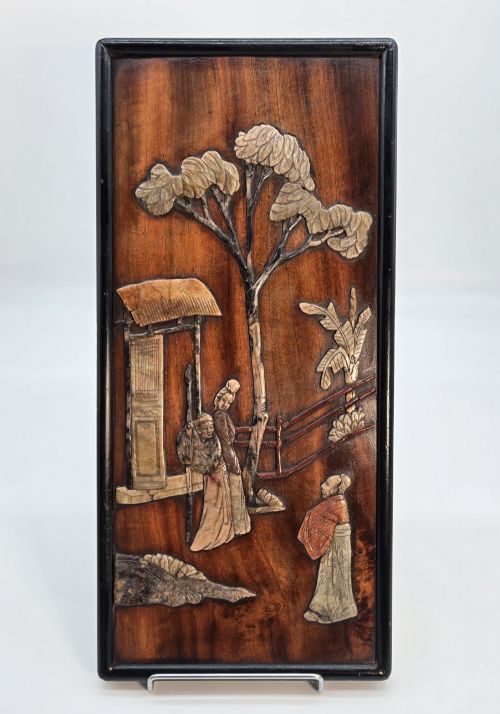
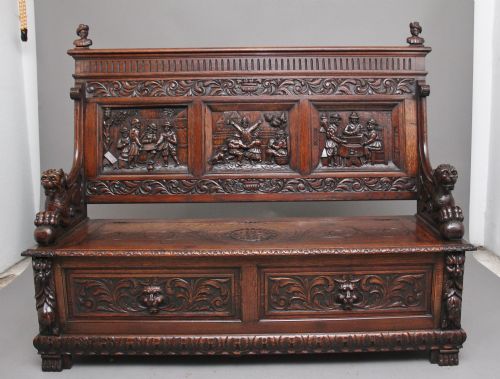
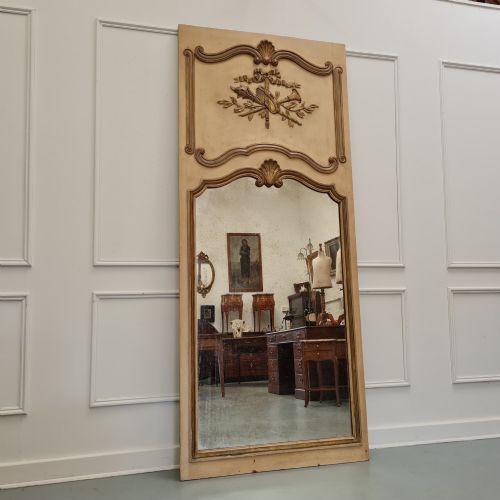
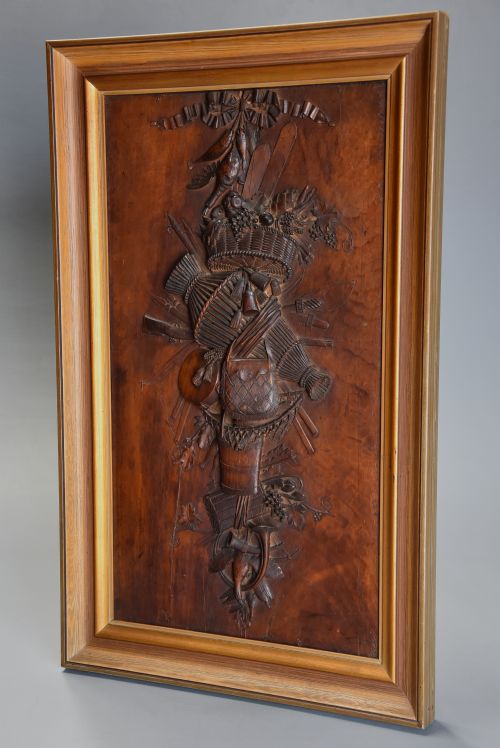
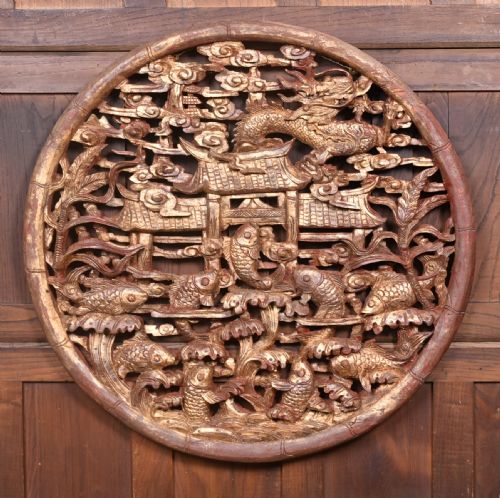
A search for 19th century wood relief centres on carved plaques, architectural panels, and sculptural wall art created across diverse global workshops. Buyers encounter architectural fragments, heraldic marriage plaques, and deep-carved hunting trophies originating from British, continental European, and Asian makers.
The material vocabulary spans native European hardwoods like oak, walnut, and fruitwood alongside exotic imports such as teak and dense Chinese hardwoods. Many of these surfaces retain traces of original polychrome paint, dark ebonisation, or delicate gilding applied over gesso grounds.
Materials and carving techniques
Carvers employed gouges, chisels, and parting tools to shape seasoned timber, working either in low bas-relief or deep undercut high relief. Oak, walnut, and fruitwood provided the dense structural grain necessary for crisp detailing without splintering along natural growth lines.
Surface treatments varied according to regional workshop traditions, ranging from simple wax polishes to layered lacquer, polychrome pigments, and gold leaf. Architectural elements frequently relied on applied gesso details to build up sharp contours before final gilding or painting.
Listings span the entire nineteenth century, incorporating 1800s Georgian survivals, Victorian Gothic revivals, and late Chinese export hardwoods.
Distinctions in craftsmanship
Quality rests entirely in the anatomical accuracy of the carving, the crispness of undercut edges, and the depth of the spatial perspective achieved by the maker. Master carvers managed complex figure groups and naturalistic foliage with confident strokes that avoided the stiff, mechanical repetition seen in lesser workshop output.
The integration of the wooden support structure also separates standard items from exhibition pieces. Superior examples utilise well-seasoned timber panels that resist significant warping, paired with original mounts, framing elements, or polychrome surfaces that remain largely undisturbed by aggressive modern restoration.
Carlhian and Corbiere London·Van Rijckevorsel and Verheijen
The 19th Century Wood Relief Glossary
- Relief
- A sculptural technique where figures or designs project from a flat background plane. Low relief keeps elements shallow, while high relief projects deeply into the viewer space.
- Boiserie
- French wood panelling applied to interior walls, often carved with decorative mouldings, floral motifs, or architectural framing. These panels define elite domestic spaces of the period.
- Black Forest
- A regional carving style originating from the wooded mountain ranges of central Europe, typically depicting naturalistic animals, hunting scenes, and deep foliage in heavy walnut or oak.
- Linenfold
- A style of wood panelling carved to resemble folded vertical strips of fabric or parchment. This motif appears frequently on revival cabinets and architectural panels.
19th Century Wood Relief: Frequently Asked Questions
How do I hang a heavy wood panel securely?
Heavy panels require sturdy French cleats or direct masonry fixings to support the dense weight of seasoned hardwoods like oak or walnut safely.
Ensure the hanging hardware engages directly with the structural frame of the piece rather than relying solely on decorative surface mouldings.
How should I clean antique wood relief?
Dust surfaces gently using a soft, dry natural bristle brush to clear debris from recessed carved areas without abrading the patina.
Avoid liquid cleaners, modern polishes, or excessive moisture, which can soften historic gesso, lift delicate gold leaf, or stain dry timber.
How do I distinguish regional carving styles?
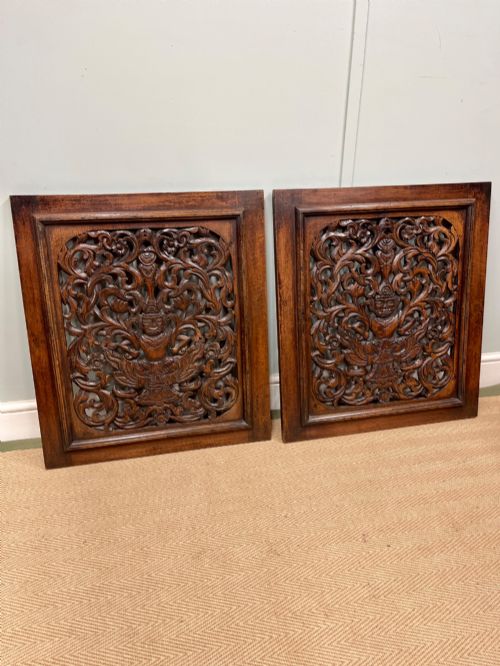
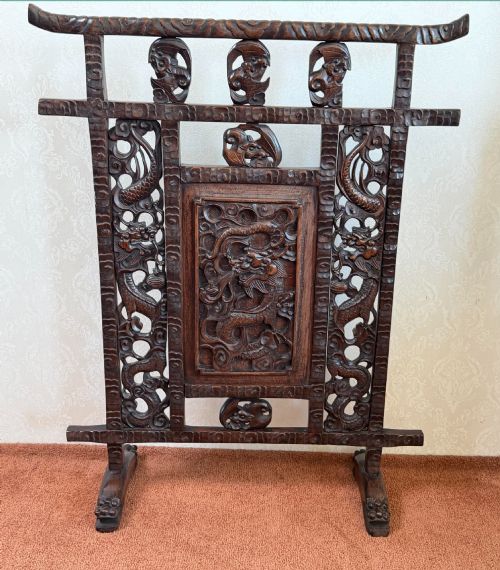
Examine the choice of timber and the specific subject matter, as regional workshops favoured local materials alongside culturally distinct motifs. For instance, Swiss and German makers produced deep naturalistic hunting trophies, while Asian workshops utilised dense exotic hardwoods for floral screens and figural plaques.
Tool marks and framing techniques also offer clear clues to the geographic origin of the workshop.
Does original paint affect the value?
Original polychrome paint, ebonisation, or gilding significantly enhances the historical integrity of a carved panel. Surviving traces show how the maker intended the finished surface to catch the light.
Buyers should inspect surfaces under natural light to confirm that pigments remain authentic rather than representing later decorative overpainting.