


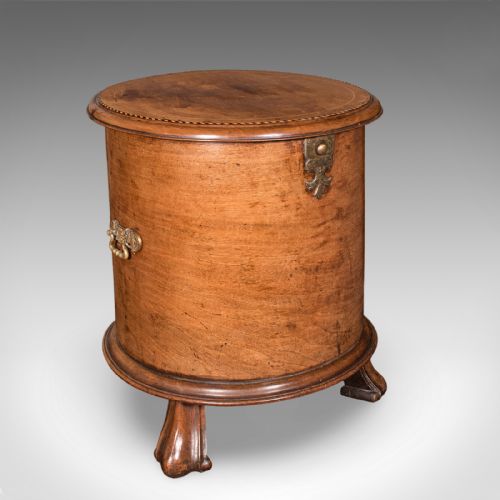


19th Century Wine Box
These 19th century wine box pieces, known as cellarettes and wine coolers, kept bottles secure and chilled.
19th Century Wine Box
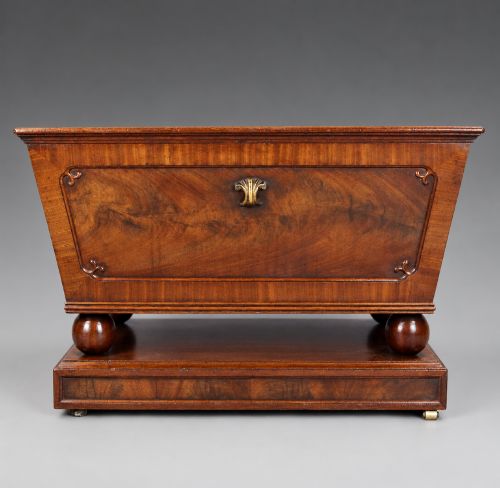
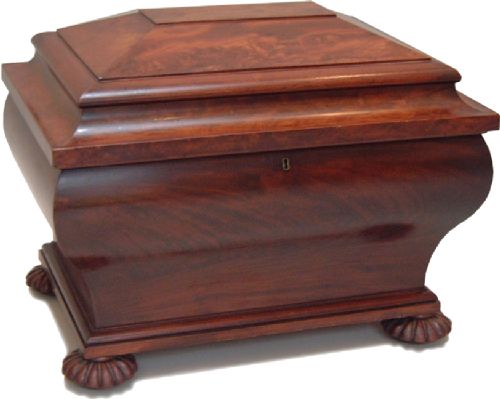
When you search for a 19th century wine box, you encounter heavy timber receptacles designed to hold vintage bottles near the dining table. The most frequent iteration on this page is the mahogany sarcophagus form, often standing upon carved feet.
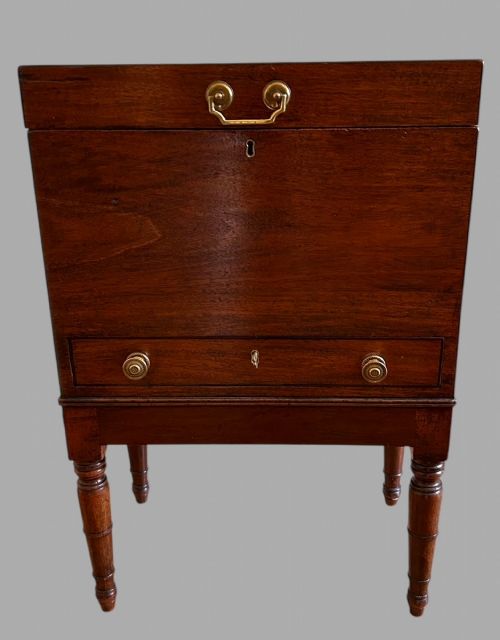
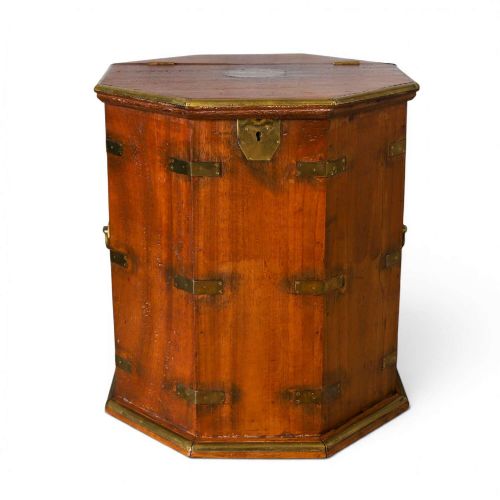
These items originate across the Georgian, Regency, William IV and Victorian eras, taking the shape of low chests, campaign trunks, or grand wine coolers. Cabinetmakers constructed them with internal divisions to cushion glass bottles and sometimes lined the interiors with lead or zinc for ice.
Beyond standard cellarettes, the selection includes jardiniere planters, tole grocery hoppers with bottle holders, and walnut stands from English and French workshops. Each form served the dining room by keeping the household's beverages close at hand.
How they were made
Joiners selected dense timbers, predominantly mahogany and flame mahogany veneer, supplemented by burr elm and walnut for striking grain patterns. They built robust carcases with dovetailed joints to withstand the heavy loads of wet ice and glass.
Craftspersons applied brass handles, lion paw feet, cast ormolu mounts and delicate marquetry inlay to finish the exteriors. Metal liners of lead or zinc were soldered inside the basins to hold melting ice without rotting the surrounding wood.
Listings feature mahogany, flame mahogany veneer, walnut, and burr elm combined with brass, metal, and ormolu mounts.
What varies in quality
The distinction between standard utility items and exceptional pieces rests upon timber selection and sculptural carving. Fine examples display matched flame mahogany veneers and crisp, deep-relief carving on paw feet or sarcophagus edges.
Hardware and internal fittings reveal the hand of skilled workshops. Heavy cast brass carrying handles, intact lead or zinc linings, and working locks with original keys elevate a piece far above simpler everyday containers.
Freemans of Norwich·Gillows of Lancaster and London
The 19th Century Wine Box Glossary
- Cellarette
- A lockable container or box used to store wine bottles in the dining room. They often sat beneath the sideboard.
- Sarcophagus
- A monumental funerary shape with a domed lid that cabinetmakers adopted for grand Regency wine coolers.
- Ormolu
- Gilt bronze mounts applied to furniture for decoration. This technique added metallic contrast to dark mahogany surfaces.
- Flame mahogany
- A decorative wood veneer cut from the fork of the mahogany tree. It creates a distinctive rippled, flamy pattern.
- Campaign chest
- A portable trunk built in sections with recessed brass handles. Officers used them during military travel.
19th Century Wine Box: Frequently Asked Questions
What is a 19th century wine box?
A 19th century wine box is a heavy timber container, commonly called a cellarette or wine cooler, designed to store and chill bottles.
Cabinetmakers built these boxes with internal compartments and lined them with metal to hold ice during formal dinners.
How were cellarettes used?
Servants placed these boxes near the dining table or sideboard to keep bottles accessible without requiring frequent trips to the cellar.
Many featured lead or zinc linings so ice could be packed directly around the glass to chill the wine.
How do I identify a Regency wine box?
Regency pieces frequently display the sarcophagus shape with bold mahogany grain, lion paw feet, and heavy brass ring handles.
They date from the early decades of the nineteenth century and lean toward classical architectural proportions.
Can I use an antique wine cooler today?
These boxes function well as distinctive side tables, storage chests, or plant holders in contemporary rooms.
Their robust timber construction allows them to endure daily domestic use while retaining their historic character.