




19th Century Whatnot Stand
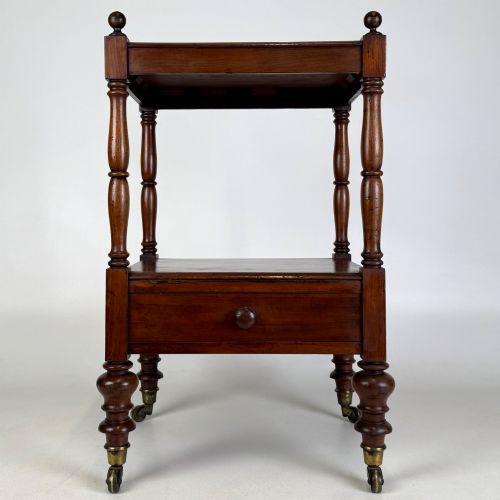
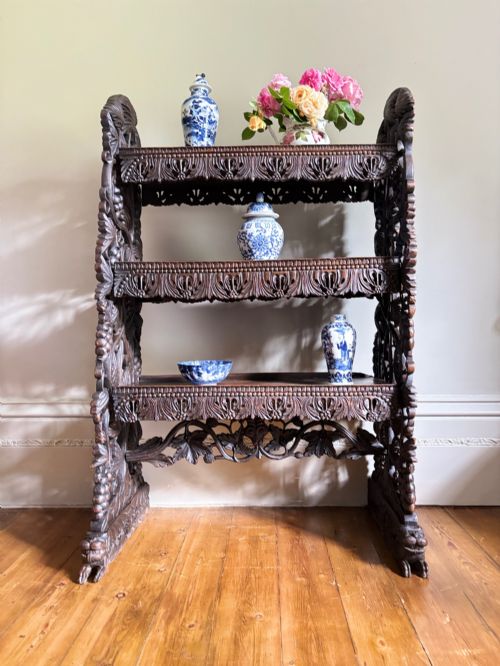
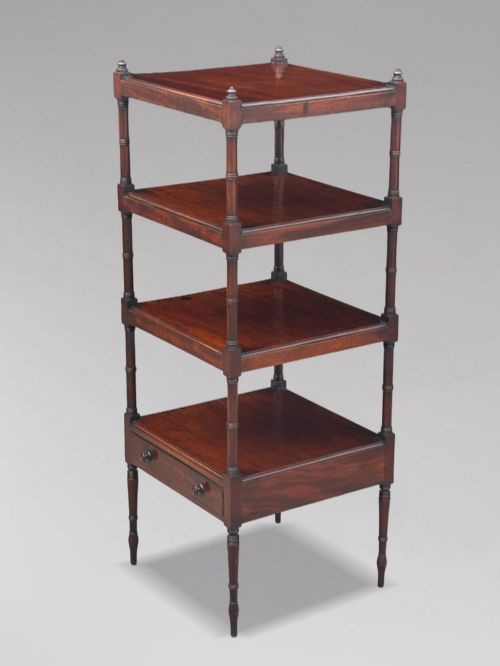
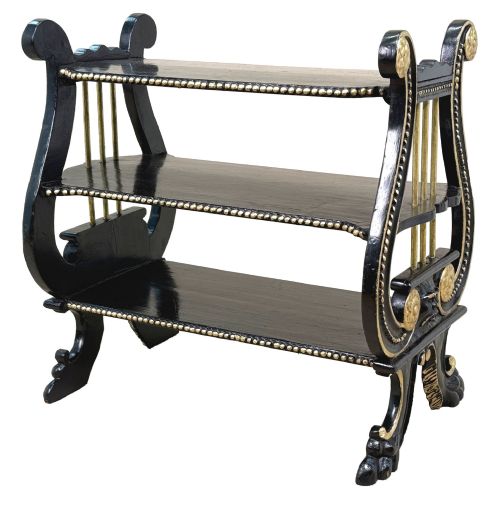
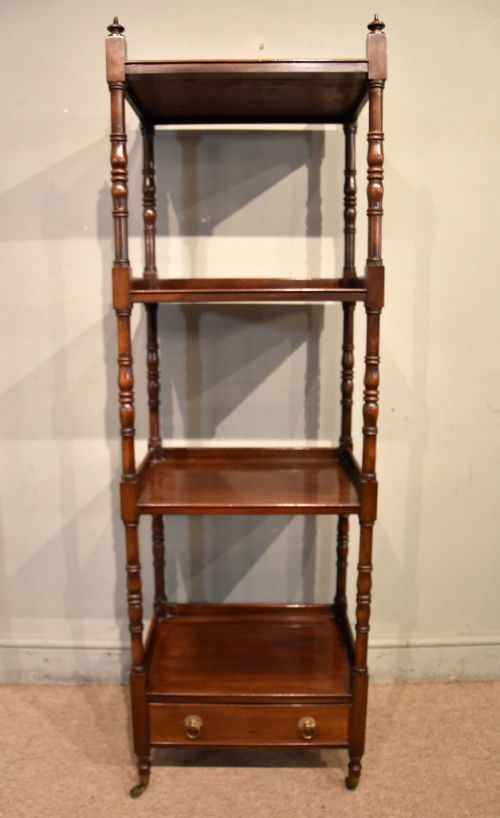
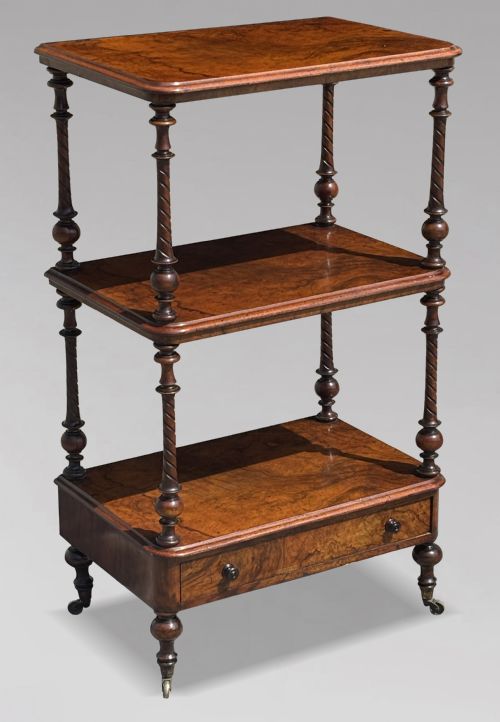
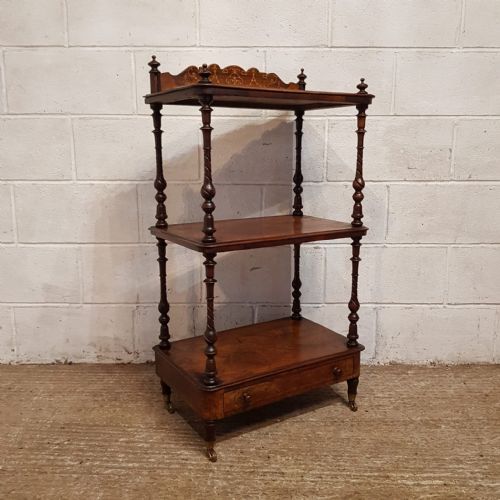
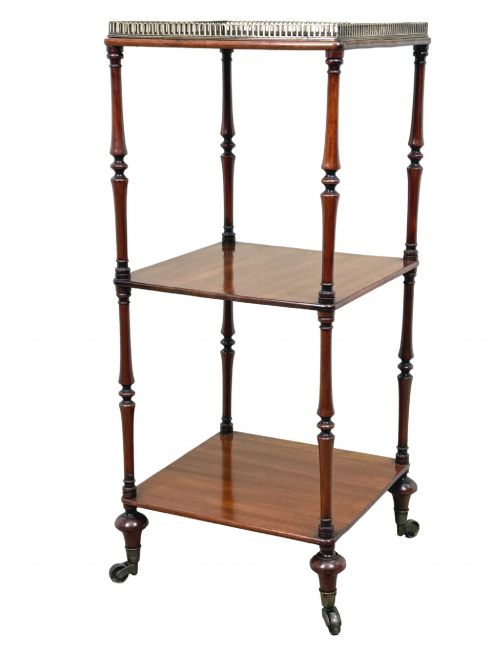
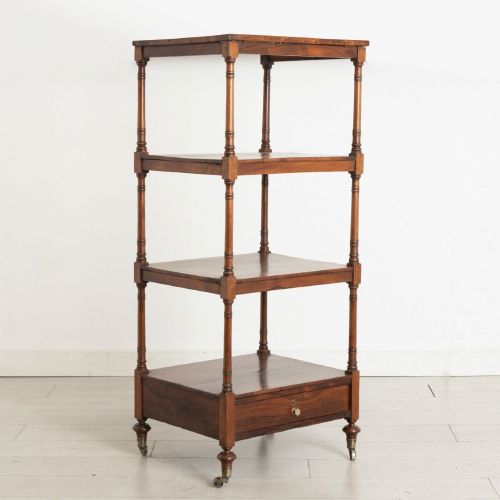
These pieces are a 19th century whatnot stand, multi-tiered display shelves designed to hold books, sheet music or ornaments with elegance.
19th Century Whatnot Stand
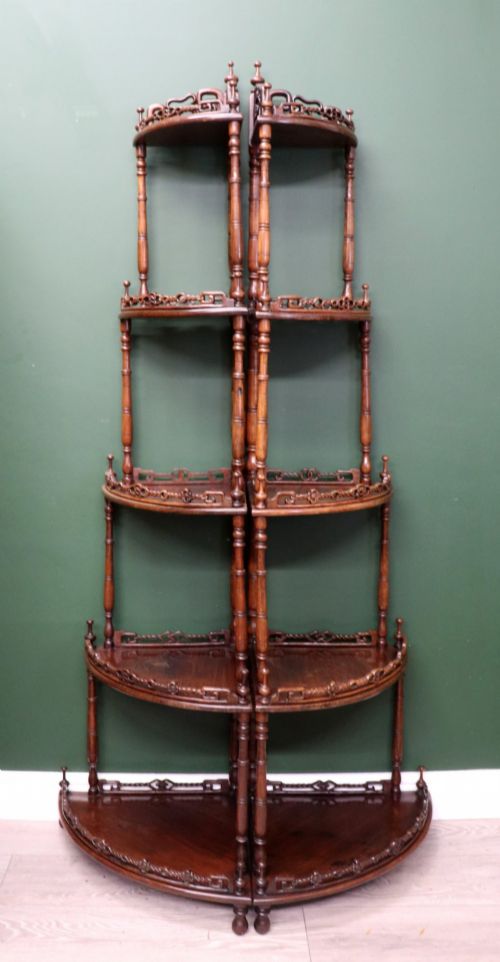
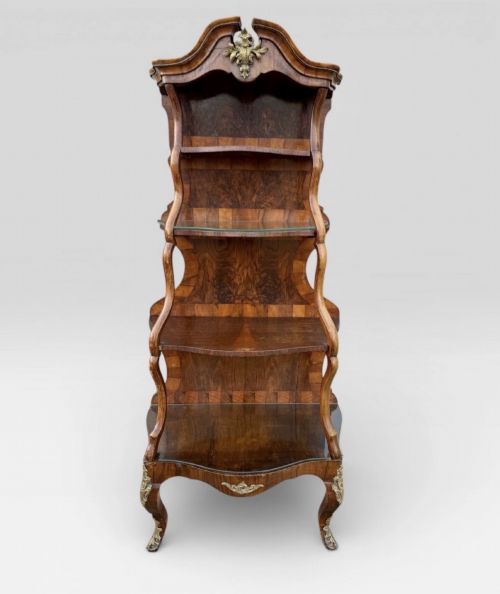
A 19th century whatnot stand represents a multi-tiered shelving unit developed to organise and display small household possessions. The listings here contain a broad variety of formats, from simple four-tier mahogany book shelves to elaborate French étagères and corner units.
The dominant examples encountered on this page date from the Victorian era and the preceding Regency and Georgian periods. Pieces range from straightforward utility stands to hybrid designs incorporating music stands, cellarettes and under-tier drawers.
Forms vary from compact corner shelves and diminutive side tables to tall multi-shelf display stands. Many take the form of open étagères, whilst others include enclosed cabinets or integrated canterbury sections for papers.
How they were made
Cabinet makers built these stands primarily in mahogany, walnut, burr walnut, and rosewood, frequently incorporating exotic timbers like padauk, amboyna and birdseye maple. Ebonised wood with parcel gilding also appears alongside brass mounts and gilt metal details.
Construction relies on slender vertical supports, often turned columns or brass rods, dividing multiple graduated tiers. Detail work includes serpentine moulding, inlaid veneers, and specialised fitted compartments for music, books, or writing implements.
Victorian households needed shelves dedicated entirely to holding their miscellaneous knick-knacks, hence the literal name whatnot.
What varies in quality
The distinction between ordinary and superior pieces rests on the choice of timber and the complexity of the grain figures, particularly in burr walnut and rosewood veneers. Finer workshops invested in superior turning for the uprights, crisper mouldings, and more substantial brass or ceramic hardware.
Proportion and utility also separate the tiers, where clever combinations such as integrated lower cellarettes, drop-down work tops or specialised music racks demonstrate higher ambition in design. The integration of structural stability across multiple open shelves marks out the better examples.
Gillows
The 19th Century Whatnot Stand Glossary
- Étagère
- A piece of furniture consisting of a set of open shelves for displaying ornaments. Originating in France, it serves a similar decorative purpose to the English whatnot.
- Canterbury
- A low stand with divisions, originally used for holding sheet music or loose newspapers. It frequently forms the lower section of a combined whatnot unit.
- Dumb waiter
- A tiered stand or revolving table used for holding food or tableware without the need for servants. Some heavier 19th century utility pieces share this form.
- Cellarette
- A lockable compartment or container built into furniture for storing bottles of wine or spirits. It occasionally integrates into the base of larger stands.
- Padauk
- A heavy, durable tropical timber with a distinct reddish hue. Makers utilised it in imported Anglo-Indian furniture.
19th Century Whatnot Stand: Frequently Asked Questions
What was a whatnot used for?
These tiered stands served as multi-purpose display furniture for books, ceramics, and ornaments in Victorian drawing rooms. They kept small decorative items organised and visible.
Some variations included integrated compartments for sheet music, writing materials, or even bottles, adapting the tier system to specific domestic habits.
How do I identify a Victorian whatnot?
Victorian examples typically feature dark timbers like walnut, rosewood, or mahogany, often decorated with turned columns and scrolled supports. They frequently present four or more open shelves.
Earlier Regency and Georgian pieces tend to show lighter, cleaner lines, whilst later Victorian models incorporate heavier burr walnut veneers and ornate carving.
Where should I place a corner whatnot?
Corner stands fit directly into room angles, making them ideal for utilising dead space in smaller sitting rooms or hallways. They lift visual interest into neglected corners through vertical shelving.
Ensure the wall angles match the piece, and keep heavier display items on the bottom tiers to maintain stability.
What is the difference between an étagère and a whatnot?
The terms largely overlap in 19th-century furniture, though étagère often implies a French influence with lighter, more decorative framing for ornaments. Whatnot is the traditional English descriptor for multi-tiered shelving.
Both types rely on stacked platforms supported by columns, designed primarily to exhibit possessions.