

Antique Standing Shelf Unit
An antique standing shelf unit organises your books and display pieces with timber character spanning the Georgian, Regency, Victorian, and Edwardian periods.
Antique Standing Shelf Unit
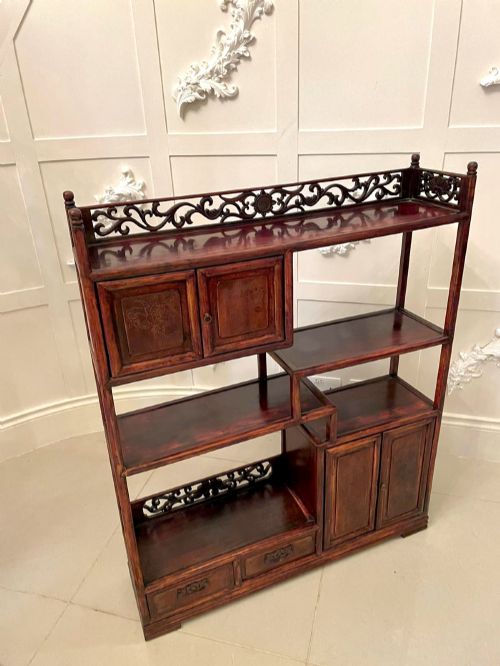
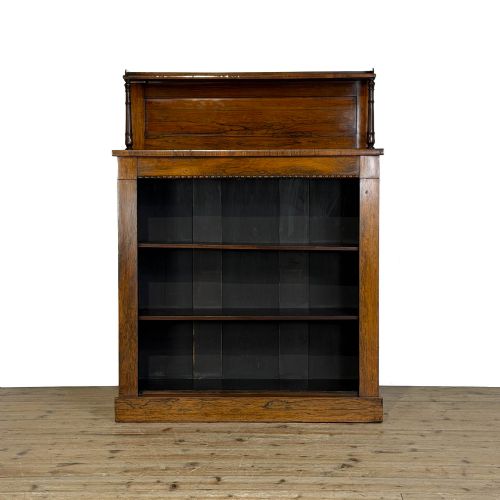
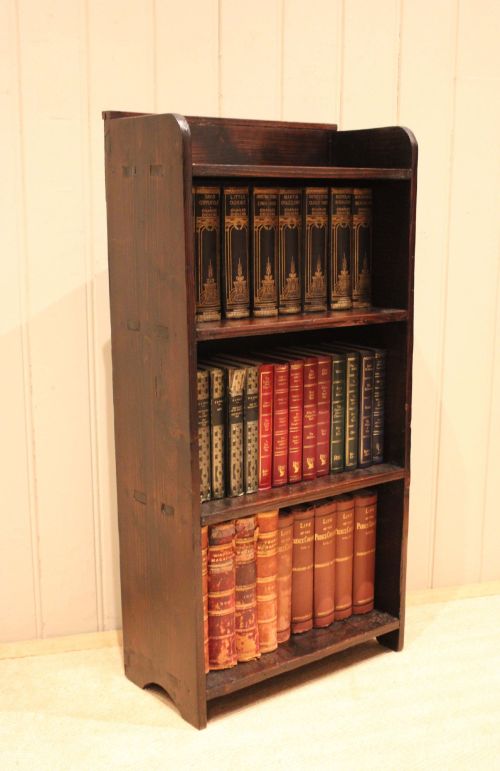
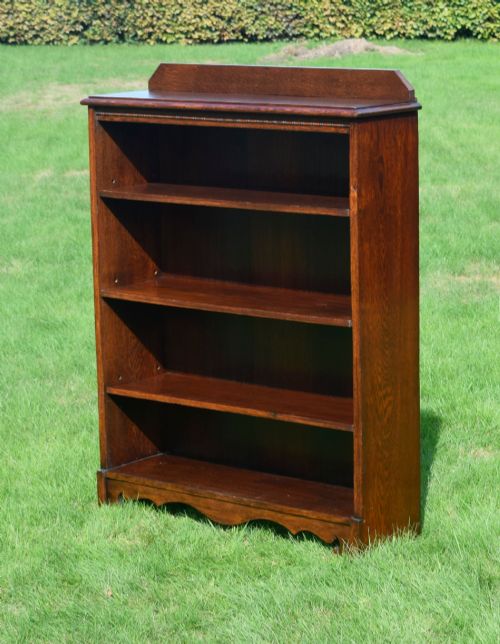
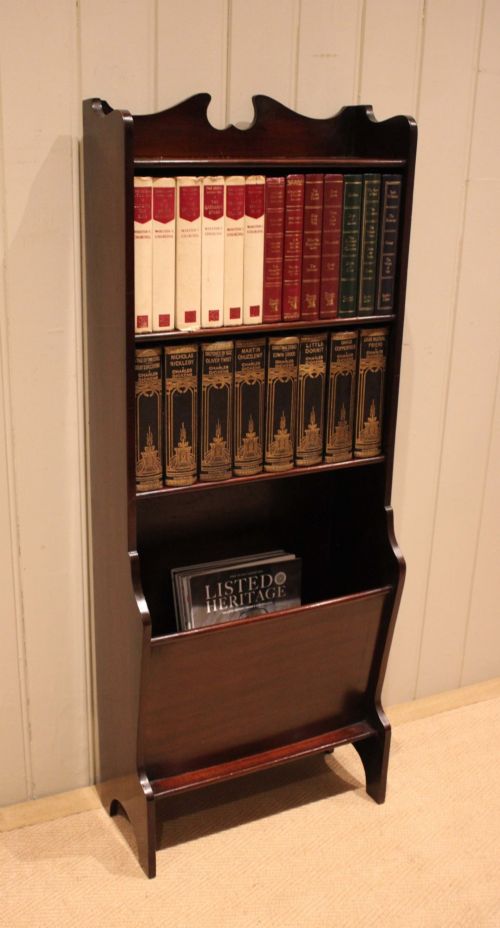
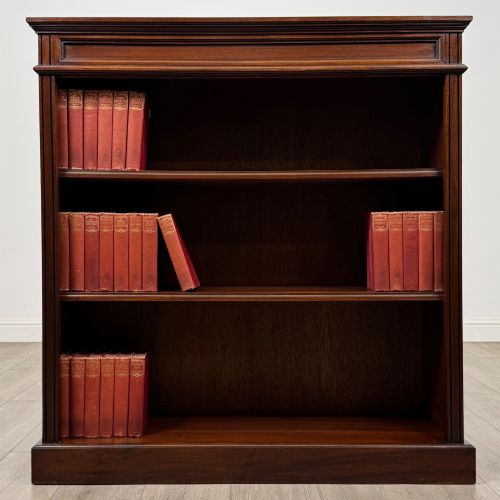
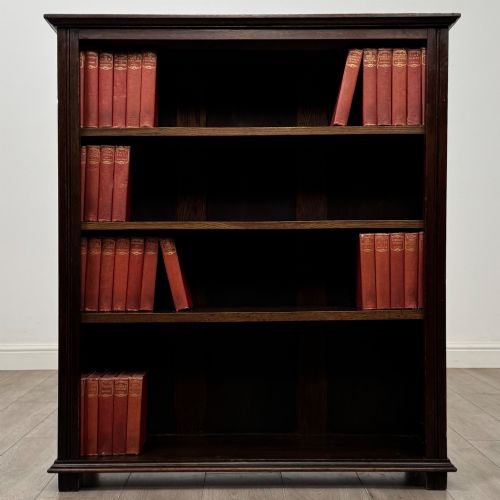
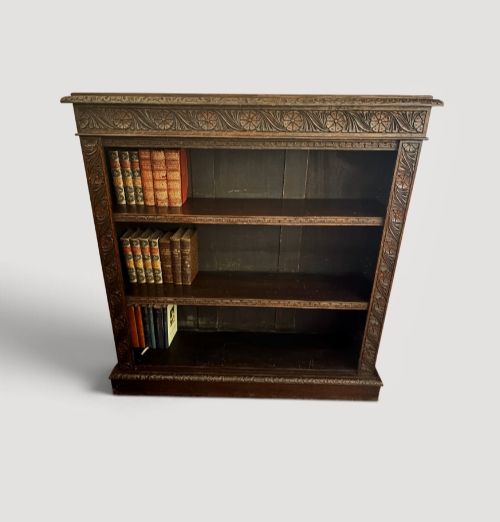
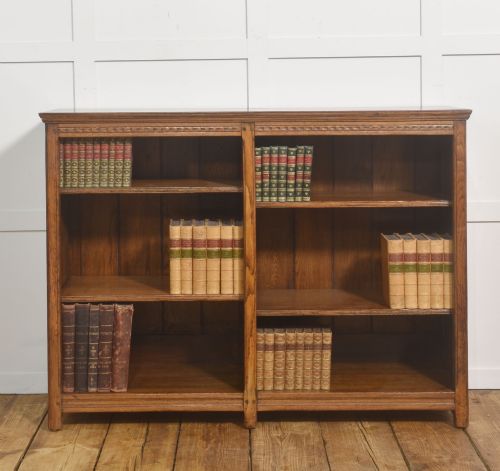
An antique standing shelf unit encompasses open bookcases, whatnots, etageres, and revolving bookcases designed to stand independently against a wall or within a room. You will frequently encounter Victorian and Edwardian examples alongside pieces from the Regency, Georgian, and 1920 periods.
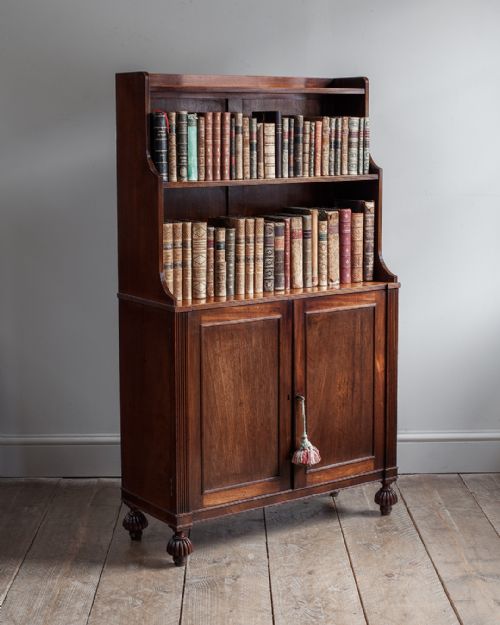
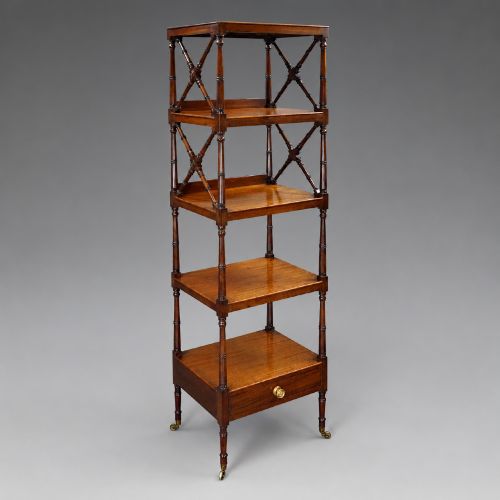
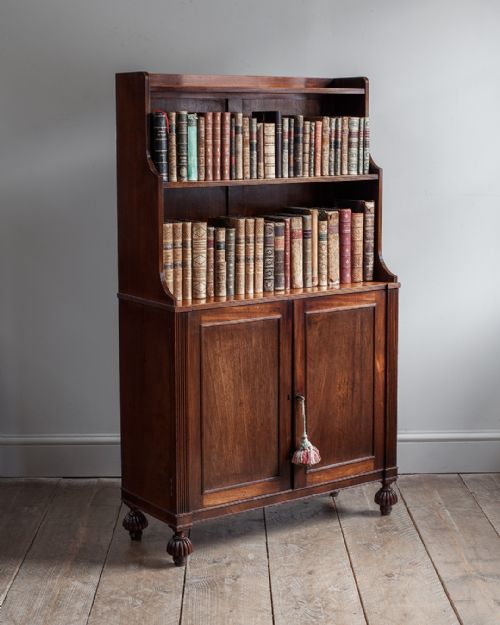
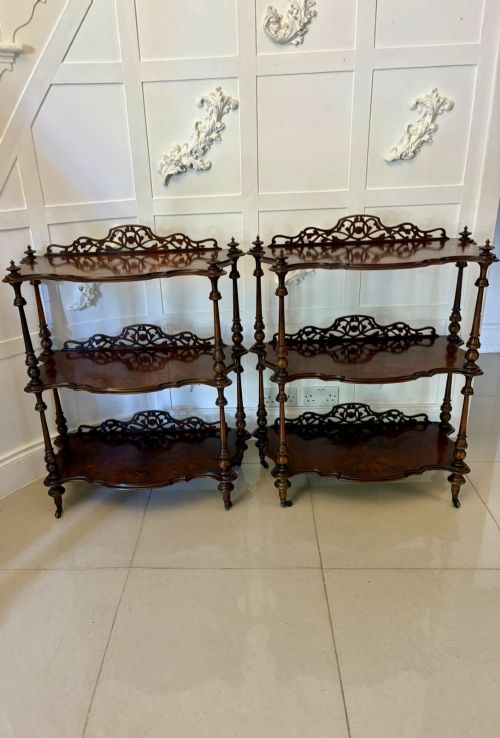
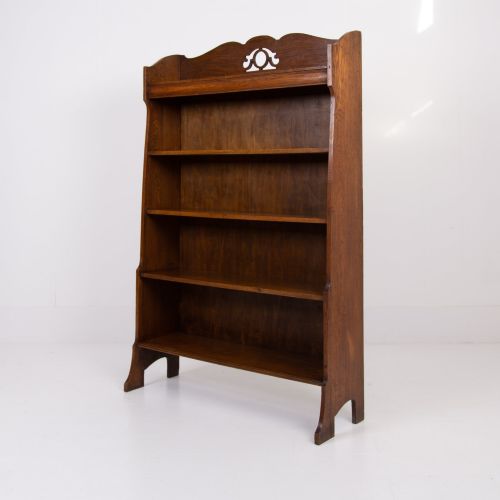
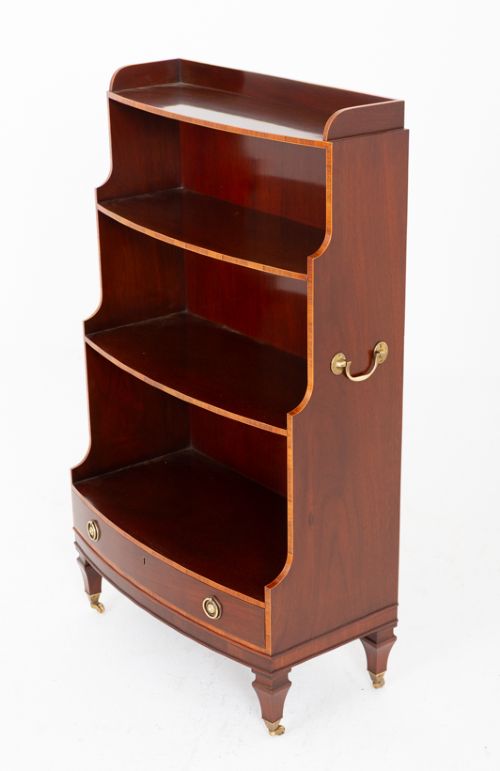
The objects span varied configurations, from slim oak open bookcases and tiered etageres to elaborate burr walnut whatnots and waterfall bookcases fitted with brass castors. These items served specific domestic functions for holding books, magazines, and displaying decorative objects.
Origins and styling range from English oak Arts and Crafts pieces to Anglo-Indian padauk shelves and French library bookcases. Such diversity reflects the shifting tastes of makers working across the nineteenth and early twentieth centuries.
Materials and construction
Cabinetmakers utilised dense timbers such as mahogany, oak, walnut, burr walnut, rosewood, satinwood, and pine to construct these standing units. Artisans often enhanced the visual grain of mahogany and burr walnut through polishing, while deploying pine for secondary structural elements.
Joinery methods incorporated carved details, barley twist supports, turned legs, beaded edges, and inlaid decoration. Functional hardware such as brass castors appeared on larger waterfall bookcase cabinets to ease movement across carpets and floorboards.
Listings feature timbers including mahogany, oak, walnut, burr walnut, rosewood, satinwood, pine, and brass across multiple periods.
Markers of execution
The calibre of a standing shelf unit depends on the selection of timber veneers, such as figured burr walnut or satinwood, and the crispness of carved woodwork or inlaid details. Finer pieces demonstrate careful attention to proportions, particularly in tiered waterfall designs and serpentine shapes.
Structural integrity and hardware integration distinguish standard production from exceptional examples. The presence of adjustable shelves, original brass castors, and robust joinery reveals the original maker's commitment to durability and utility.
Gillows
The Antique Standing Shelf Unit Glossary
- Whatnot
- A movable set of open shelves, typically tiered, designed for displaying small ornaments or books. These pieces became popular during the nineteenth century.
- Étagère
- A piece of furniture consisting of a set of open shelves for displaying ornaments. They often appear in slim, multi-tiered formats.
- Waterfall bookcase
- A standing bookcase featuring cascading graduated shelves that step back from bottom to top. This design emerged during the Regency period.
- Revolving bookcase
- A compact bookcase mounted on a pivoting base that allows access to books from any angle. Edwardian examples often feature inlaid mahogany tops.
- Barley twist
- A type of carved furniture leg or support resembling a twisted rope. This decorative turning technique appears frequently on Victorian oak pieces.
Antique Standing Shelf Unit: Frequently Asked Questions
How were waterfall bookcases used?
Waterfall bookcases were utilised in domestic interiors for holding prized volumes and decorative ornaments. Their graduated shelves allowed smaller books or items to sit at the top.
Cabinetmakers designed them to stand against walls or function as compact display furniture in parlours and studies.
How do I date an oak bookcase?
Dating an oak bookcase involves examining the construction techniques, hardware, and stylistic details present in the piece. Arts and Crafts items from 1910 often display plain surfaces and simple joinery.
Earlier Victorian versions frequently incorporate carved oak elements, barley twist supports, or beaded edges that reflect nineteenth-century design trends.
What woods were used for whatnots?
Makers constructed whatnots using a variety of hardwoods including mahogany, burr walnut, rosewood, and satinwood. Figured veneers were selected to highlight the natural grain.
Some pieces also incorporated brass castors on the feet to assist with moving the tiered shelves across heavy carpets.