






19th Century Walnut Chiffonier
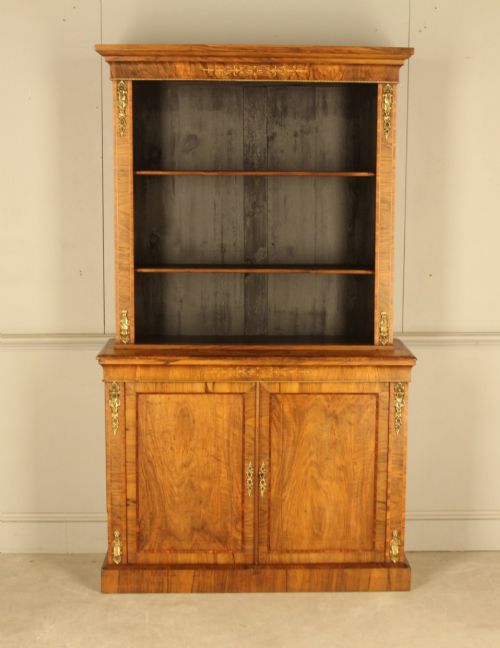
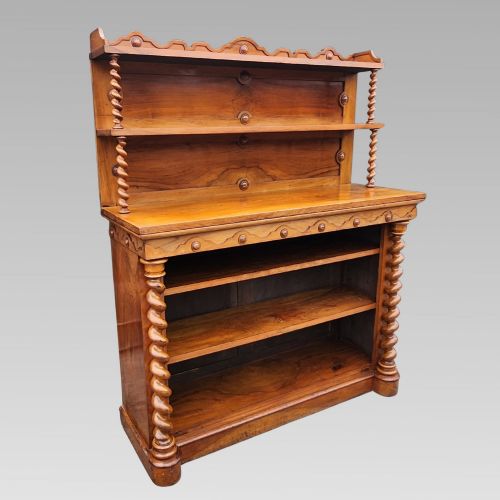
A 19th century walnut chiffonier brings rich timber grain and useful low storage to a room, combining display and utility with characteristic Victorian presence.
19th Century Walnut Chiffonier
When you search for a 19th century walnut chiffonier, you encounter a refined class of low nineteenth-century storage furniture that evolved alongside related sideboards, credenzas, and side cabinets during the Victorian era. These pieces served primarily to store dining silver, linens, or books while providing a flat surface for display.
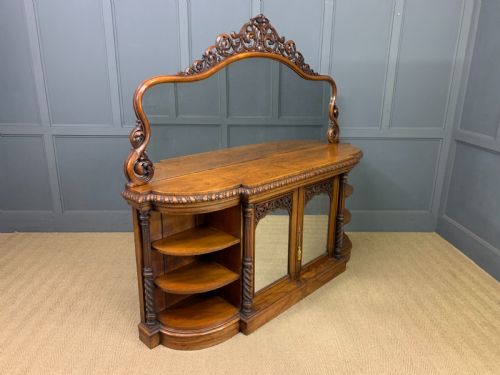
The selections available range from simple two-door side cabinets to elaborate mirror-backed designs incorporating glass doors, open shelves, and marble tops. Most examples date from the Victorian period, spanning decades from eighteen-fifty through to eighteen-eighty, with occasional French Empire and French Restoration imports appearing in the mix.
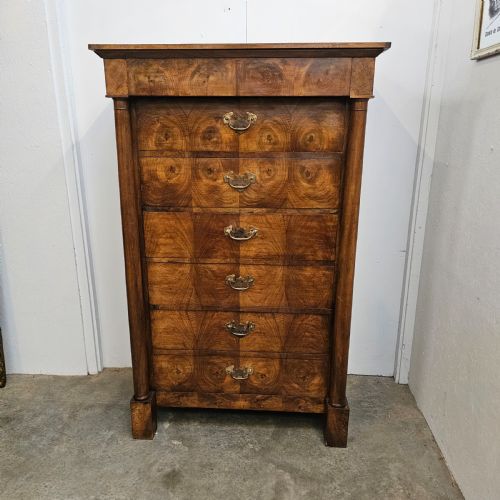
Formats vary considerably across the surviving inventory, taking in chiffoniers with superstructure backs, glazed credenzas, and tall chests or secretaries that utilise the same prized timber. Buyers typically select these items to anchor a dining room or drawing room wall with period character and functional surface space.
Quality factors in walnut chiffoniers
The choice of timber grain dictates much of the visual appeal, with highly figured burr walnut commanding particular attention for its complex patterns. Superior pieces display careful bookmatching across the entire front elevation rather than random veneer patching.
Integration of secondary materials such as substantial marble slabs, gilt or ormolu mounts, and original mirror glass elevates certain examples above standard utility furniture. Construction depth, such as heavy panel timber and tight door joinery, separates exceptional workshop production from simpler output.
Secretaries and whatnot attachments occasionally snuck into the lineup, proving that nineteenth-century cabinetmakers loved adding unexpected writing flaps and extra shelves to anything that stood still.
The 19th Century Walnut Chiffonier Glossary
- Burr walnut
- A prized timber harvested from tree growths that produces intricate, swirling grain patterns. Cabinetmakers sliced this wood into thin veneers for decorative surfaces.
- Credenza
- A low cabinet, frequently enclosed by glass or curved doors, used for display and storage. Nineteenth-century versions often featured elaborate marquetry and ormolu mounts.
- Ormolu
- Gilded bronze ornamentation applied to furniture surfaces for decorative contrast. It added metallic highlights to dark walnut timbers.
- Bookmatching
- A veneer technique where adjacent slices of wood are opened like a book to mirror each other. This created symmetrical, abstract patterns on cabinet doors.
- Ebonised wood
- Timber treated with a dark finish to resemble ebony. It was commonly used for contrasting mouldings and structural accents on Victorian pieces.
19th Century Walnut Chiffonier: Frequently Asked Questions
What is a 19th century walnut chiffonier used for?
These pieces function primarily as low side storage units in dining rooms or living spaces. They provide enclosed shelving for tableware or linens while offering a sturdy top surface for lamps and decorative objects.
Many variants include upper mirror backs or display shelves designed to showcase porcelain and small ornaments.
How do I date a Victorian walnut chiffonier?
Dating relies on observing construction methods, hardware styles, and stylistic markers recorded across decades like eighteen-fifty or eighteen-eighty. Earlier Victorian pieces often favour simpler architectural lines, whereas later examples incorporate heavier carving and mirror backs.
Material choices, such as the introduction of specific ormolu mounts or marble tops, also point to particular phases of the nineteenth century.
Are walnut chiffoniers and credenzas the same thing?
While both belong to the family of nineteenth-century low storage furniture, they differ slightly in form and origin. Chiffoniers traditionally feature a lower cabinet base sometimes surmounted by a small shelf back, whereas credenzas frequently display curved glass side cabinets and symmetrical door arrangements.
Both types utilise walnut and burr walnut veneers extensively across the Victorian period.
How do I care for antique walnut furniture?
Maintain the timber by keeping it away from direct heat sources and sudden humidity shifts that can crack old veneers. Regular dusting with a soft, dry cloth preserves the finish without requiring heavy polishes.
Protect marble tops from acidic spills and use felt pads beneath objects placed on the wooden surfaces.