





19th Century Walnut Bed
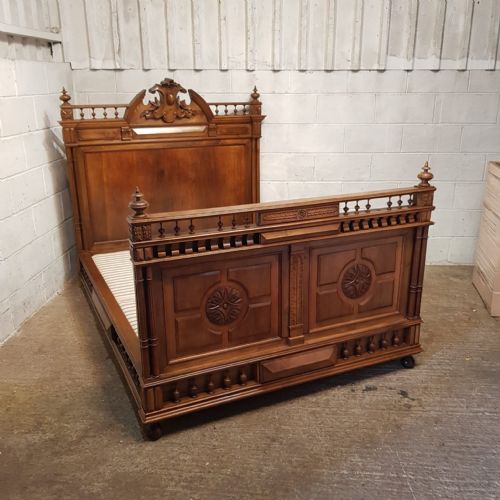
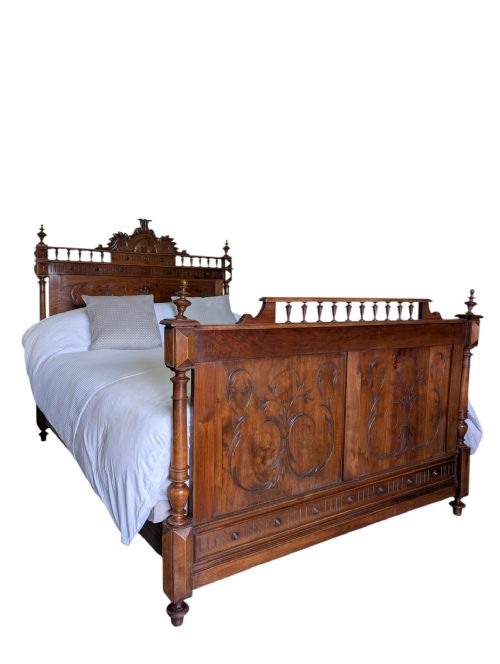
A 19th century walnut bed brings rich timber grain and sculptural French or Victorian carving into a bedroom.
19th Century Walnut Bed
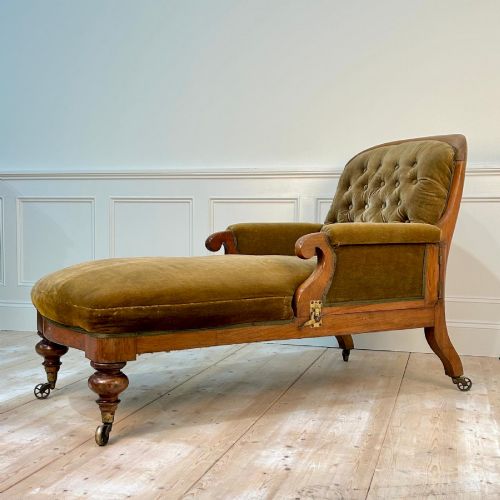
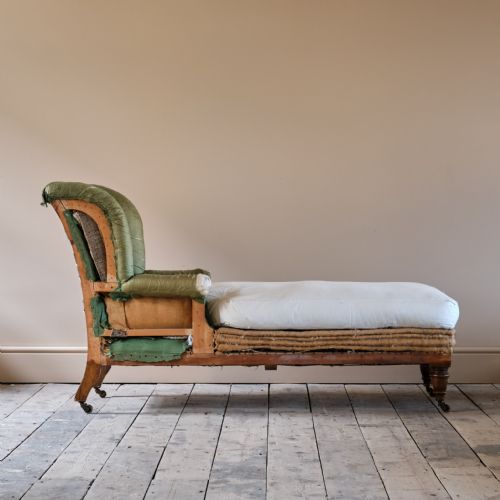
A 19th century walnut bed encompasses substantial French bedsteads, Victorian single frames, and low daybeds designed for repose. Buyers examining this page encounter large king and emperor sizes alongside compact single dimensions.
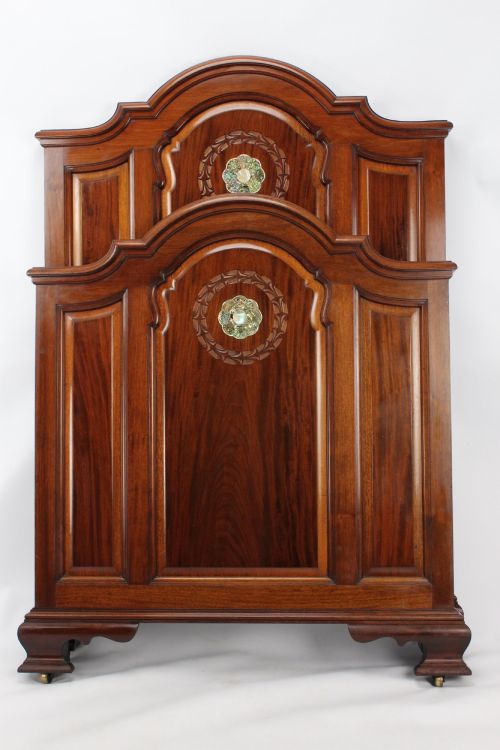
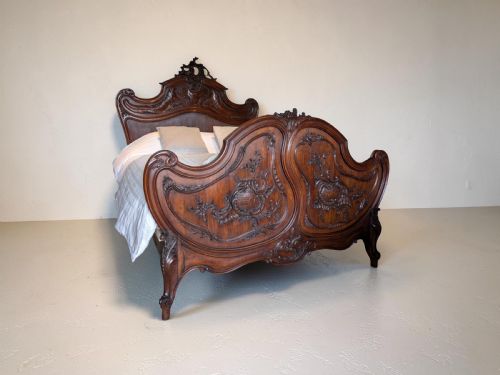
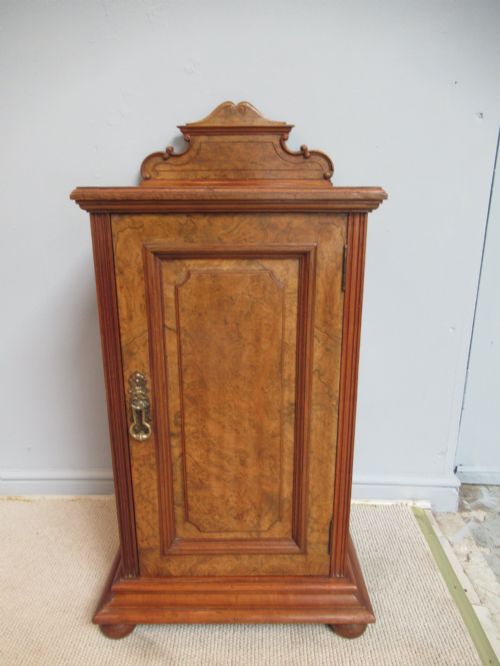
The dominant forms are French carved walnut bedsteads featuring elaborate styling alongside British Victorian pieces incorporating mother of pearl and abalone inlay. Bedside cabinets and window seats in burr walnut frequently accompany the primary bed frames.
Origins span across Victorian workshops and continental ateliers, drawing on aesthetic movements from Louis XVI and Empire revivals to Henri II styles. These pieces demonstrate the varied domestic architecture of the eighteen hundreds and early nineteen hundreds.
Materials and construction
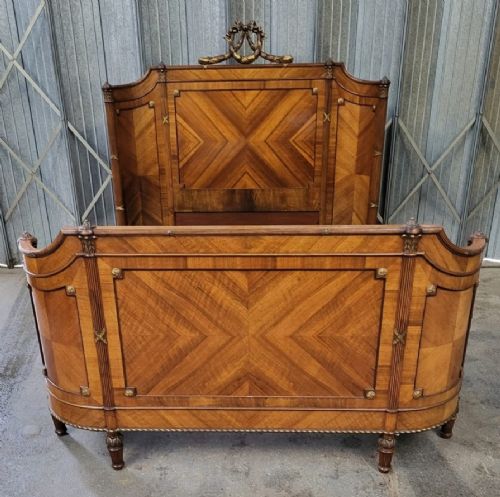
Makers utilised solid walnut and decorative burr walnut veneers, often laid as quarter veneers to accentuate complex grain patterns. Structural elements integrate secondary timbers whilst visible surfaces showcase rich natural figuring.
Carved details define the French and Victorian output, employing hand-chiselled foliage and scrollwork across headboards and footboards. Inlay work incorporates mother of pearl and abalone, while mounts in brass and ormolu accent specific frames.
Hardware and joinery reflect nineteenth-century cabinet making traditions, securing large bedsteads designed for dismantling and transport. Fabric upholstery appears on daybeds and sofa couches alongside wooden slats.
19th Century Walnut Bed Retail Price Guide 2026
Typical asking prices for 19th century walnut bed among the pieces listed under this phrase on Sellingantiques today, from the lower quarter to the upper quarter. They describe what is for sale here now, not the wider market.
Listings feature walnut, burr walnut, brass, fabric, ormolu, mother of pearl, and abalone across Victorian and French periods.
Indicators of quality
Quality rests upon the selection of timber, distinguishing plain walnut boards from highly figured burr walnut and symmetrical quarter veneering. The depth and crispness of hand carving across French and Victorian styles further separate standard production from superior work.
The integration of decorative elements such as mother of pearl and ormolu mounts dictates the refinement of a piece. Structural integrity in large king and emperor size frames relies on robust timber density and precise joinery.
The 19th Century Walnut Bed Glossary
- Burr walnut
- A wood figure featuring swirling knots and distorted growth patterns harvested from tree burls. This material provides highly decorative veneer panels on headboards and bedside cabinets.
- Quarter veneered
- A method where four consecutive slices of veneer are matched symmetrically to create a patterned surface. This technique appears on French bedstead panels from the nineteenth century.
- Daybed
- A long seating item combining sofa and bed functions for daytime resting. Examples span from Regency couch styles to French window seats.
- Ormolu
- Gilded bronze ornamentation applied to furniture mounts and decorative accents. This material highlights neoclassical and empire styling on continental bed frames.
- Half tester
- A bed type featuring a partial canopy extending from the headboard over the pillow area. Victorian versions incorporate burr walnut construction.
19th Century Walnut Bed: Frequently Asked Questions
What sizes are available?
The selection includes single beds, double frames, king sizes, and large emperor dimensions suited for modern mattresses.
Daybeds and long single formats provide alternative proportions for smaller rooms or guest spaces.
How do I identify French styles?
French pieces often display pronounced relief carving, arched headboards, and stylistic references to Louis XVI, Rococo, or Empire designs.
Quarter veneered panels and golden walnut finishes are also characteristic of continental workshops from this era.
What is burr walnut?
Burr walnut is taken from the growth growths on walnut trees, producing a dense cluster of swirling grain patterns.
Cabinet makers used these figured veneers on prominent surfaces like bed panels and bedside cabinets to create visual contrast.
Do these beds fit modern mattresses?
Many nineteenth-century frames accommodate standard modern dimensions, though internal rails occasionally require adaptation by a specialist.
King and emperor size listings offer generous proportions that align well with contemporary sizing requirements.
Are matching bedside cabinets available?
The inventory includes bedside cabinets executed in Victorian burr walnut, matching the materials of the main sleeping furniture.
These complementary pieces share the timber tones and nineteenth-century dating of the associated bed frames.