






19th Century Vernis Martin Cabinet
These pieces, found in a 19th century vernis martin cabinet search, combine painted panels with fine timber and gilt mounts to bring eighteenth-century French glamour into a room.
19th Century Vernis Martin Cabinet
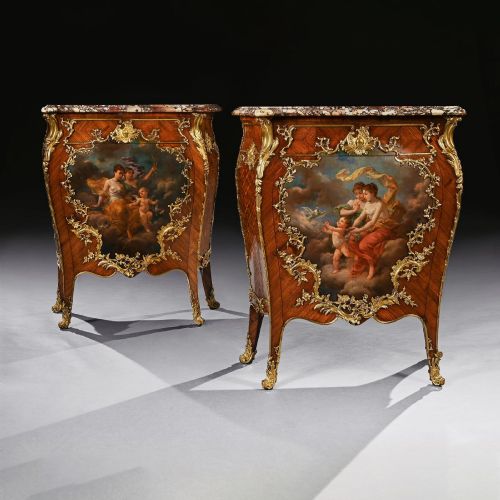
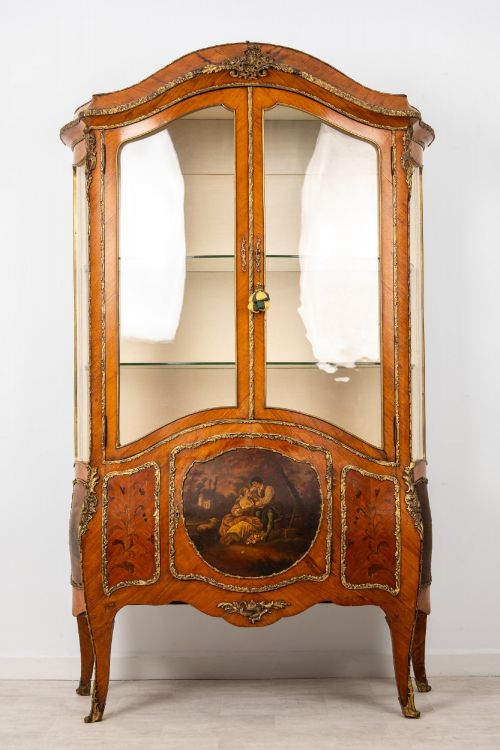
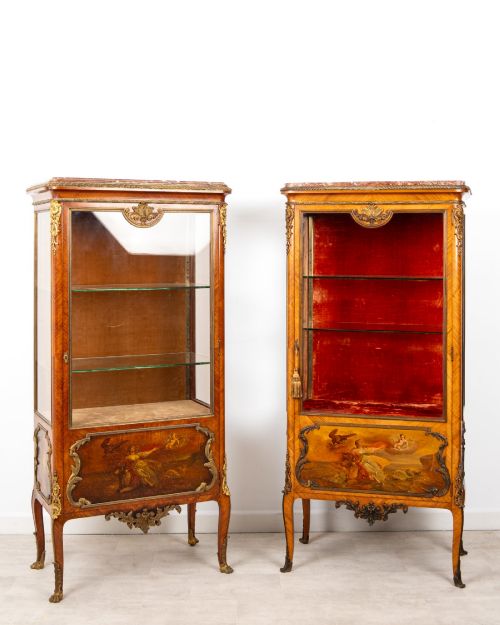
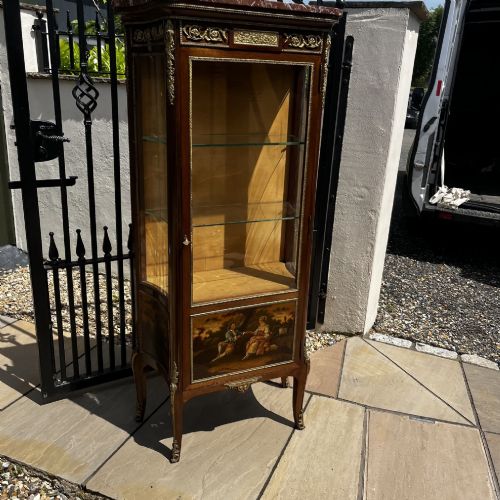
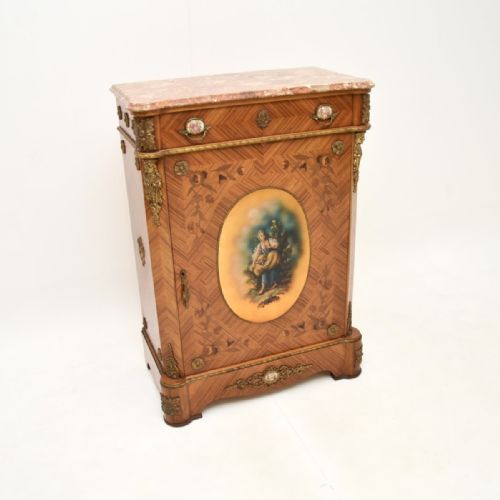
A 19th century vernis martin cabinet is typically a French revival display piece designed to showcase collections behind glass while exhibiting decorative painted panels on its lower doors or sides. The form encompasses vitrines, commodes, secretaries, and side cabinets originating mostly from the nineteenth century, drawing heavily on Louis XV and Louis XVI styles.
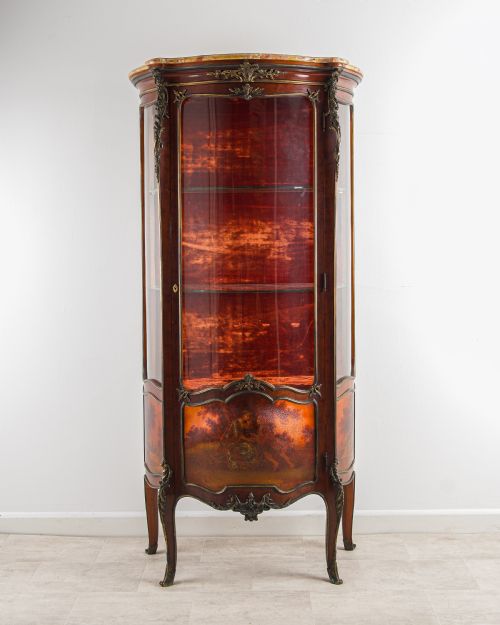
The version most commonly met on this page is the freestanding kingwood vitrine with curved glass, marble tops, and prominent ormolu mounts framing the painted scenes. These cabinets range from tall display pieces to smaller petit commodes and bureau cabinets featuring characteristic serpentine or bombe shapes.
How they were made
Maker workshops constructed these cabinets using hardwoods such as kingwood, mahogany, and rosewood as a carcass for intricate painted panels finished in the manner of the Martin brothers' lacquer technique. Craftsmen mounted cast ormolu and gilt bronze details around the edges, legs, and glass panels to accentuate the curvaceous rococo forms.
Surface decoration relies on painted pastoral scenes and figures applied beneath clear varnishes on wood or metallic grounds. Marble slabs frequently top the commodes and vitrines, fitted precisely to the shaped wooden frames.
19th Century Vernis Martin Cabinet Retail Price Guide 2026
Typical asking prices for 19th century vernis martin cabinet among the pieces listed under this phrase on Sellingantiques today, from the lower quarter to the upper quarter. They describe what is for sale here now, not the wider market.
Listings feature nineteenth-century dates spanning from 1870 through 1920, predominantly representing French revival cabinet styles.
What varies in quality
Quality separates along the crispness of the gilt bronze or ormolu mounts and the artistic execution of the painted panels. Superior examples display finely rendered figures on the lacquer work alongside heavy, meticulously chased bronze mounts rather than simpler cast fittings.
The choice of underlying timber and the precision of the cabinetwork define the upper tier of pieces. Selected kingwood veneers, harmonious marble tops, and signed elements elevate certain cabinets significantly above standard production pieces.
François Linke·Befort Jeune for Mathieu Befort·H.Martin·Angela Kaufman
The 19th Century Vernis Martin Cabinet Glossary
- Vernis Martin
- A type of simulated Japanese lacquer developed in eighteenth-century France using copal varnish and paint, widely imitated in nineteenth-century revival furniture. It provides a glossy, translucent finish over decorative figural scenes.
- Ormolu
- Gilded bronze applied as decorative mounts, feet, and edge trim on furniture. The technique involves treating cast brass or bronze with an amalgam of gold.
- Vitrine
- A glass-fronted display cabinet intended for the exhibition of porcelain, silver, and small curiosities. These pieces often feature glass side panels to maximise light entry.
- Kingwood
- A dense, richly figured Brazilian timber utilised extensively for veneering fine French revival furniture. Its contrasting dark and golden brown stripes lend visual depth to serpentine surfaces.
- Bombe
- A swelling, outward-curving contour found on the front and sides of commodes and cabinets. This undulating shape requires advanced woodworking skill to veneer and finish successfully.
19th Century Vernis Martin Cabinet: Frequently Asked Questions
What is a Vernis Martin cabinet?
A Vernis Martin cabinet is a nineteenth-century French furniture piece decorated with specialised translucent painted lacquer panels, typically built in revival styles.
These cabinets often take the form of vitrines or commodes incorporating glass, marble, and gilt bronze mounts.
Where were these cabinets made?
The pieces listed originate predominantly from nineteenth-century French workshops and maker ateliers specialising in revival furniture.
They reflect the sustained popularity of Louis XV and Louis XVI decorative arts during the Victorian era.
How do I style a vitrine cabinet?
A vitrine cabinet serves as a focal point in a drawing room or dining space, designed to house porcelain, glassware, and small collections.
The glass panels and internal shelving allow items to be viewed clearly from multiple angles within the room.
How do I distinguish Louis XV and Louis XVI styles?
Louis XV style furniture relies on asymmetrical curves, serpentine shapes, and exuberant rococo ormolu mounts. Louis XVI style introduces straighter lines, neoclassical symmetry, and more restrained geometric detailing.
Both aesthetics frequently utilise Vernis Martin panels and kingwood veneers across nineteenth-century cabinet production.