
19th Century Upholstered Couch
A 19th century upholstered couch brings nineteenth-century comfort and craftsmanship into a modern interior.
19th Century Upholstered Couch
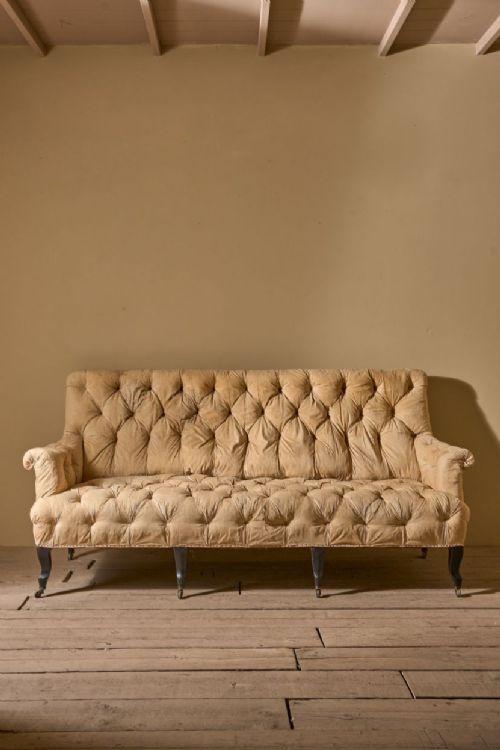
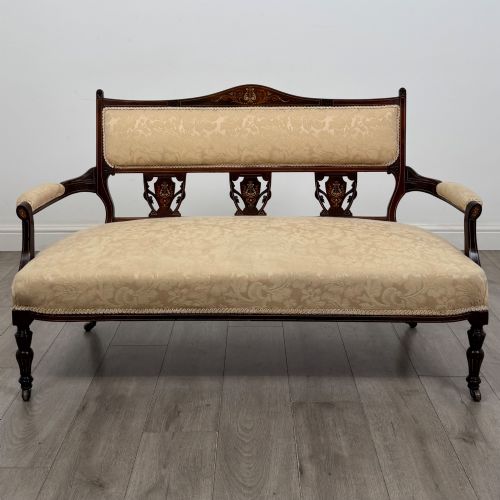
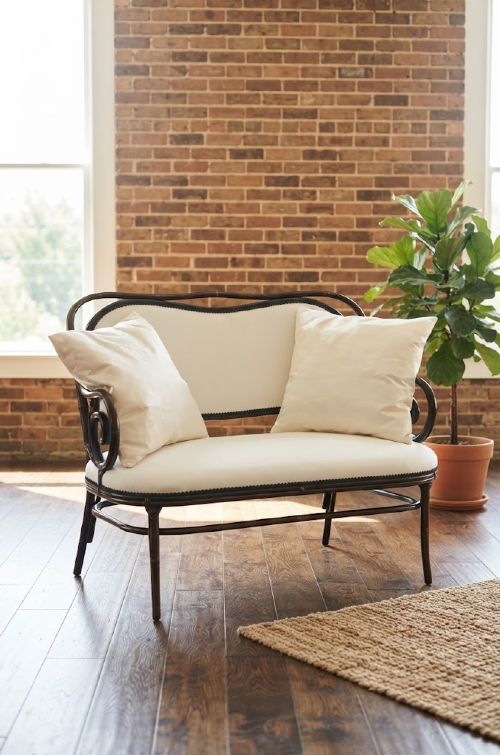
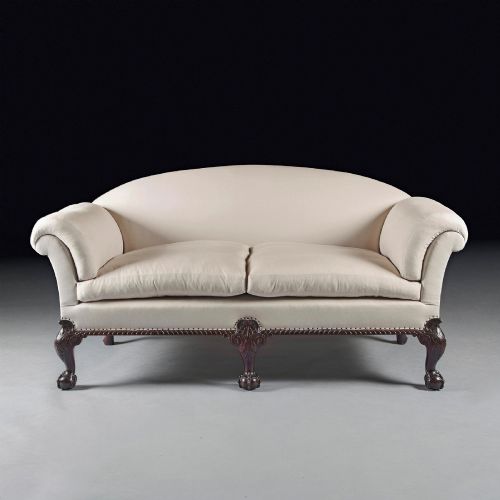
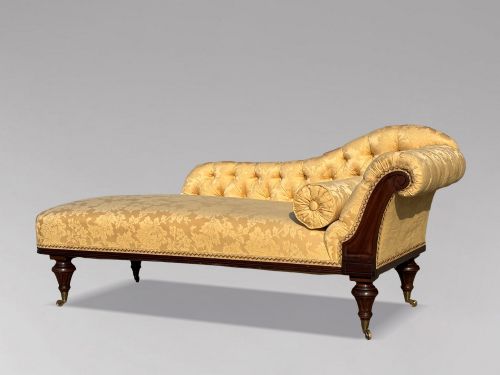
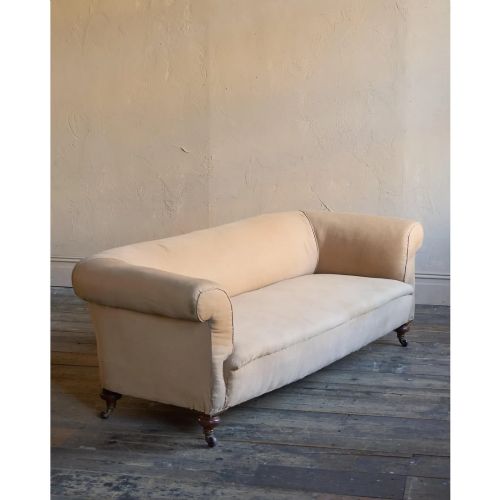
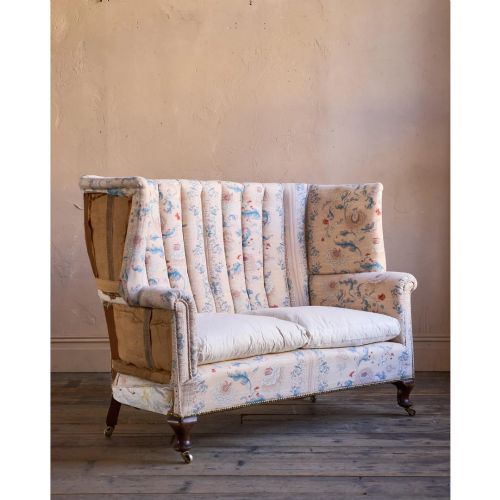
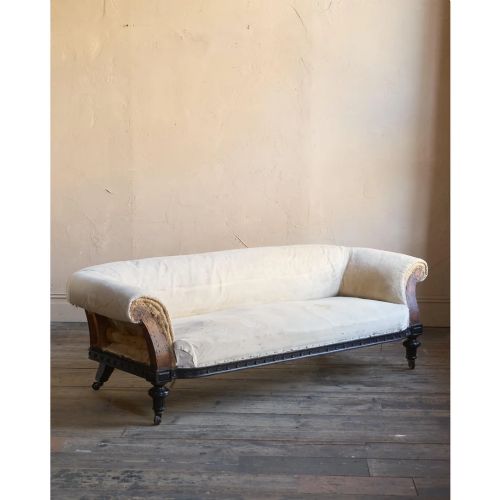
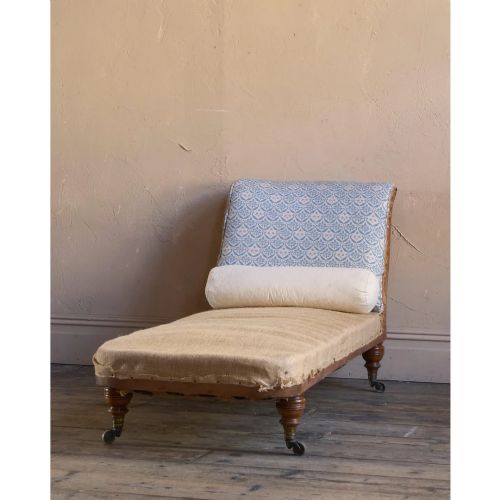
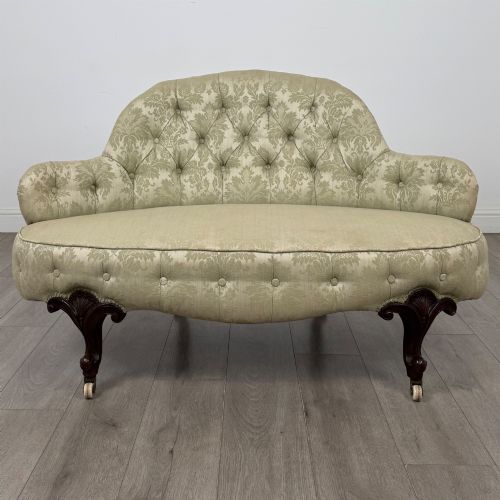
When searching for a 19th century upholstered couch, buyers encounter a diverse selection of seating forms spanning the Victorian era, Regency period, and later movements. The listings on this page predominantly feature Victorian settees, chesterfields, and chaise longues alongside Regency scroll end couches.
Makers and workshops of the period produced varying scales, from intimate salon sofas to large country house sofas upholstered in velvet, calico linen, and assorted fabrics. These pieces reflect the evolving domestic comforts and stylistic revivals of the nineteenth century, encompassing rococo, aesthetic, and classical influences.
Materials and Construction
Makers constructed these frames using hardwoods such as mahogany, walnut, rosewood, and oak, often incorporating brass castors and turned wooden legs. Upholstery relied on traditional stuffing methods finished with fabrics like velvet, damask, and plain linen.
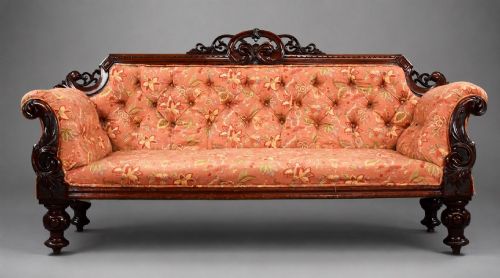
Structural details such as ebonising, inlay work, and hand-carved scroll ends demonstrate the craftsmanship applied to both the timber frames and the sprung upholstery systems housed within.
Listings feature walnut, mahogany, rosewood, and oak frames paired with velvet, calico, and various upholstered fabrics.
Judging Quality
The distinction between standard commercial production and fine cabinet work rests on the crispness of timber carving, the choice of dense hardwoods like rosewood over softer alternatives, and the integrity of the frame construction.
Pieces bearing attribution to prominent workshops display superior joinery, balanced proportions, and refined upholstery detailing that elevate them above ordinary domestic seating of the era.
Thonet·Howard and Sons·C. Hindley and Sons·Hampton and Sons·Holland and Sons·H. Goodall and Sons
The 19th Century Upholstered Couch Glossary
- Chaise Longue
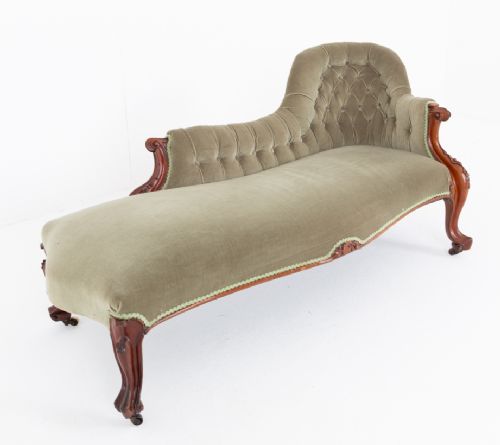
- An upholstered long chair designed for reclining, combining the characteristics of a chair and a sofa. These pieces often feature a single raised end and date frequently from the Victorian and Regency periods.
- Chesterfield
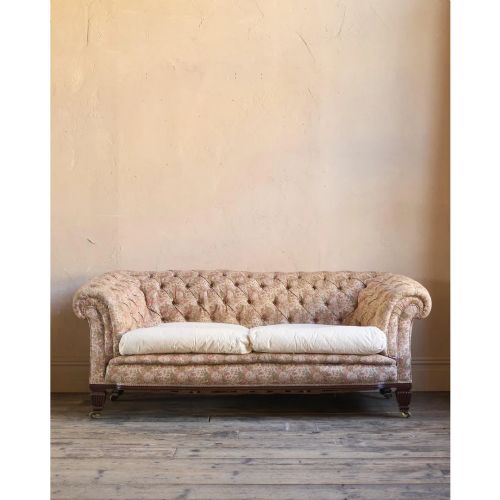
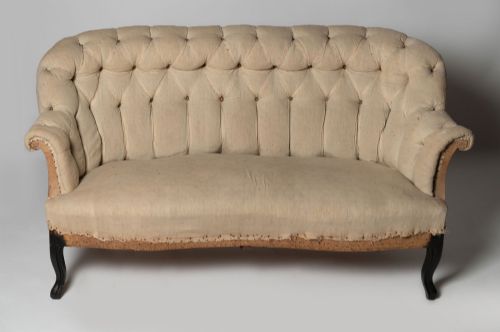
- A large upholstered sofa traditionally characterised by deep button tufting and rolled arms of the same height as the back. Examples in the evidence appear in both Victorian and aesthetic contexts.
- Settee
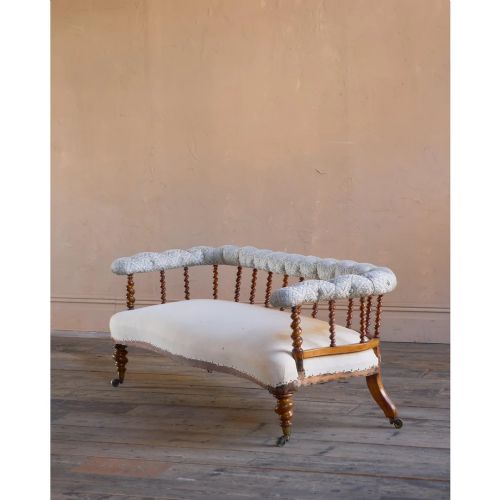
- A medium-sized upholstered seat with a back and arms, designed to accommodate more than one person. They appear across various nineteenth-century styles including carved mahogany and rosewood variants.
- Daybed
- A couch that can be used for sitting or reclining, often featuring an elevated end or backrest. The listings include examples in oak and in specific nineteenth-century revival styles.
- Scroll End
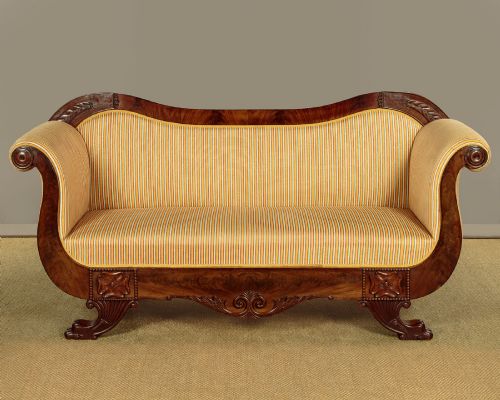
- A sweeping, curved wooden or upholstered terminal found on the arms or back of a couch. This design feature recurs across Regency and Victorian pieces.
19th Century Upholstered Couch: Frequently Asked Questions
How do I identify a Regency couch?
Regency pieces often display classical lines, simulated or solid rosewood timbers, and distinctive scroll ends characteristic of the early nineteenth century.
Design elements tend to reference ancient Greek and Roman forms, differing from the heavier, more heavily carved Victorian furniture that followed.
Where should I place a chaise longue?
A chaise longue suits bedrooms, dressing rooms, or large drawing spaces where it can sit away from walls to display its shaped profile.
Because these pieces feature an asymmetric back or single scroll end, placement must account for the direction of the recline.
How do I care for antique upholstery?
Antique fabric and velvet surfaces require gentle vacuuming with a soft brush attachment and protection from direct sunlight to prevent textile degradation.
Wooden frames benefit from occasional dusting with a dry cloth and should be kept away from sudden changes in room temperature.