




19th Century Tavern Table
A 19th century tavern table brings robust pub character into a home, offering sturdy wooden tops and practical trestle frames built for heavy daily use.
What a 19th century tavern table is
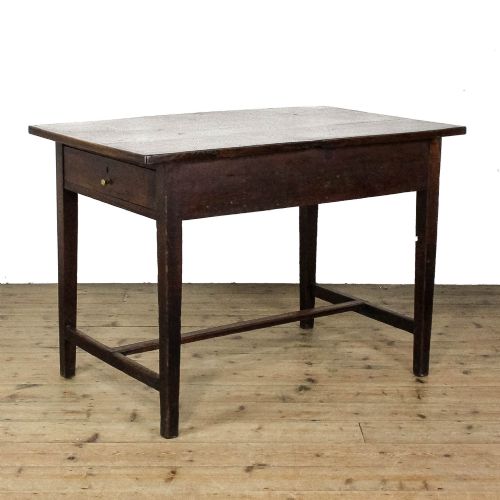
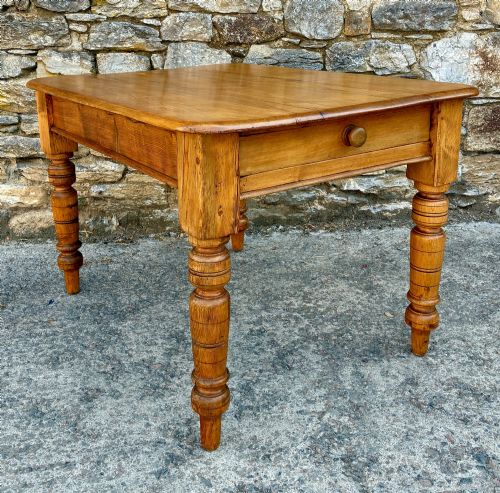
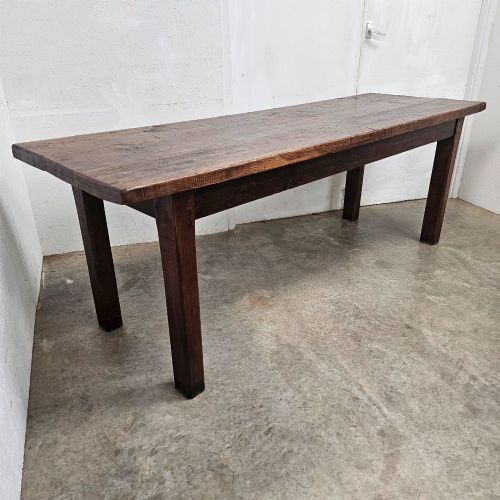
A 19th century tavern table is a sturdy utilitarian furnishing designed for commercial and domestic hospitality, appearing in dining, occasional, and side table formats. These sturdy surfaces range from compact models to long dining proportions suited for communal gatherings.
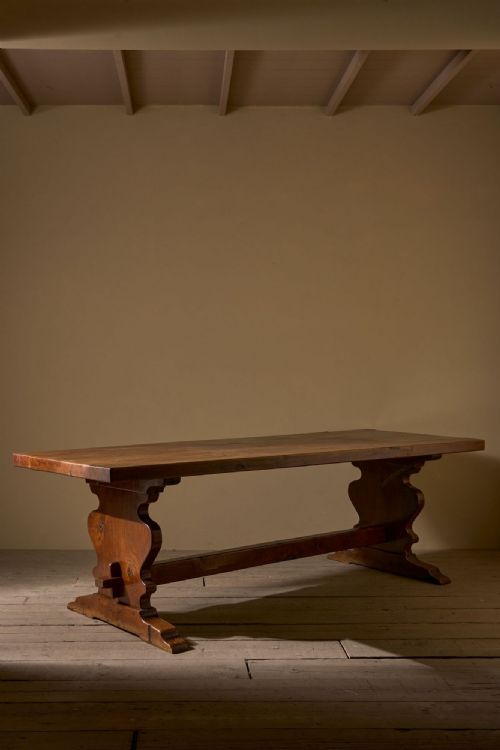
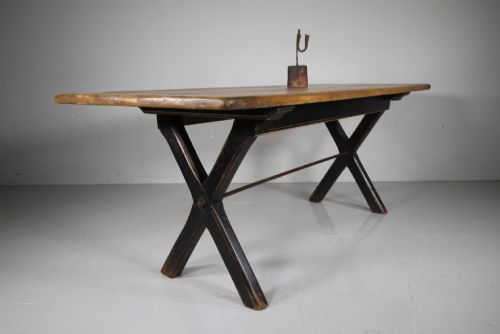
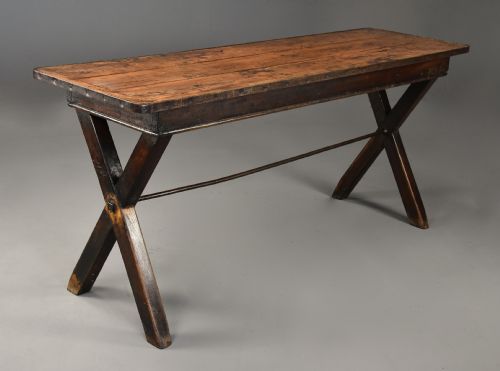
You will frequently meet pine and oak examples on this page, often built with trestle or X-frame supports rather than standard four-legged designs. Regional variations such as Welsh country pieces and English rustic farmhouse styles dominate the selections.
Earlier pieces from the century sit alongside items from around eighteen eighty, showing both plain timber surfaces and surviving original painted finishes. Some specimens incorporate practical elements like service bells or travel-friendly folding mechanisms.
How they were made
Joiners built these heavy-duty furnishings using accessible local timbers including pine, oak, sycamore, elm, mahogany, and general timber. Metal components in iron and brass provided structural reinforcement for the wooden frames and trestle bases.
Makers applied traditional joining techniques to withstand constant public house use, frequently employing X-frame trestle supports and waney-edged boards. Many surfaces retained their original paint or developed deep patinas through decades of heavy handling and cleaning.
Retail Price Guide 2026
Typical UK retail prices for 19th century tavern table, calculated from the Sellingantiques database of over a million retail prices indexed since 2003. This retail price guide relies exclusively on Sellingantiques data; no external sources or auction records are used, so the figures do not describe the wider market.
Listings feature timbers including pine, oak, sycamore, elm, and mahogany, paired with iron and brass hardware.
What varies in quality
The distinction between standard utility items and superior examples lies in the choice of dense hardwoods like oak or sycamore compared to soft pine. Original painted surfaces that survive intact command greater interest than stripped timber.
Proportion and scale also separate the items, with long dining formats and unusual X-frame trestle designs offering more presence than standard occasional tables. The integrity of the original timber patina and the weight of the supporting iron or brass fixtures define the upper tier.
The 19th Century Tavern Table Glossary
- Trestle table
- A board supported by two or more upright frames, allowing maximum legroom beneath the top surface. This construction method appears frequently in sturdy tavern and refectory furniture.
- X-frame
- A structural base formed by intersecting diagonal timbers that cross to form an X shape. This configuration provides robust stability for heavy tabletops.
- Waney-edged
- A board that retains the natural curved edge of the tree trunk along its side. This rustic feature appears on selected country tables.
- Patina
- The deep surface sheen and colour developed by timber through years of use, age, and polishing. Collectors value this visual evidence of a piece's history.
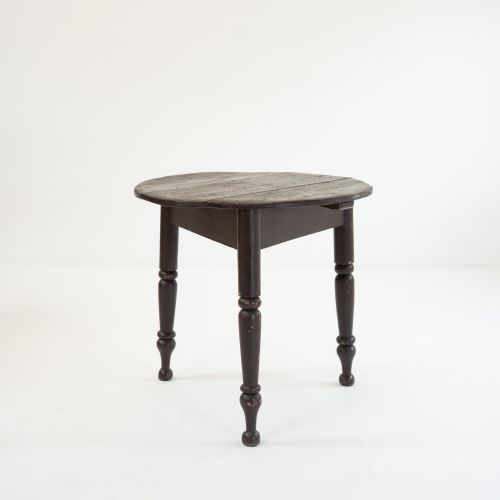
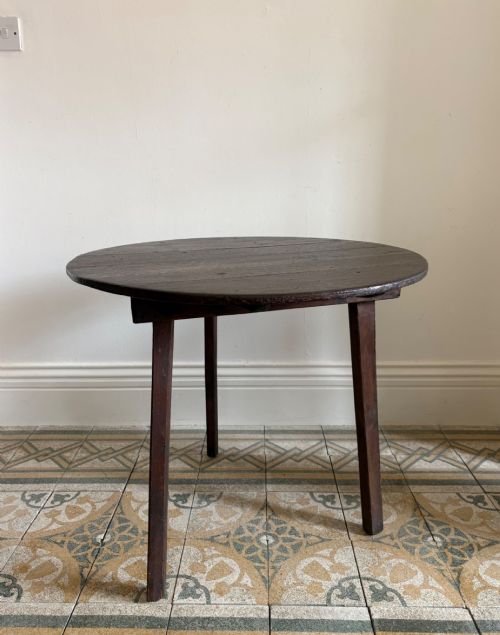
- Cricket table
- A small, lightweight three-legged table traditionally used in domestic and public settings. These occasional pieces offer compact surfaces for intimate spaces.
Frequently Asked Questions
How were tavern tables used?
These tables served patrons in public houses for eating, drinking, and social gatherings. Their robust construction handled heavy mugs, food service, and constant movement.
In modern spaces, they function equally well as kitchen dining surfaces, robust desks, or decorative hallway tables.
Are these tables suitable for daily dining?
They were originally built for heavy commercial hospitality, making them remarkably durable for daily family use. Their solid timber construction easily endures regular meals and active household routines.
Buyers should check dimensions and leg clearance to ensure comfortable seating for modern chairs.
How do I care for original paint?
Original painted surfaces require gentle dusting with a dry microfibre cloth and protection from direct sunlight and moisture. Avoid harsh chemical cleaners that can strip or soften historic pigments.
Applying occasional wax preserves the finish while maintaining the authentic aged appearance of the paintwork.
What is an X-frame tavern table?
An X-frame tavern table utilises intersecting diagonal wooden supports instead of four vertical corner legs. This specific engineering provides exceptional lateral stability on uneven floors.
Such frames are characteristic of robust country workshop production during the nineteenth century.