
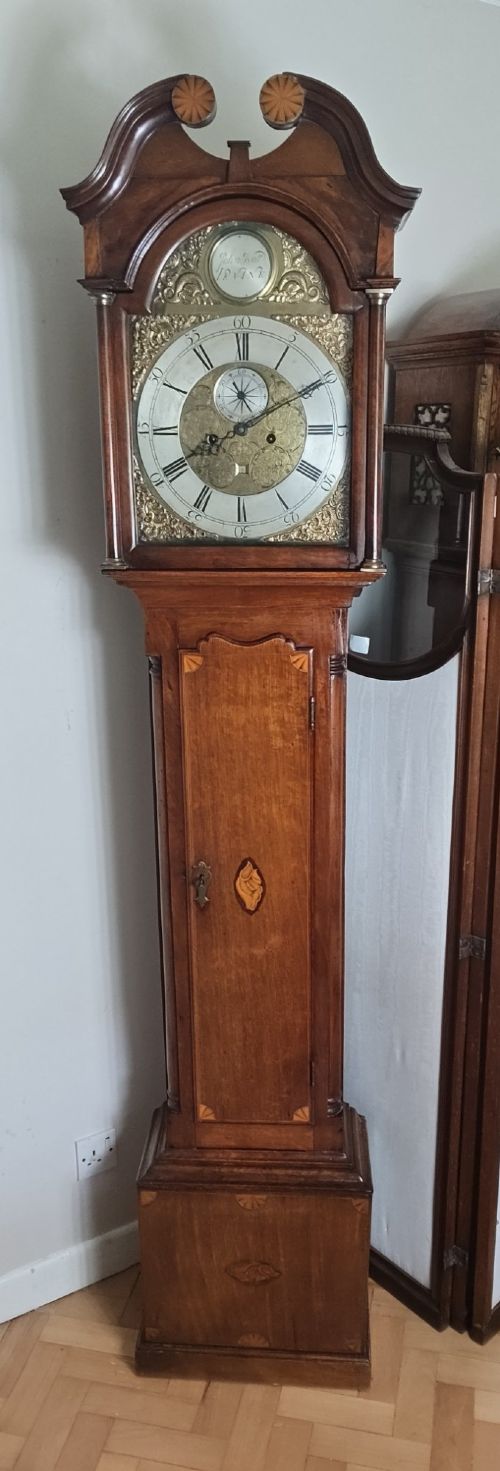
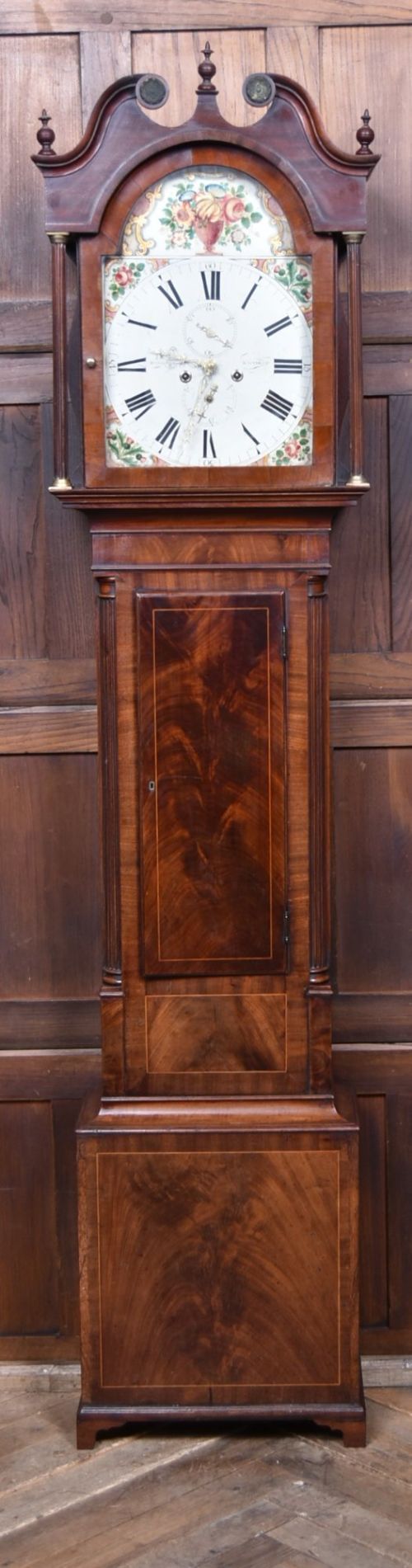
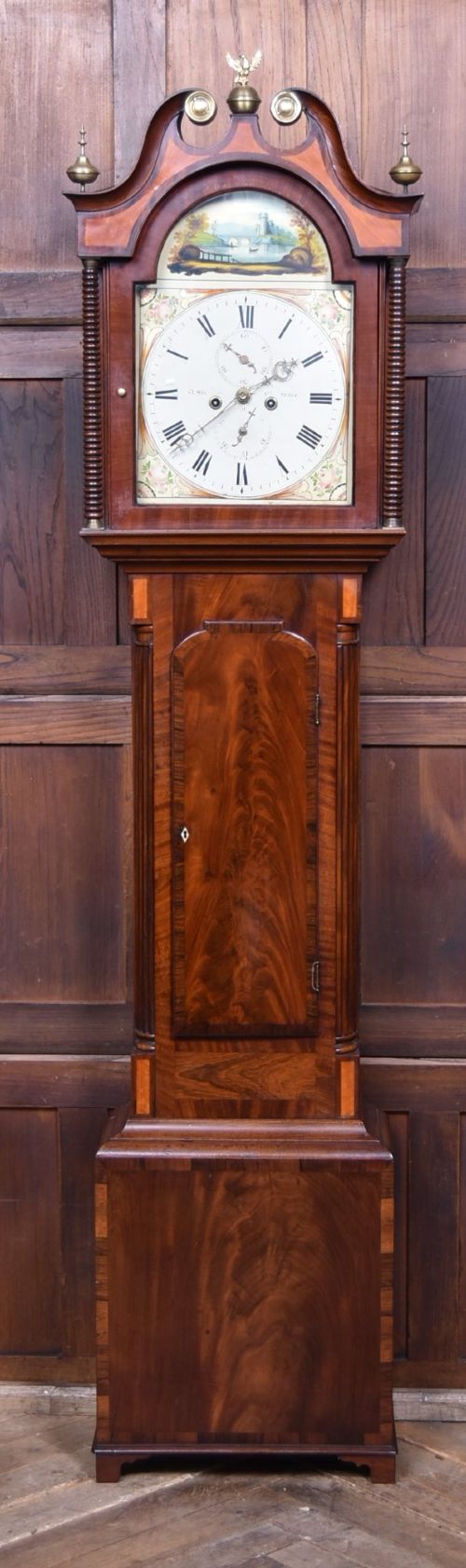

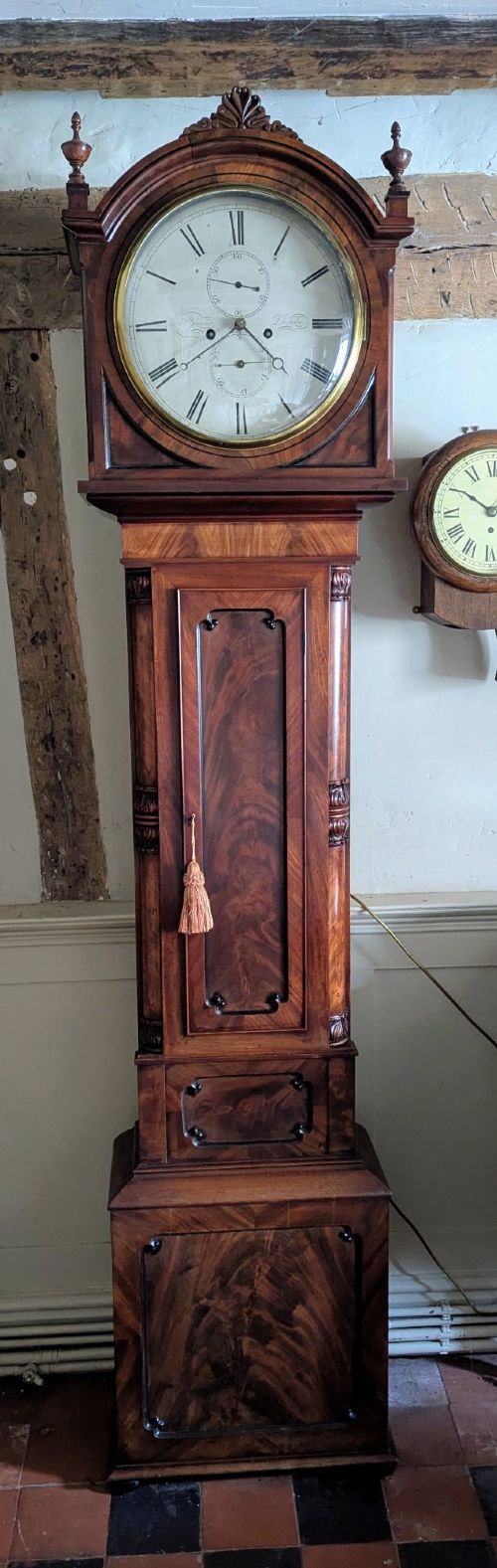
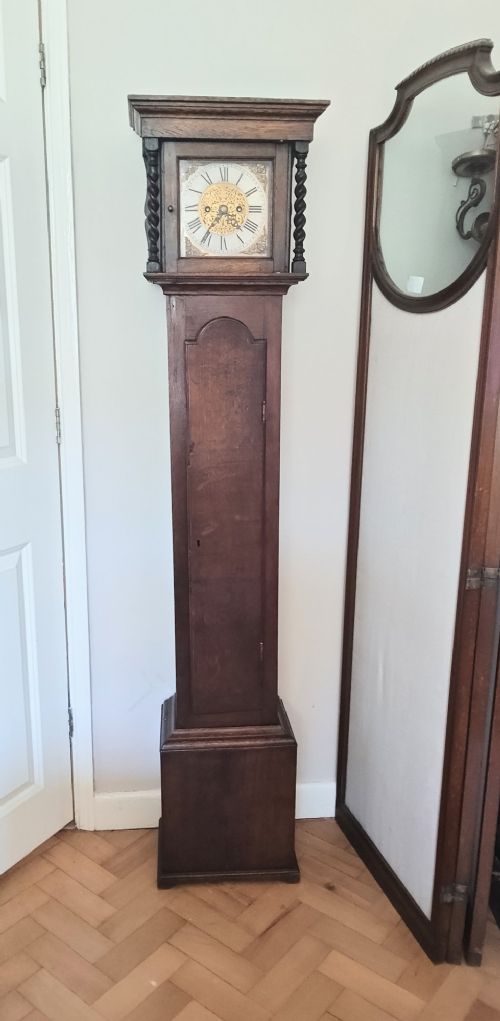


19th Century Tall Clock
These 19th century tall clock pieces bring mechanical precision and architectural presence into a room.

19th Century Tall Clock
A 19th century tall clock encompasses floor-standing timepieces, commonly known as longcase or grandfather clocks, alongside regional variants like Swedish Mora clocks and smaller grandmother clocks. Buyers encounter numerous mahogany and oak examples originating from British, Scottish, Welsh, and Scandinavian makers.
The selection ranges from disciplined domestic regulators and painted dial models to sophisticated musical and rolling moon variations housed in architectural wood cases. Most pieces rely on eight-day movements, uniting practical timekeeping with stately furniture design.
How they were made
Cabinetmakers constructed the tall cases primarily using mahogany, flame mahogany, and oak, often embellishing the timber with decorative inlay and paterae. Glass protected the dial faces while brass and iron components formed the intricate mechanical gear trains within.
Dial faces combined painted iron or enamel with meticulous hand-lettered signatures and chapter rings. Metalworkers and horologists collaborated to produce weights, pendulums, and striking mechanisms designed to maintain accurate time over extended periods.
Some models feature rolling moons that quietly track lunar phases while ticking away the hours in the hallway.
What varies in quality
Quality separates through the crispness of case carving, the choice of figured timber such as flame mahogany, and the sophistication of the dial work. Examples signed by notable makers command attention for superior movement finishing and harmonious proportions.
Hendrie Ogg·D. Straiton·Thomas Webbe·William Smith·David Morice·Parkinson And Frodsham·John Jones·David Griffith·John Bishop·Perigal Bond Street·Charles Denham·Geo Tarratt
The 19th Century Tall Clock Glossary
- Longcase clock
- A tall, weight-driven pendulum clock enclosed in a protective wooden case standing directly on the floor. These pieces are frequently termed grandfather clocks.
- Regulator
- A precision pendulum clock designed for extreme timekeeping accuracy, often featuring a subsidiary second dial and a clean architectural case.
- Rolling moon
- A mechanical dial feature that tracks the phases of the lunar cycle through a rotating painted disc behind the clock face.
- Drum head
- A specific circular dial housing shape atop the trunk of the clock case, seen on certain Victorian mahogany variations.
- Paterae
- Small, round decorative relief carvings applied to furniture surfaces, frequently taking the form of rosettes or elliptical patterings on clock hoods.
19th Century Tall Clock: Frequently Asked Questions
What is a grandfather clock?
A grandfather clock is a tall, weight-driven timekeeper housed in a protective wooden enclosure that rests on the floor. These instruments use long pendulums to regulate time accurately.
Cabinetmakers built these tall cases from woods like mahogany and oak to match domestic interior styles across the nineteenth century.
How do eight-day movements work?
An eight-day movement requires winding via a crank or key once every week to maintain continuous operation. Falling weights suspended inside the trunk power the gear train.
This mechanism allowed households to manage time without daily intervention while ensuring steady tension across the gear train.
Where were these clocks made?
Makers constructed these timepieces across regional workshops in England, Scotland, Wales, and Scandinavia. Local horologists frequently signed the painted or brass dials directly.
Regional preferences influenced whether the case featured Scottish mahogany, Welsh oak, or Scandinavian pine construction.
How do I care for a tall clock?
Position the case against a stable interior wall on level flooring to ensure the pendulum swings evenly. Consistent room temperatures prevent timber movement and protect the mechanical components.
Wind the weights gently every week and avoid placing the instrument near direct heat sources or damp environments.