
19th Century Stick Holder
A 19th century stick holder brings robust utility and distinct period character to an entrance hall.
19th Century Stick Holder
A 19th century stick holder comprises umbrella stands, stick stands, and hall stands designed for hallways and vestibules. These pieces organise walking canes, umbrellas, and parasols within domestic interiors.
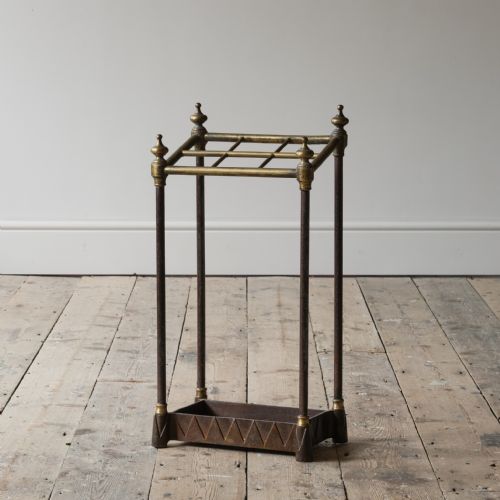
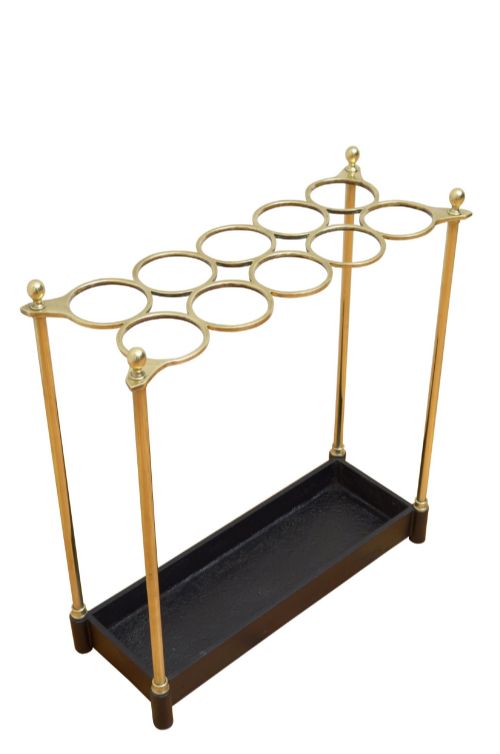
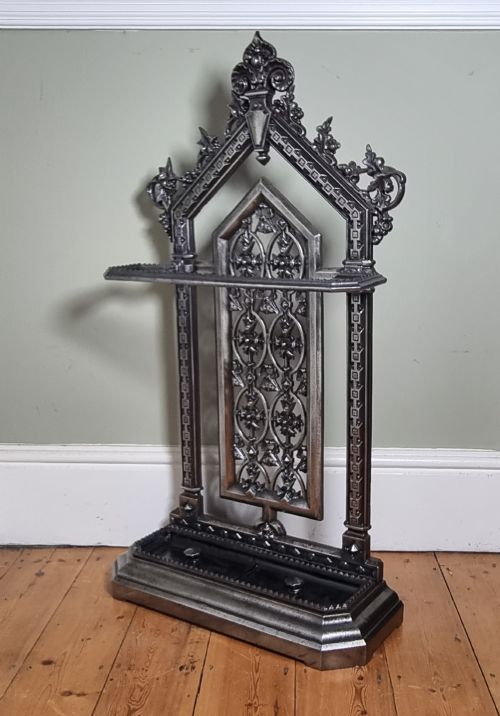
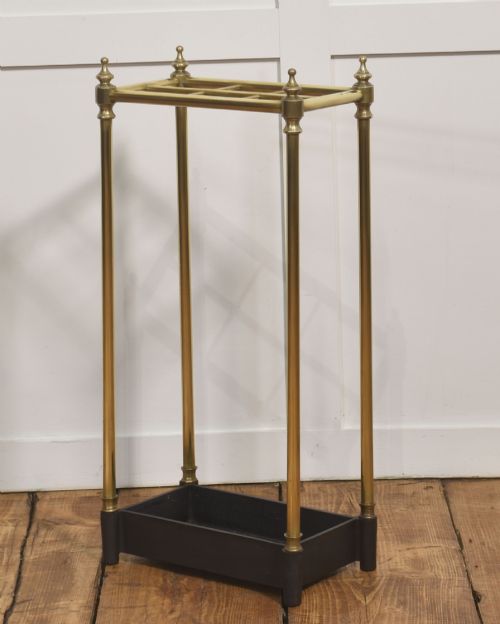
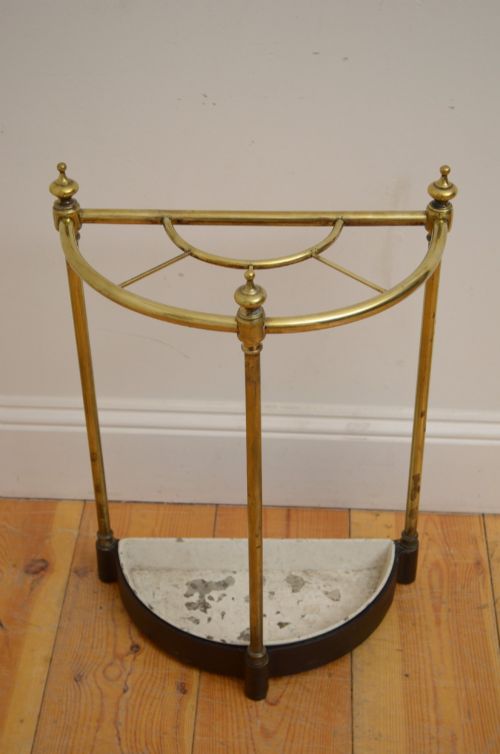
The most common examples on this page are cast iron and brass umbrella stands from the Victorian era, often featuring decorative ball finials, half-moon shapes, or figural designs.
Other variations include carved Black Forest wood examples depicting bears, alongside oak barrel stands with brass braces and mahogany frames.
Materials and Construction
Foundries utilised cast iron and brass for structural rigidity and ornate detailing, producing heavy umbrella stands alongside lighter brass components.
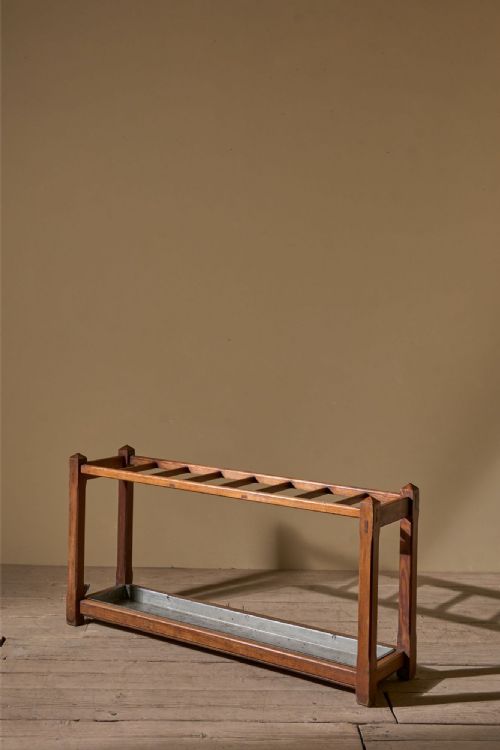
Woodworkers employed oak, walnut, pine, and carved fruitwood, often incorporating metal braces or mounts for added durability.
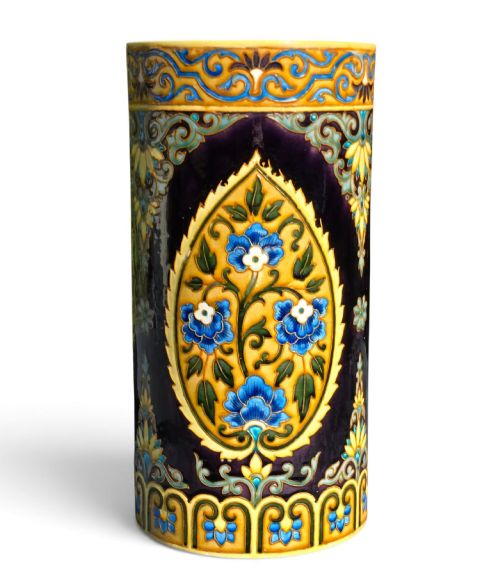
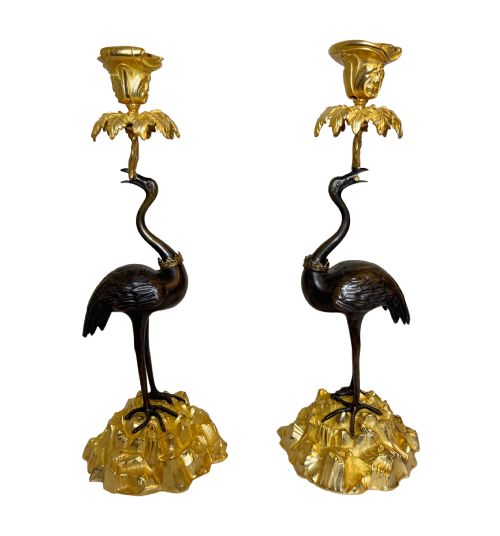
Ceramic and marble elements appear in specific pieces, alongside cold-painted spelter and gilt bronze finishes.
Listings feature oak, walnut, pine, and fruitwood alongside brass, cast iron, and marble.
Craftsmanship and Design
Quality depends on the crispness of the casting in iron and brass models, where sharp relief and clean lines distinguish superior work from softer secondary production.
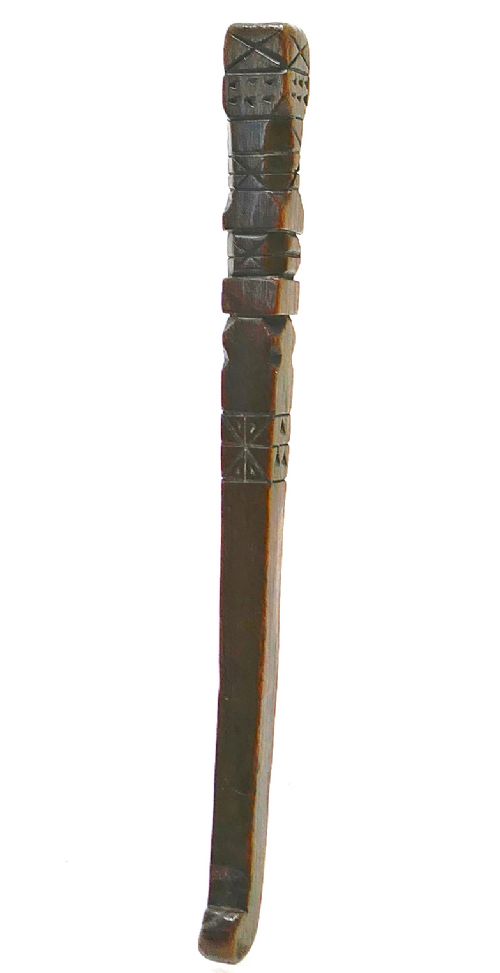
In wooden and carved pieces, the depth and precision of the carving dictate the standard, particularly in detailed animal motifs and woodwork.
The integration of structural fittings, such as brass braces on wooden barrels and secure drip trays, marks the distinction between utilitarian items and finer decorative objects.
Théodore Deck·Falkirk Ironworks·James Clews·Conrad Eduard Mappe·Barr, Flight & Barr
The 19th Century Stick Holder Glossary
- Cast Iron
- An iron-carbon alloy poured into moulds to create rigid, durable objects. This material allowed makers to produce intricate umbrella stands with complex figural motifs.
- Black Forest
- A style of wood carving originating in Central Europe, known for realistic animal sculptures. Pieces in this manner frequently depict bears holding containers for walking sticks.
- Spelter
- An alloy of zinc and other metals used as a cheaper substitute for bronze. It accepts cold-painted finishes well, appearing in decorative figures on this page.
- Finial
- A decorative ornament fixed to the top of a post or structure. These finish the corners and uprights of brass and metal umbrella stands.
19th Century Stick Holder: Frequently Asked Questions
How do I clean a cast iron stick holder?
Dust the surface regularly with a dry cloth to prevent moisture accumulation. Avoid harsh chemical cleaners that might strip the protective finish or painted details.
For stubborn grime, apply a minimal amount of neutral soap on a damp cloth, then dry the metal completely. Ensure any internal drip tray is emptied and wiped clean after holding wet umbrellas.
Where should I place a wooden umbrella stand?
Position the piece in a dry hallway away from direct heat sources and strong sunlight. Excessive temperature changes can cause timber to warp or split over time.
Protect the interior wood by placing a suitable liner or tray inside to catch water from wet walking sticks and umbrellas.
Are these stands suitable for daily use?
Cast iron and heavy brass stands offer exceptional weight and stability, making them well-suited for holding heavy walking canes and everyday umbrellas.
Wooden and carved examples require more care to protect the finish from constant moisture exposure, though they function effectively with proper liners.
How do I identify a Victorian stick stand?
Look for characteristic materials such as heavy cast iron, polished brass, and carved oak or walnut. Aesthetic Movement and figural designs often indicate production during the second half of the nineteenth century.
Date stamps or registration marks occasionally appear on ironwork, providing a specific year of manufacture.