






19th Century Staffordshire Group
A 19th century staffordshire group brings the distinct charm of Victorian shelf pottery into a room, offering colourful portraits and figurative scenes that collectors prize.
19th Century Staffordshire Group
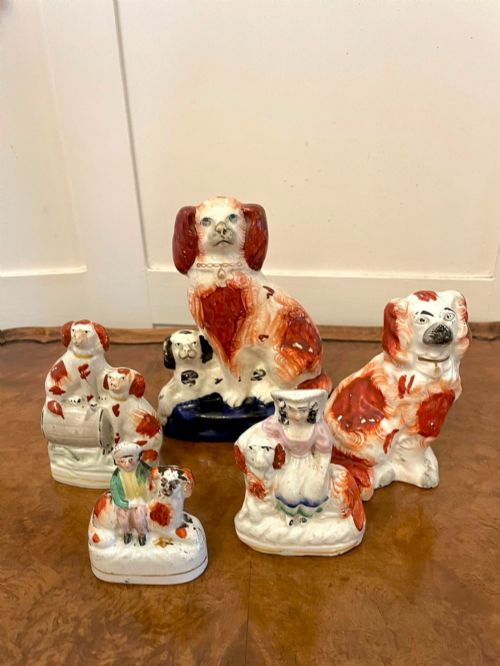
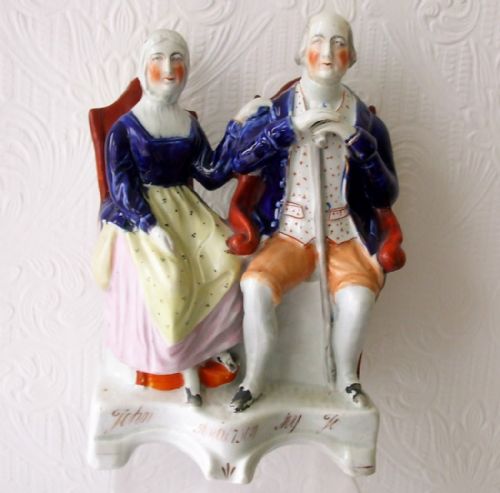
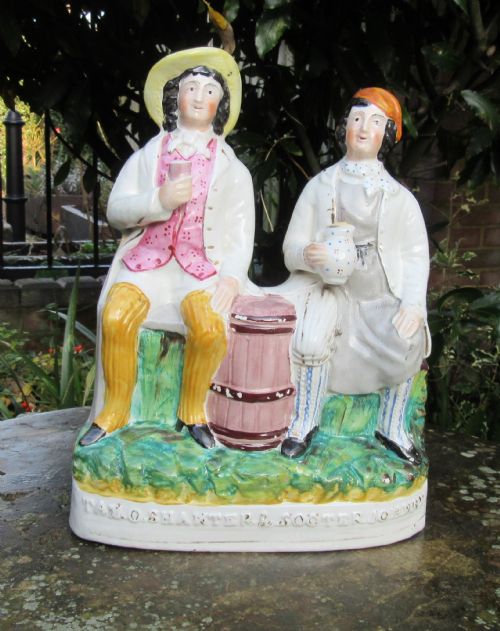
When you search for a 19th century staffordshire group, you encounter earthenware figures and figural groups shaped by Staffordshire potters during the Victorian era. The selection ranges from portrait pieces of political and literary figures to domestic animals like dogs, poodles, swans, and deer, often modelled as flatback figures meant to sit against a wall.
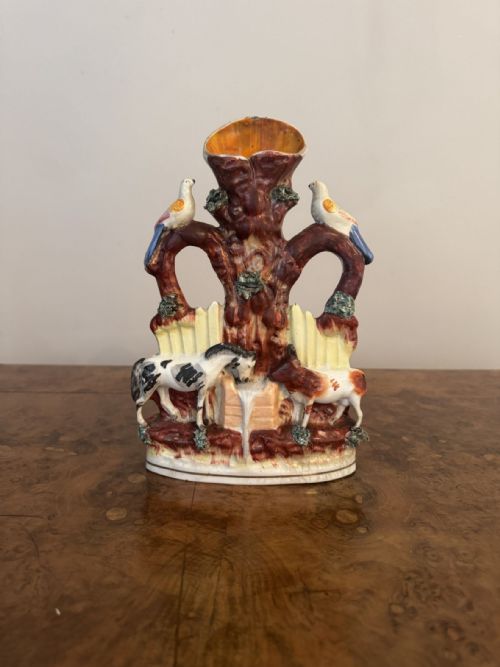
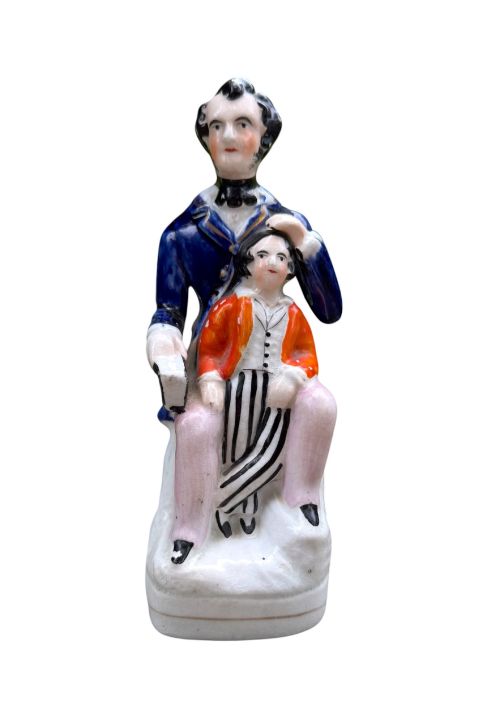
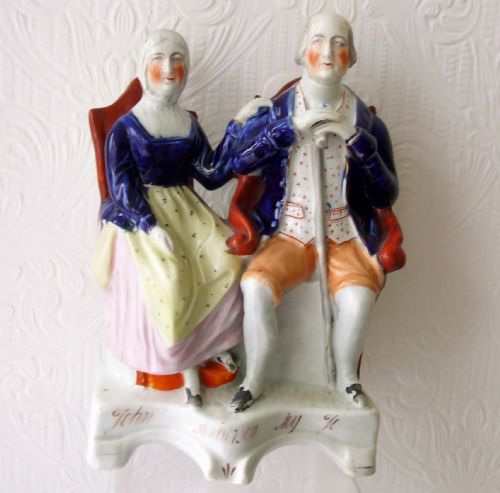
Many examples capture historical moments, literary characters, and moral themes, including subjects such as the Crimean War, Lord Shaftesbury, Tam O'Shanter, and the Band of Hope. You will frequently find spill vases combined with animal figures or figural groupings depicting couples and public figures.
The style spans Georgian survivals through high Victorian folk art, with dates clustering around the mid to late nineteenth century, notably the 1830s, 1860s, and 1880s. These ceramic objects served as decorative mantel ornaments in homes, reflecting the popular culture and sentiments of the period.
Judging quality and character
The sophistication of the subject matter and the complexity of multi-figure groups or clock arrangements also distinguish the work of skilled potteries from routine domestic production. Better preserved gilding and minimal glaze crazing elevate the visual appeal of a piece.
19th Century Staffordshire Group Retail Price Guide 2026
Typical asking prices for 19th century staffordshire group among the pieces listed under this phrase on Sellingantiques today, from the lower quarter to the upper quarter. They describe what is for sale here now, not the wider market.
Poodles and dogs in these groups often display fleecy coats created by applying tiny ceramic clay pellets by hand before glazing.
The 19th Century Staffordshire Group Glossary
- Flatback
- A figure moulded with a finished, painted front and a plain, unglazed or thinly glazed flat back designed to stand against a wall. This construction method saved weight and materials for mantel ornaments.
- Spill vase
- A hollow cylindrical holder integrated into a figure or group, designed to hold wooden tapers for lighting pipes or candles. These vessels often feature animals or rustic scenes wrapped around the central tube.
- Pearlware
- A refined earthenware developed in the late eighteenth century with a bluish-white glaze that pooled in recesses to mimic Chinese porcelain. It forms the body of earlier nineteenth-century figural groups.
- Enamel paint
- Coloured vitreous pigments applied over the fired glaze and fixed by a lower-temperature firing. This technique allowed makers to achieve vibrant hues on costumes and animal coats.
- Prattware
- Earthenware decorated with underglaze metallic oxides, typically blue, ochre, brown, and green, producing soft polychrome patterns on plates and figures.
19th Century Staffordshire Group: Frequently Asked Questions
What subjects do these figures show?
The pieces depict a wide range of subjects, including literary characters, political figures, royalty, and domestic animals like dogs and swans. Many represent specific historical events or moral narratives popular during the Victorian era.
Makers also produced portraits of contemporary figures such as Lord Shaftesbury and Napoleon III alongside traditional folk groupings.
Where were they displayed originally?
These ceramic figures were designed primarily as mantelpiece ornaments in nineteenth-century homes, intended to be viewed from the front. Their flat backs allowed them to sit securely on narrow shelves against parlour walls.
They served as decorative conversation pieces that displayed the owner's literacy, political sympathies, or taste in popular art.
How do I spot a flatback piece?
A flatback figure has a completely unmodelled or flat rear surface that lacks the detail found on the front of the object. This design ensured the piece rested flush against a wall or mantel back.
Potters utilised this method extensively for Victorian shelf figures to conserve ceramic material while maximising visual impact.
What is a spill vase figure?
A spill vase figure incorporates a built-in cylindrical receptacle alongside the main figural sculpture, intended to hold thin wooden spills for lighting fires. Animals such as deer and stags frequently appear embracing these central tubes.
They combine practical domestic utility with decorative portraiture or pastoral grouping.