
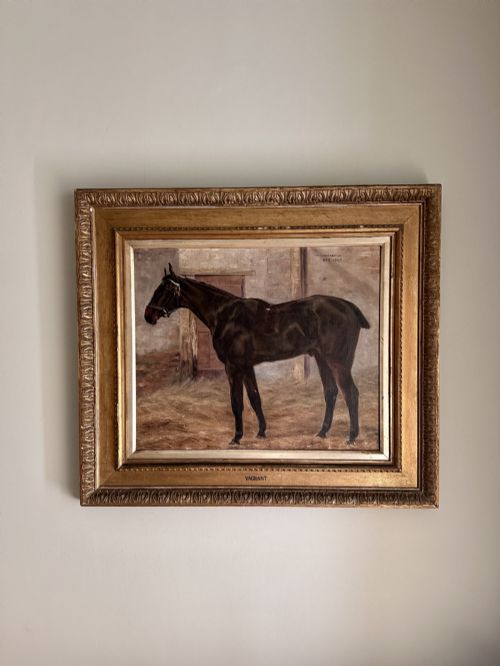
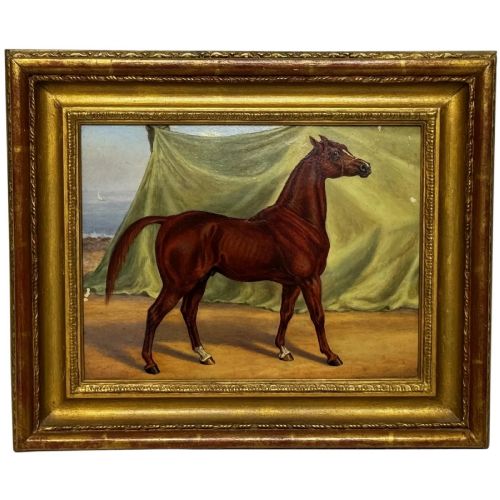
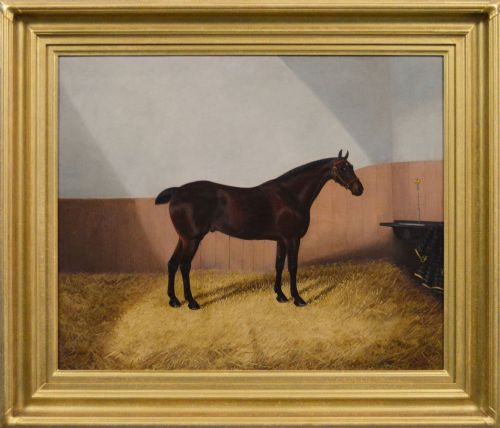
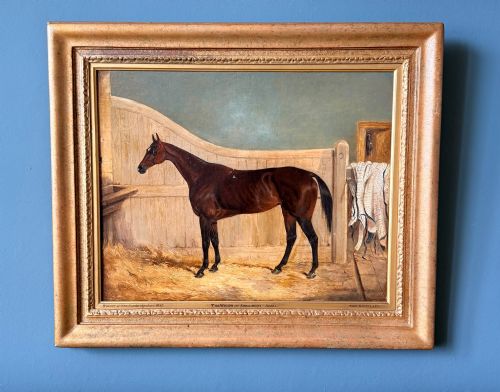



19th Century Stable Painting
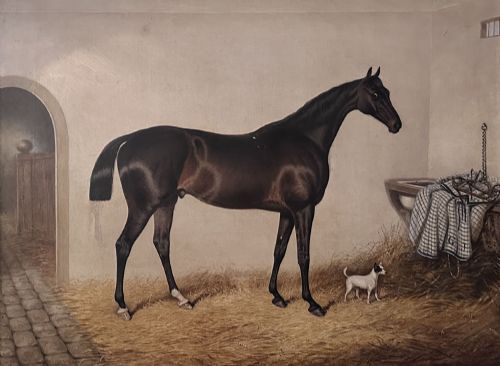
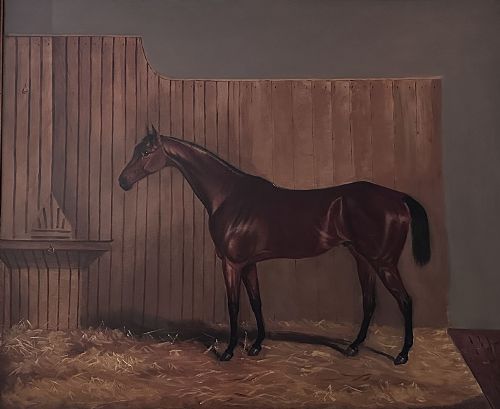
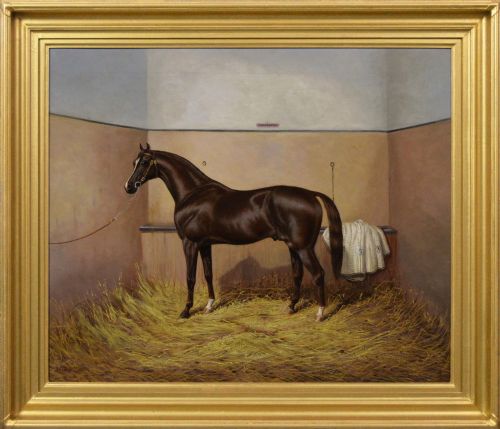
These 19th century stable painting works capture horses and animals within agricultural and sporting interiors, valued for their equine detail and historic pedigree.
19th Century Stable Painting
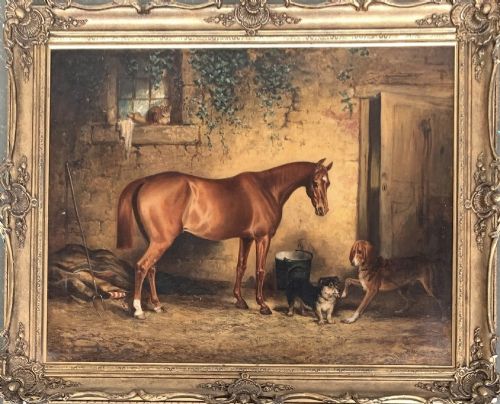
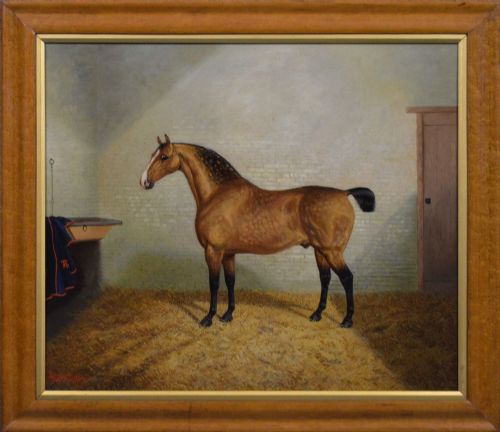
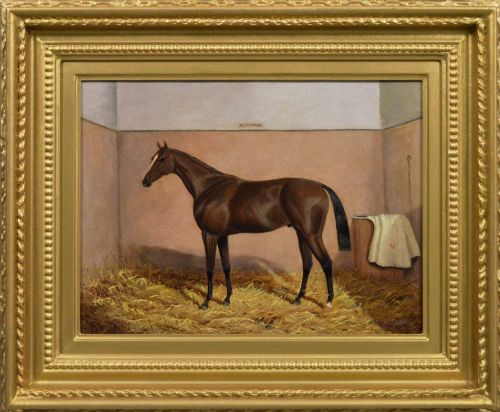
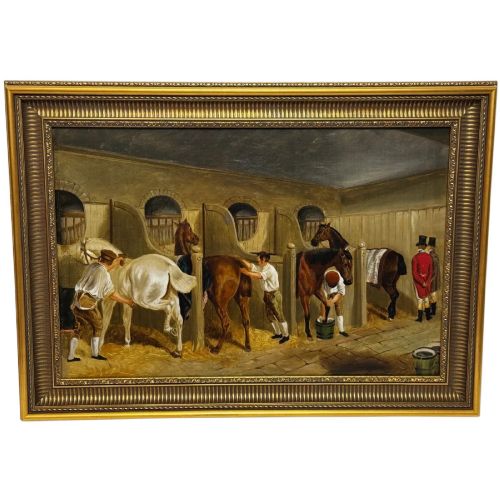
A 19th century stable painting depicts horses, hunters, and occasionally other animals housed within rural quarters or yards. The pieces seen here span periods from the eighteen-fifties through to nineteen hundred, encompassing Victorian sporting art and equestrian portraiture.
Buyers will most frequently encounter oil paintings on canvas or wood panel, alongside occasional watercolour and gouache works. These pieces often feature named racehorses, hunters, and stable scenes executed by British and European artists of the period.
Materials and construction
The physical works rely primarily upon oil paint applied to stretched canvas or wooden panels, with some examples utilising watercolour and gouache on paper. Canvases are frequently housed within original or period-appropriate giltwood and gold leaf frames.
Artists built up these compositions using traditional brushwork to render the glossy coats of horses, straw bedding, and timber stable architecture. Pigments were applied to capture light falling into dark stalls, highlighting the musculature and conformation of the animals.
Not all stable residents were horses; select canvases record a mother dog with her pups resting quietly in the straw.
Distinctions in quality
Quality in a 19th century stable painting rests primarily upon the anatomical accuracy of the horse and the skill in rendering light and texture within the interior. Works by recorded painters display a sophisticated understanding of equine conformation, whereas naive or provincial pieces show simpler proportions and stiffer brushwork.
The condition of the canvas, the preservation of the original paint layer without heavy restoration, and the presence of a period gilt frame contribute significantly to the standing of an individual piece.
Henry Barraud·Albert Clark·Fred Fitzpatrick·Thomas Walker Bretland·Edward Lloyd of Ellesmere·George E Sharpe·Samuel Spode·Benjamin Cam Norton·Edwin Frederic Holt·Alfred Moginie Bryant·Charles Bilger Spalding·John Nost Sartorius·John Ferneley Jnr·Stanley Berkeley·Albert Clark Snr·J Harris·John Boultbee·Edwin Loder
The 19th Century Stable Painting Glossary
- Equine portrait
- A painting focused specifically on the likeness and conformation of a particular horse, often a named racehorse or hunter. These works were commissioned by owners to record prized animals.
- Giltwood
- Wood carved and covered with thin gold leaf or gilt powder, commonly used for framing Victorian artworks. It provides a reflective border that enhances the dark tones of an oil painting.
- Hunter
- A horse bred and trained for fox hunting or general riding over fences. In these paintings, they are often depicted standing stabled with groomed coats and cropped tails.
- Canvas
- A heavy woven fabric stretched across a wooden frame to serve as a foundation for oil painting. It allows for textured brushstrokes and large-scale compositions.
- Provenance
- The documented history of ownership of a painting, sometimes tracing a work back to a specific estate or gallery. It establishes the authenticity and past journey of the object.
19th Century Stable Painting: Frequently Asked Questions
What is a 19th century stable painting?
A 19th century stable painting is an artwork depicting horses, dogs, or cattle inside agricultural or equestrian buildings. These works reflect the Victorian preoccupation with sporting art and animal husbandry.
Artists of the era documented prized hunters, racehorses, and working animals with careful attention to anatomy and stable interiors. They served as records of valuable bloodlines and rural life.
How were these paintings displayed?
In the nineteenth century, these artworks hung in country houses, estate offices, and the homes of sporting enthusiasts. They were framed in ornate giltwood to complement formal domestic interiors.
Today, they suit studies, libraries, and living spaces with traditional decor, often paired with equestrian accessories or period furniture.
How do I identify the subject?
Many paintings include inscriptions on the canvas, stretcher bars, or frames naming the horse, such as a race winner or a family hunter. Documentation or provenance records often supply the identity of the animal.
Without an inscription, the specific breed type, markings, and tack can suggest whether the animal is a thoroughbred racehorse or a heavier agricultural hunter.
Are these paintings executed in oil or watercolour?
The majority of the pieces in this category are executed in oil paint upon canvas or wood panel. Oil allowed artists to build up deep shadows and rich textures within the stable.
A smaller selection comprises watercolour and gouache paintings on paper, which offer a different tonal quality and required protective glazing.