

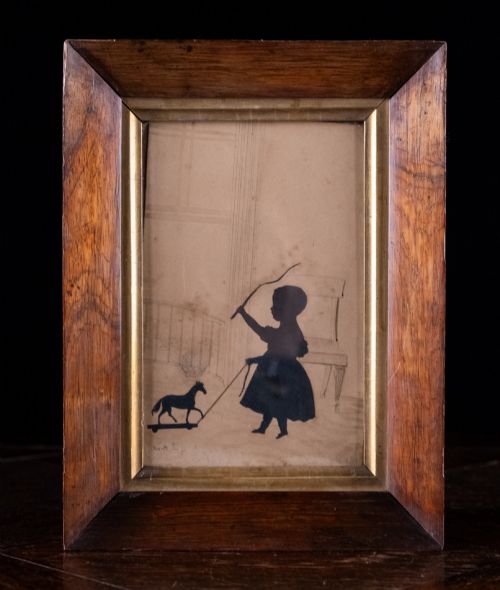


19th Century Shadow Portrait
These 19th century shadow portrait examples capture likenesses in cut paper and ink, offering a direct window into past lives.
19th Century Shadow Portrait
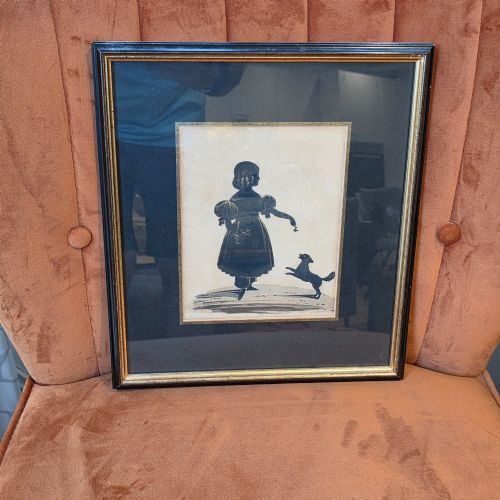
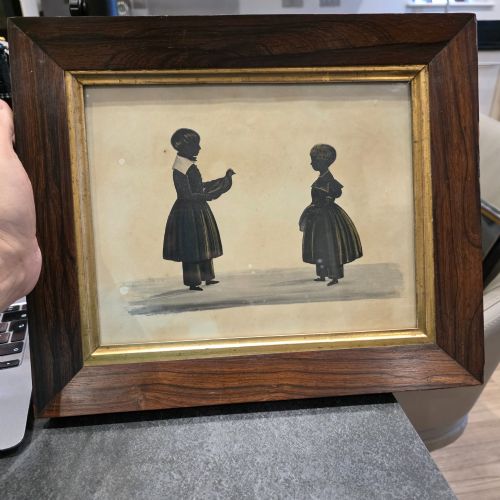
A 19th century shadow portrait depicts a profile likeness, created as a silhouette portrait or wall art. You will frequently encounter framed silhouette art representing single sitters, children, families, and animals from the Georgian, Regency, and Victorian periods.
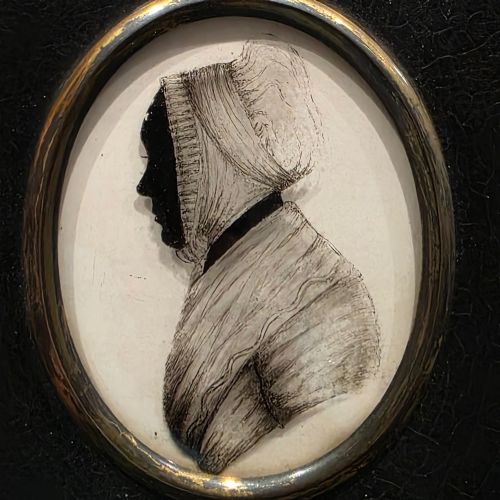
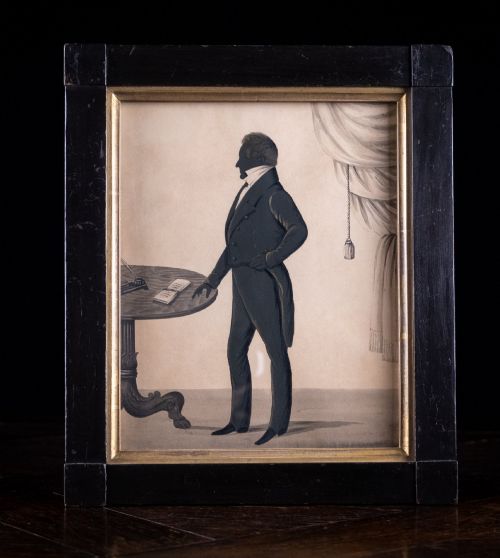
The selections span whole conversation pieces involving multiple figures alongside individual portraits of ladies, gentlemen, and youths. Makers worked within specific regional traditions, producing framed artwork designed for domestic display.
Materials and construction methods
Pieces utilise paper cut by hand, sometimes paired with ink or watercolour detail on glass. Reverse painted glass techniques also appear alongside simple cut paper silhouettes.
Mountings typically involve wood frames, including rosewood, ebony, and gilt wood, occasionally enhanced with gold leaf and brass fittings.
Listings feature paper, glass, ink, wood, brass, gold leaf, rosewood, and gilt wood across Georgian, Regency, and Victorian eras.
Distinctions in quality and execution
Quality rests in the precision of the paper cutting and the fidelity of the profile likeness. Finer examples display meticulous detail in costume, hair, and accessories without losing the stark shadow effect.
The sophistication of the framing contributes significantly to the overall merit of the piece. Well-preserved glass, original rosewood or gilt wood frames, and documented attribution elevate individual works.
William James Hubard·Augustin Edouart·J. Deacon·Alfred Darbyshire·Skeolan
The 19th Century Shadow Portrait Glossary
- Silhouette portrait
- A profile likeness filled in with a solid dark colour, typically black, against a pale background. This form was widely practised before the widespread adoption of photography.
- Reverse painted
- A technique where the image is painted directly onto the reverse side of a glass panel. This method protects the pigment and produces a glossy finish.
- Conversation piece
- An informal group portrait showing people engaged in a common activity. In silhouette work, these complex compositions often feature multiple figures and animals.
- Gilt wood
- Wood that has been decorated with gold leaf or gold powder. Frames treated in this manner add brightness to the dark profile.
19th Century Shadow Portrait: Frequently Asked Questions
How are profiles dated?
Dating relies on costume details, hair styles, and framing materials characteristic of Georgian, Regency, and Victorian fashions.
Inscribed labels on the reverse or signatures by known practitioners also help establish a precise period of creation.
Where were they displayed?
These framed works hung in domestic parlours and drawing rooms as personal mementos of family members.
Larger conversation pieces often occupied central wall positions in reception rooms.
Are subjects always single?
Many works depict lone gentlemen or ladies, but group compositions are well documented.
Group scenes frequently show children with pets, family gatherings, or outdoor activities.
What frames are original?
Period frames generally consist of rosewood, ebony, or gilt wood matching the era of the portrait.
Original backing papers and old glass further indicate that the mounting remains undisturbed.