



19th Century Rosewood Couch
A 19th century rosewood couch brings rich timber tones and sculptural nineteenth-century lines into a drawing room.
19th Century Rosewood Couch
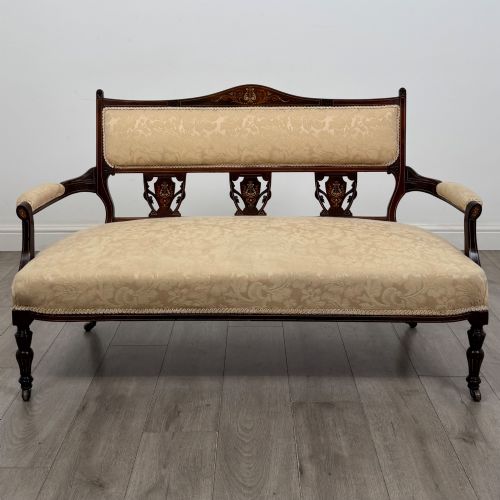
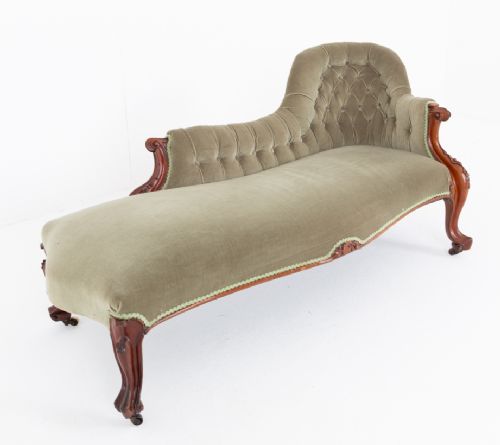
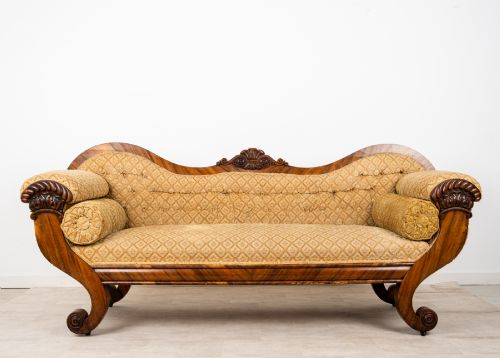
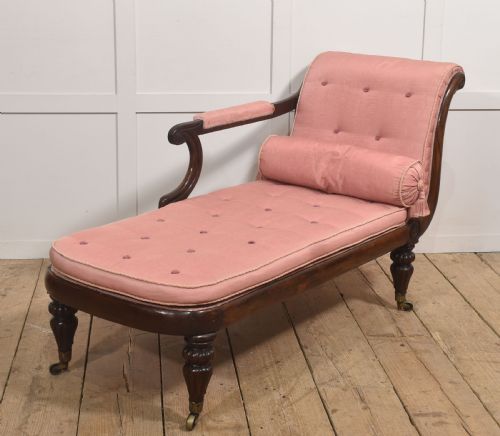
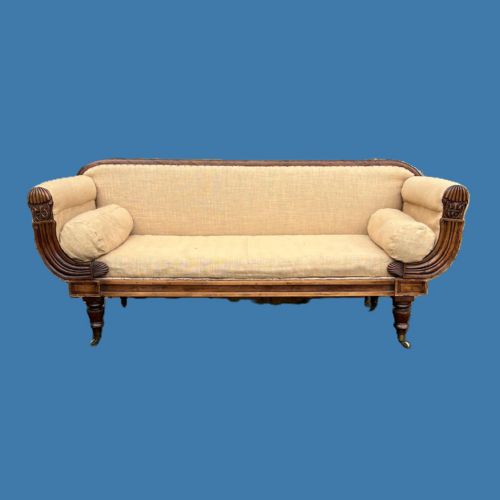
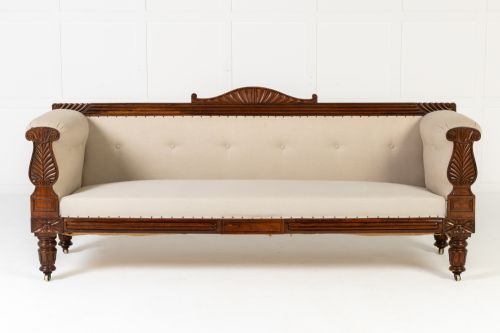
When you search for a 19th century rosewood couch, you encounter a range of formal seating that spans Regency, William IV, and Victorian periods. The selection includes grand country house sofas, deep-buttoned settees, and sculptural daybeds designed for reclining.
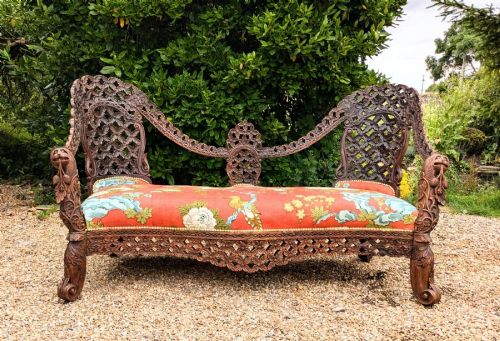
Most examples you meet here date from the nineteenth century, utilising solid timber or simulated finishes. Forms range from English scroll-ended settees to Anglo-Indian carved pieces and French frames.
Makers such as H. Goodall & Sons produced notable variations during this era, combining elaborate woodwork with contemporary upholstery fabrics.
How they were made
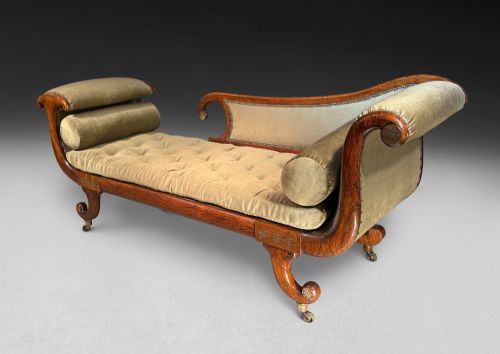
Cabinet makers constructed these frames primarily from rosewood, occasionally employing simulated rosewood on alternative timbers, alongside teak and padauk in colonial workshops. Brass inlay frequently accented Regency and early nineteenth-century surfaces.
Upholstery techniques involved traditional springs, horsehair stuffing, and heavy textiles like velvet, damask, and plain fabric. Carved scroll ends and double spoon backs required skilled hand-carving directly into the dense timber.
Listings feature periods from the 18th century through to the late Victorian era, with materials spanning brass, solid rosewood, and cane.
What varies in quality
The distinction between ordinary and exceptional pieces rests upon the crispness of the timber carving and the architectural proportion of the frame. Heavy scrollwork and detailed brass inlay indicate higher workshop standards.
The integrity of the underlying rosewood structure and the fidelity of period upholstery schemes determine the enduring worth of a couch. Pieces retaining solid Rio rosewood and cane seating demonstrate superior regional craftsmanship.
H. Goodall & Sons
The 19th Century Rosewood Couch Glossary
- Chaise Longue
- An upholstered long chair designed for reclining, featuring a single raised headrest or scroll end.
- Simulated Rosewood
- A painted or grained finish applied to a secondary timber to imitate the appearance of genuine rosewood.
- Spoon Back
- A padded chair or settee back shaped to resemble the bowl of a spoon, popular during the early Victorian period.
- Campaign Sofa
- A portable seating form designed for easy transport, often utilised by military officers or travellers in the nineteenth century.
19th Century Rosewood Couch: Frequently Asked Questions
How do I identify a Regency rosewood couch?
Regency examples often feature cleaner classical lines, brass inlay, and simulated rosewood finishes that reflect early nineteenth-century neoclassical tastes. The frames are typically lighter in proportion than later Victorian designs.
Look for sabre legs and restrained scrollwork rather than the heavy, deep-buttoned cushioning associated with mid-Victorian seating.
Where were these couches placed originally?
These pieces sat in principal reception rooms, drawing rooms, and libraries of nineteenth-century country houses and town residences. Daybeds and chaise longues also served in private boudoirs for daytime resting.
Their placement depended on the formality of the room and the desire to display rich timber grains and costly upholstery fabrics to visiting guests.
Can I use an antique couch every day?
Nineteenth-century seating is structurally robust, but the internal stuffing and textiles may require careful treatment depending on their age and restoration history. Solid timber frames handle regular daily use well.
Consider the condition of the webbing and springs before placing a delicate silk or velvet upholstered settee in a high-traffic family room.
What is the difference between a settee and a chaise longue?
A settee provides formal, upright seating for two or more people with a uniform backrest, whereas a chaise longue is built for reclining with a single elevated end. Settees suit conversation areas.
Chaise longues allow a person to stretch out fully, combining the function of a chair and a daybed within a single architectural frame.