




19th Century Pocket Pistol
A 19th century pocket pistol is a compact personal defence arm offering a tangible link to Victorian and Regency life.
19th Century Pocket Pistol
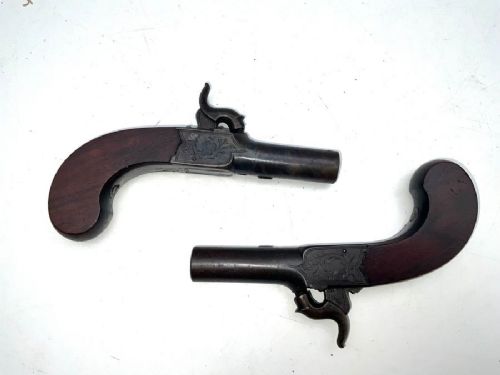
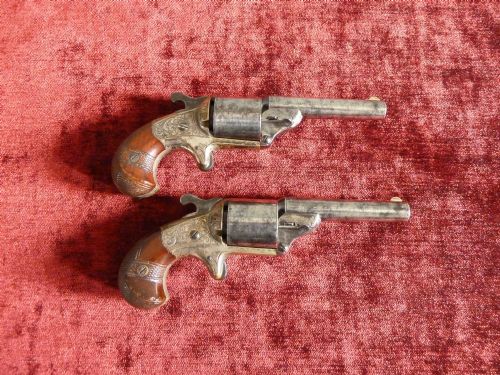
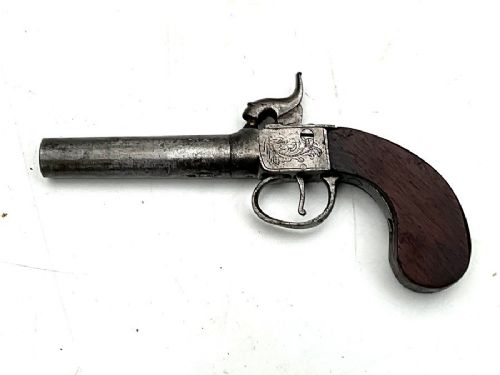
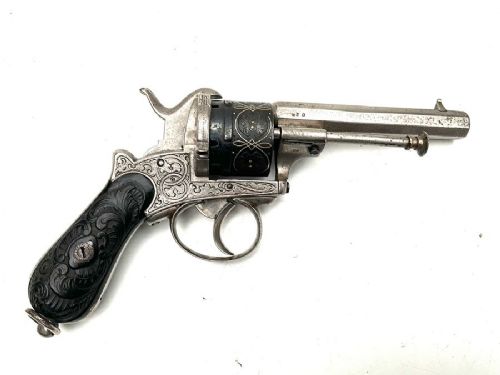
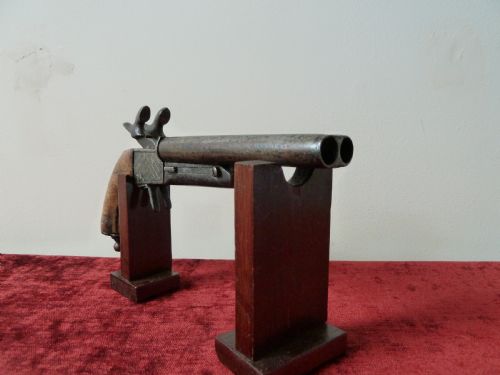
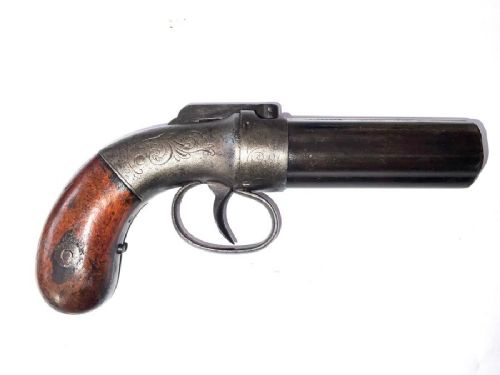
When you examine a 19th century pocket pistol, you are looking at small personal firearms designed for concealed carry by gentlemen, officers, and travellers. The pieces encountered here span the Georgian, Regency, and Victorian periods, taking forms from single-shot boxlock percussion pistols to multi-barrel pepperboxes and pinfire or rimfire revolvers.
Makers produced these arms for discretion and close-range protection, resulting in short barrels and often folding triggers or offset hammers to prevent snagging in a pocket or coat. You will frequently find matching pairs or cased sets complete with accessories, alongside individual pocket and belt models.
How They Were Made
Gunmakers built these pocket pistols using robust metals like steel and iron for barrels and actions, paired with brass frames or mounts. Stocks and grips relied on dense timbers such as walnut, ebony, and oak, shaped to fit the hand securely despite the small scale.
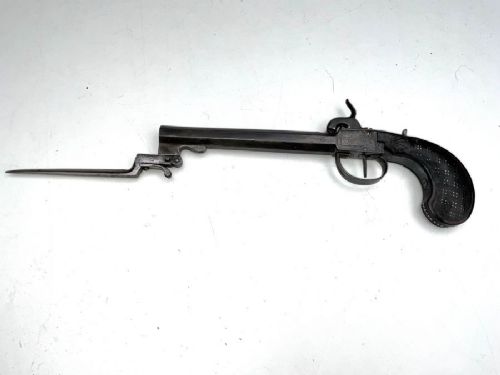
Many examples incorporate specialised mechanics such as flick bayonets, revolving barrels, or percussion ignition systems. Fitted oak presentation cases often featured internal linings of velvet to secure the pistol and its accompanying tools.
Some gamblers kept small pocket defenders close at hand.
What Varies in Quality
Quality in these firearms rests upon the precision of the mechanical action and the crispness of the metal engraving. Superior examples demonstrate tight tolerances in moving parts, smooth cylinder rotation or hammer fall, and well-executed maker signatures on the metalwork or wood.
The choice of materials and finishing further distinguishes the range. Higher-grade pieces utilise finely grained walnut or ebony grips, delicate checkering, and complete matching sets with specialised accessories rather than standard utilitarian construction.
Allen And Thurber·Auguste Francotte·Barner And Boaler·George Sherwood·Williams
The 19th Century Pocket Pistol Glossary
- Boxlock
- A firearm action where the hammer and internal lockwork are contained within the frame rather than mounted on a separate sideplate. This design provides a clean exterior line suited to pocket carry.
- Percussion
- An ignition system utilising a small priming cap struck by a hammer to ignite the powder charge within the barrel. It replaced flintlock mechanisms during the nineteenth century.
- Pepperbox
- A multi-barrel firearm where the entire cluster of barrels rotates around a central axis with each shot. This design offered multiple rounds before reloading was necessary.
- Pinfire
- An early cartridge design featuring a small pin protruding radially from the base of the cartridge shell. The hammer strikes this pin to ignite the internal priming compound.
- Rimfire
- A metallic cartridge where the priming compound is spun into the folded rim of the casing. The hammer strikes the edge of the rim to fire the round.
19th Century Pocket Pistol: Frequently Asked Questions
How were 19th century pocket pistols carried?
Owners typically carried these compact firearms in deep overcoat pockets, waistcoats, or specialised belt holsters designed for quick access.
Their short barrels and concealed or folding triggers prevented the weapon from catching on fabric when drawn in an emergency.
Are these pistols still capable of firing?
While many retain their mechanical components, these antique arms are collected primarily as historical artefacts rather than modern shooting instruments. Age, changing powder standards, and conservation concerns mean they are generally treated as display pieces.
Checking specific legal regulations regarding antique firearms in your jurisdiction is essential before acquiring one.
Why do some pocket pistols have folding bayonets?
A spring-released bayonetta fitted beneath the barrel provided a secondary means of defence if the pistol misfired or the user lacked time to reload. This feature was particularly popular on belt and pocket models intended for travellers facing highwaymen or footpads.