




19th Century Platter
When you search for a 19th century platter, you uncover serving vessels and decorative chargers spanning earthenware, porcelain, copper, and papier-mâché.
19th Century Platter
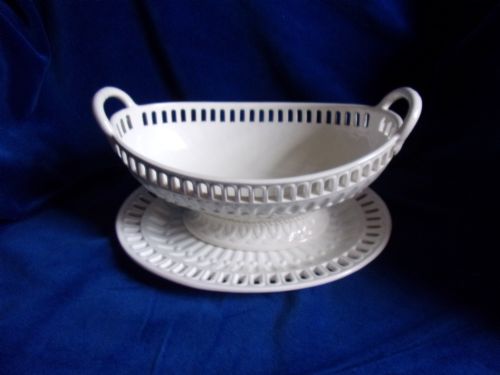
A 19th century platter encompasses large serving dishes, meat plates, oval dishes, and decorative chargers produced across English, European, and Asian workshops. These pieces served practical dining functions at the table or functioned as ornamental wall plates and centrepieces.
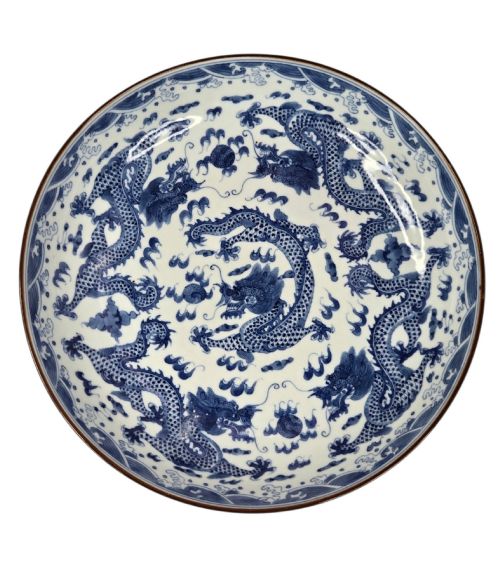
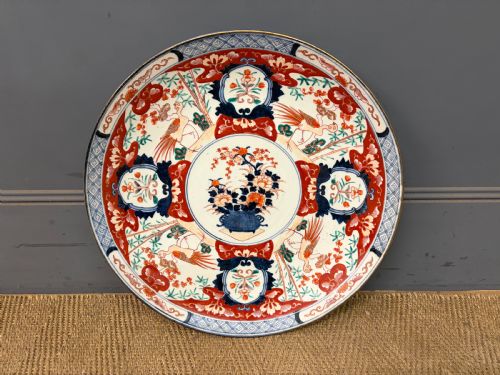
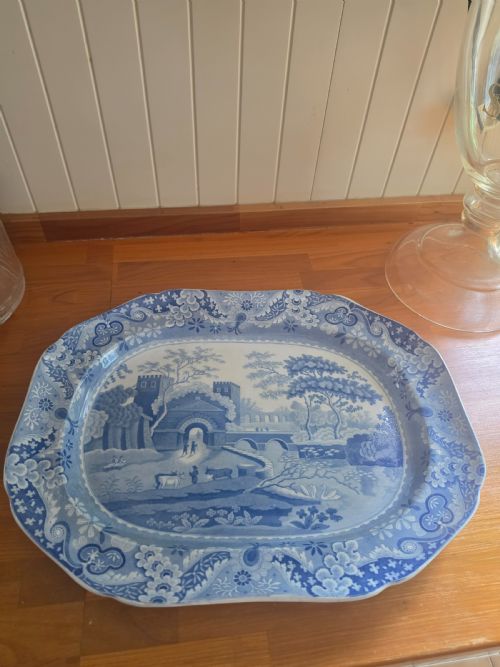
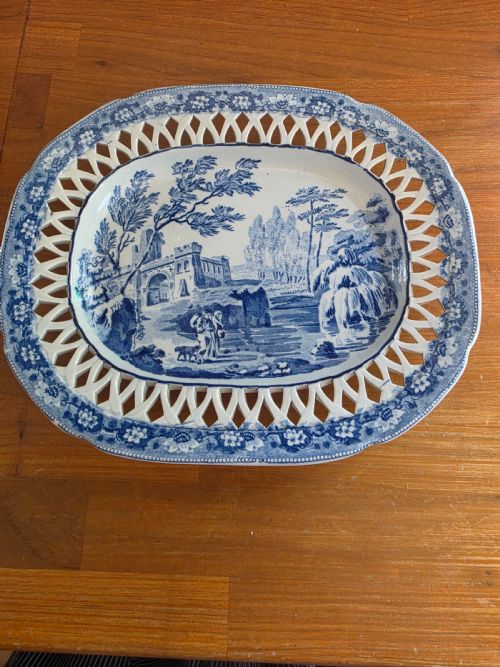
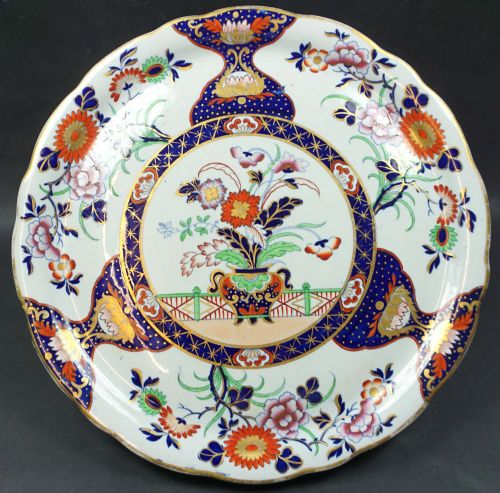
The selection on this page ranges from Georgian and Regency blue and white transferware to Victorian majolica, French porcelain, and Japanese Imari or cloisonné enamel chargers. Earthenware meat plates sit alongside lacquered papier-mâché trays and intricately decorated metalwork.
English potteries such as Spode, Davenport, and Wedgwood dominate the ceramic offerings, while Meiji period Japanese works and Middle Eastern brass or copper pieces provide contrasting regional traditions. Buyers will encounter both utilitarian serving ware and highly decorative display items from the same era.
Materials and Techniques
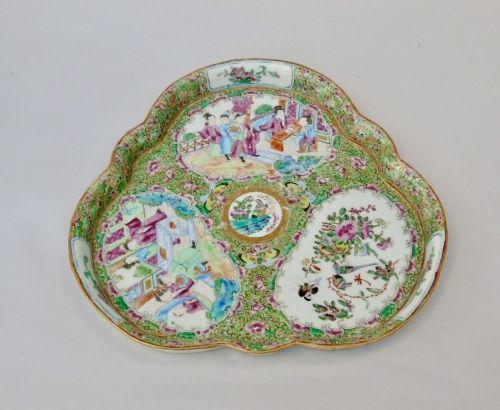
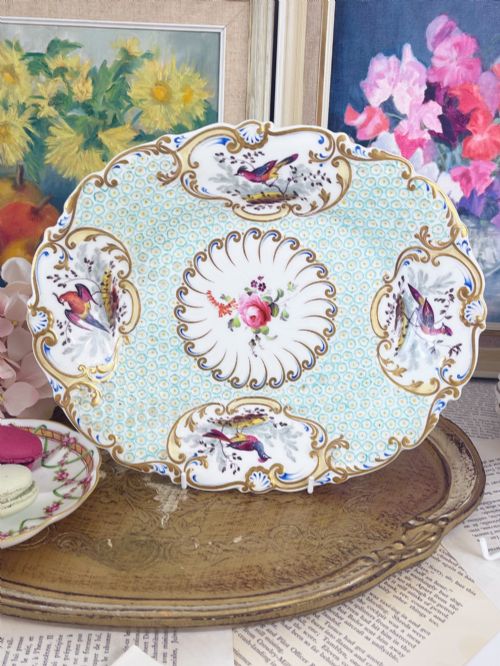
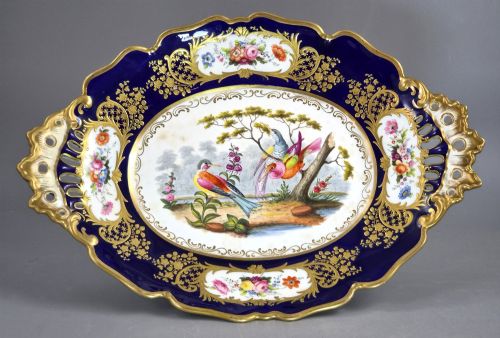
Ceramic platters rely on earthenware, creamware, and porcelain bodies finished with glazes, handpainted pigments, or blue and white transfer printing. Makers like Coalport and H & R Daniel applied detailed overglaze painting depicting birds and botanical scenes.
Metal vessels utilise copper, brass, and silver plating, often decorated with engraved repoussé work, silver inlay, or champlevé enamel with gilt bronze mounts. Japanese works employ cloisonné enamel techniques, fusing enamel wires to metal bases.
Papier-mâché trays and articles use layered paper pulp compressed and varnished with japanned finishes, occasionally retaining original hand-painted ornamentation.
19th Century Platter Retail Price Guide 2026
Typical asking prices for 19th century platter among the pieces listed under this phrase on Sellingantiques today, from the lower quarter to the upper quarter. They describe what is for sale here now, not the wider market.
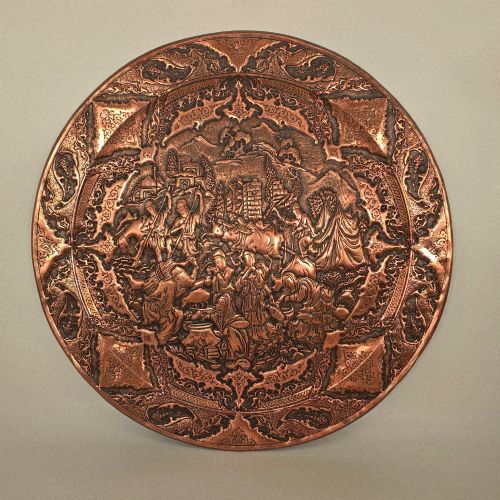
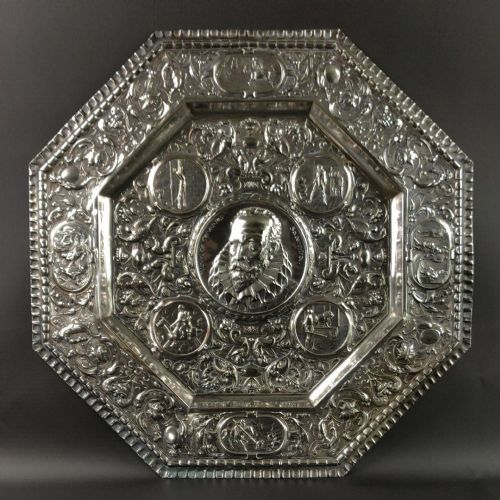
Miguel De Cervantes finds himself immortalised in heavy repoussé copper alongside leaping koi and sprawling dragons.
Assessing Quality and Execution
Quality rests in the crispness of the transfer printing or the brushwork control in handpainted porcelain and earthenware dishes. Superior pieces display finely detailed avian motifs, historical battle scenes, or precise calligraphic signatures on cloisonné enamels.
The complexity of manufacturing influences distinction, such as deep repoussé relief work on copper chargers or multi-fired Japanese Imari palettes. Intricate mounting in gilt bronze and champlevé enamel indicates higher-tier decorative commissions.
H & R Daniel·Coalport·Spode·Davenport·Hicks & Meigh·Thomas Bradbury & Sons·Copeland·Minton·John Harrison·Henry Wilkinson
The 19th Century Platter Glossary
- Charger
- A large decorative plate or dish intended primarily for display rather than passing food at the table. These often feature elaborate pictorial scenes.
- Transferware
- Pottery decorated by applying a monochrome printed design from an engraved copper plate onto the ceramic body. This technique allowed for consistent mass production of complex patterns.
- Repoussé
- A metalworking technique where the metal is hammered from the reverse side to form a raised design in relief. It appears frequently on copper and brass chargers.
- Imari
- A style of Japanese export porcelain characterised by a palette of underglaze blue, iron red, and gold. These pieces were widely produced during the Meiji period.
- Cloisonné
- An enamelling method where metal wires form raised partitions, known as cloisons, which are filled with coloured enamel pastes and fired. Japanese examples from the late nineteenth century are particularly noted for this work.
- Creamware
- A refined earthenware developed in England during the eighteenth century, possessing a pale yellowish-buff glaze. Wedgwood produced notable examples of this material.
19th Century Platter: Frequently Asked Questions
How were nineteenth-century platters used?
These pieces functioned variously as heavy meat plates for carving roasts, table serving dishes, or decorative wall chargers. Papier-mâché and metal trays managed the transit of tea services and glassware.
Larger decorative chargers and cloisonné items remained on display on sideboards or walls to showcase household wealth and artistic taste.
What is the difference between earthenware and porcelain platters?
Earthenware and creamware bodies are opaque, slightly thicker, and fired at lower temperatures, making them common for everyday utilitarian dining and transferware.
Porcelain is finer, vitreous, and translucent, suited to delicate handpainted scenes and high-status European or Asian dining services.
How do I identify Japanese Meiji period items?
Japanese Meiji period items often feature distinct Imari palettes of cobalt blue, iron red, and gilt, or meticulous cloisonné enamel wirework depicting dragons, koi, and birds.
These pieces emerged following the opening of Japanese trade routes in the nineteenth century and display exceptional metal or ceramic craftsmanship.
Can antique ceramic platters still be used for food?
While many nineteenth-century earthenware and porcelain platters remain structurally sound, centuries of use can cause glaze crazing and absorption.
Displaying them as wall art or decorative centrepieces protects the antique glaze from staining and preserves handpainted overglaze details.