



19th Century Pine Credenza
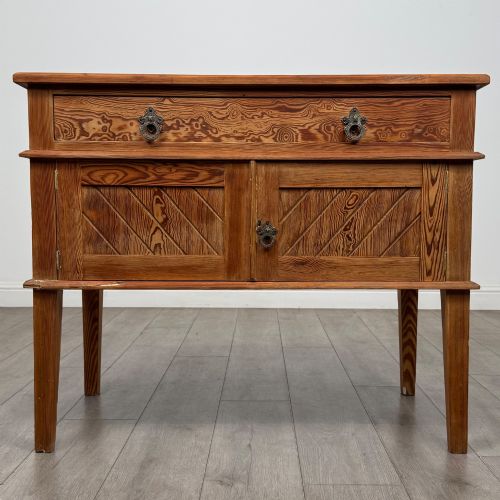
A 19th century pine credenza offers honest utility and rustic charm, providing ample storage while anchoring a room with warm, characterful timber.
19th Century Pine Credenza
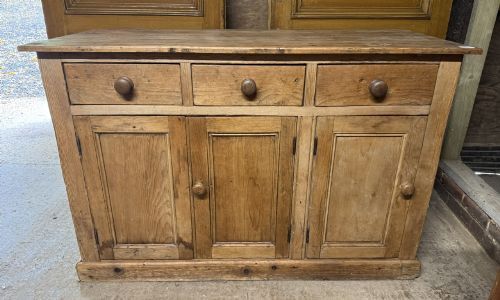
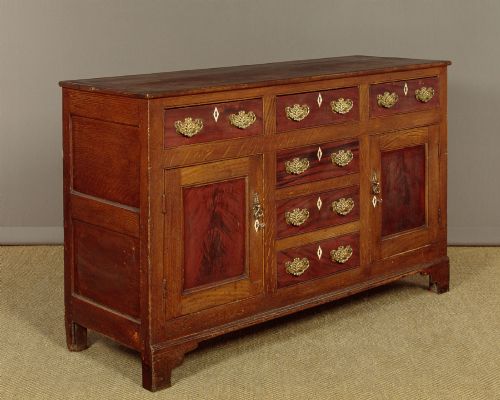
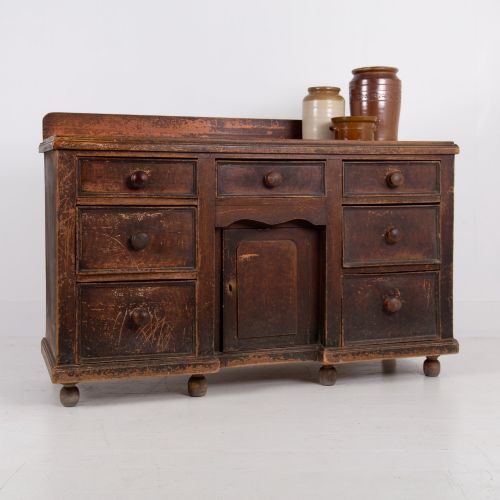
Buyers seeking a 19th century pine credenza encounter a varied selection of substantial storage furniture, spanning robust kitchen dresser bases, tall cupboards, and sideboards. These pieces originate from domestic and country settings across England, Scotland, Sweden, and Hungary, reflecting practical historical needs.
The objects listed under this description frequently manifest as painted or waxed pine furniture, including chiffoniers and cabinets with doors and drawers. While formal credenzas are less common, the related sideboard and dresser base forms dominate the selection with similar proportions and utility.
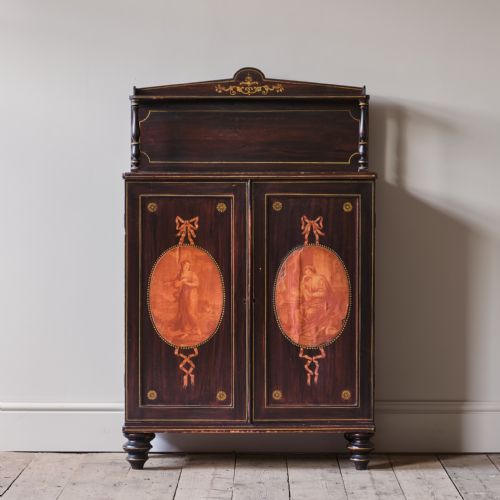
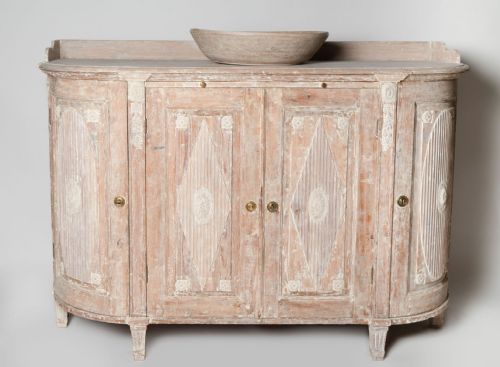
Stylistic influences range from plain Victorian country utility to decorative Scandinavian painted finishes and simulated rosewood graining. Pieces span the Georgian and Victorian eras, offering buyers a choice between clean unpainted timber and rich layers of historic colour.
Materials and construction
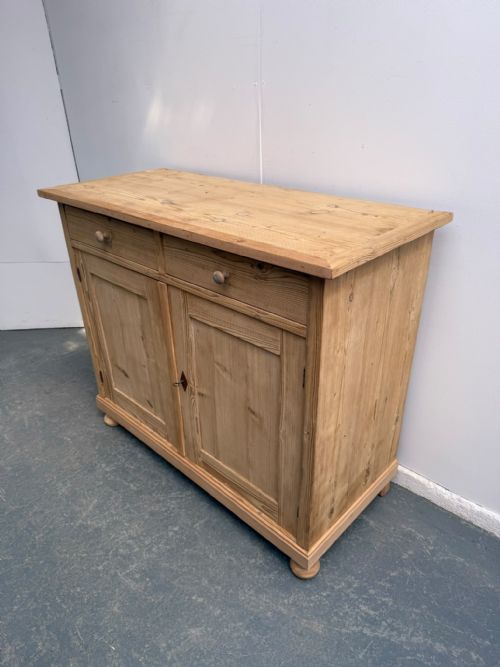
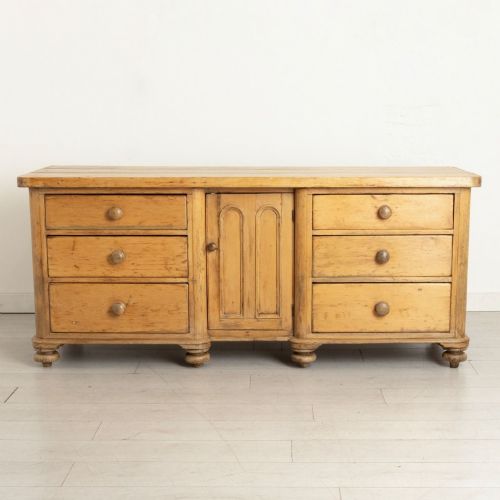
Construction relies heavily on solid pine, occasionally specified as pitch pine, shaped into sturdy frames, dovetailed drawers, and panelled doors. Iron and brass hardware such as hinges and pulls secure the structure, while occasional bone or ceramic details appear on handles.
Many surfaces carry historic paint schemes, including original scraped paint, ragwork decoration, hand-painted floral motifs, and simulated wood graining. Alternatively, unpainted timber surfaces are left bare or prepared for traditional wax finishes.
Some Victorian kitchen dresser bases feature a built-in bread slide, ready for slicing loaves once the baking was done.
Assessing quality and character
Quality rests in the survival of original surface finishes, where untouched scraped paint or authentic ragwork commands greater interest than later re-painting. The integrity of the timber, the crispness of any hand-carved floral details, and the smooth operation of drawers and doors define the better examples.
Proportion and scale also dictate desirability, particularly in regional pieces such as bowfront sideboards or large two-door dresser bases. The depth of patination on the pine and the presence of original iron or brass fittings elevate a piece above standard utility items.
Melissa White
The 19th Century Pine Credenza Glossary
- Dresser base
- A low cabinet featuring cupboards and drawers, historically used for food preparation and storage in country kitchens.
- Ragwork paint
- A decorative paint technique where rags are used to manipulate the wet surface, creating a mottled or textured finish on Scandinavian furniture.
- Chiffonier
- A compact sideboard or low cabinet equipped with drawers and doors, popular during the Regency and Victorian periods.
- Pitch pine
- A durable, resinous variety of pine known for its prominent grain pattern and robust structural qualities.
- Simulated rosewood
- A painted graining technique designed to make cheaper pine mimic the darker, more expensive appearance of exotic rosewood.
19th Century Pine Credenza: Frequently Asked Questions
What is a 19th century pine credenza?
A 19th century pine credenza or related sideboard is a sturdy storage piece made primarily from pine during the eighteen-hundreds.
These items encompass kitchen dresser bases, cupboards, and chiffoniers originating from British and Scandinavian country homes.
How do I care for painted pine furniture?
Painted pine surfaces benefit from dusting with a soft, dry cloth rather than harsh chemical cleaners.
Keep these pieces away from direct sunlight and excessive moisture to protect the integrity of the historic paint finishes.
Are these pieces usually painted or unpainted?
The selection includes both bare timber intended for waxing and pieces retaining original decorative paint.
Scraped paint, ragwork, and floral motifs are common decorative treatments found particularly on Scandinavian cupboards and English bases.
Where were these cupboards and sideboards made?
Surviving examples originate from workshops across England, Scotland, Sweden, and Hungary.
Regional preferences influenced whether a piece received a simulated rosewood finish, floral hand-painting, or plain waxed pine.