



19th Century Piano Seat
A 19th century piano seat provides sturdy support at the keyboard while reflecting the refined craftsmanship of the period.
19th Century Piano Seat
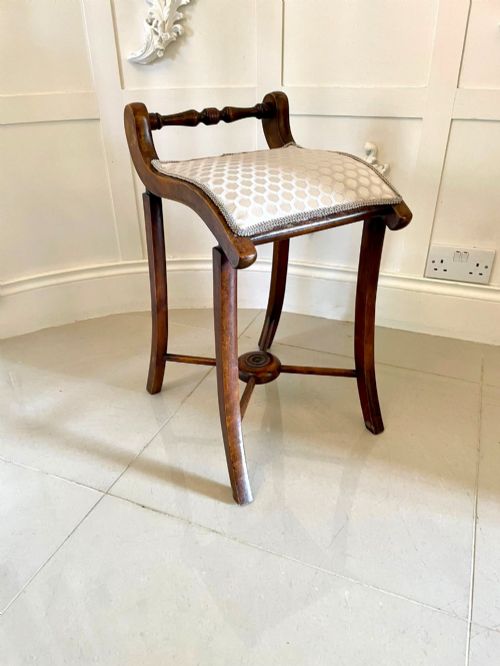
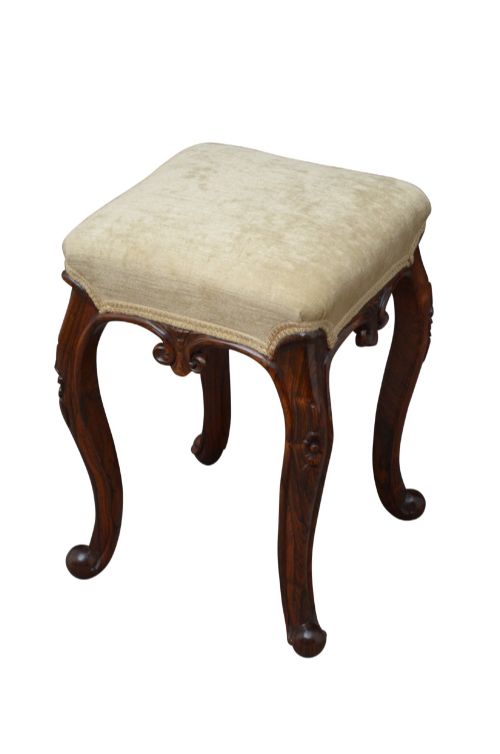
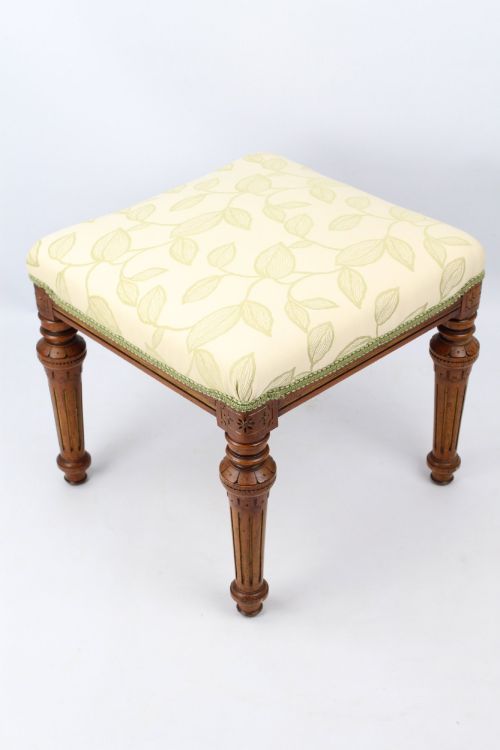
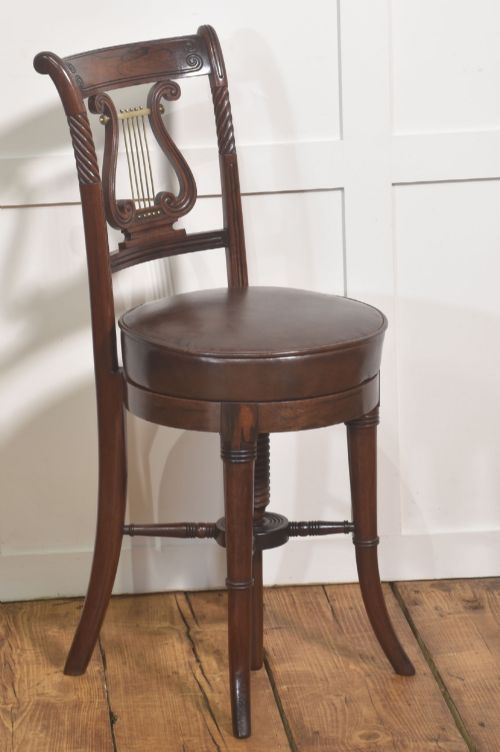
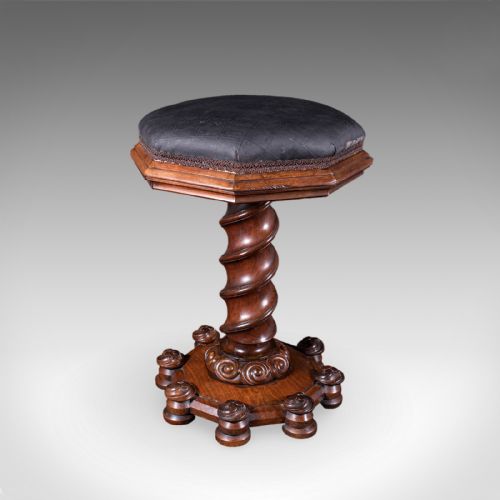
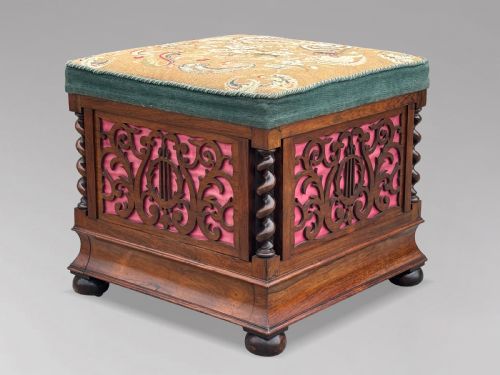
A 19th century piano seat serves musicians and collectors alike, appearing primarily as stools, revolving music chairs, and dressing table seats. These pieces emerge from periods spanning the Georgian era, the Regency years, and through the Victorian reign.
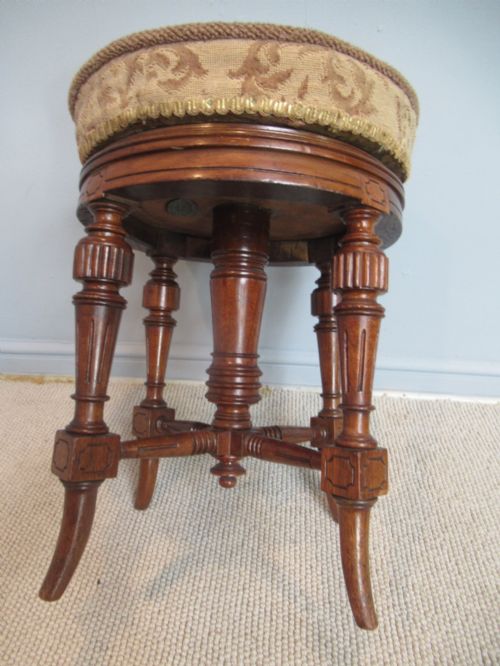
The most common formats on this page are revolving stools and adjustable seats designed for comfort during practice. Woods such as mahogany, walnut, and rosewood dominate the selection, often paired with upholstered tops in velvet, leather, or original needlepoint.
Materials and construction methods
Cabinet makers utilised dense hardwoods like mahogany, walnut, and rosewood to build durable frames capable of withstanding constant adjustment and movement. Brass mechanisms feature prominently in the construction of screw-top adjustable seats and swivel pivots.
Upholstery techniques involved textile coverings such as velvet, damask, and leather, frequently secured over padding on rigid timber foundations. Decorative detailing relied on hand carving, ormolu mounts, and brass inlay applied to the timber frame.
19th Century Piano Seat Retail Price Guide 2026
Typical asking prices for 19th century piano seat among the pieces listed under this phrase on Sellingantiques today, from the lower quarter to the upper quarter. They describe what is for sale here now, not the wider market.
Listings feature mahogany, walnut, and rosewood alongside exotic woods like padouk and goncalo alves.
Distinctions in craftsmanship
The refinement of the timber carving and the complexity of the adjusting mechanism mark the division between standard examples and exceptional pieces. Maker attribution through stamps or notable workshop origins elevates the standing of a stool considerably.
The integrity of the timber, the survival of original upholstery materials like needlepoint or leather, and the precision of brass inlays distinguish superior survivals from simpler country variants.
Jennens and Bettridge·Charles Nosotti·Holland and Son
The 19th Century Piano Seat Glossary
- Revolving stool
- A seat featuring a mechanical screw or swivel pivot allowing the top to turn and adjust in height. This mechanism permitted players to find a comfortable seating position.
- Music stool
- A specialised seat designed for use at a piano or harp, often incorporating height adjustment. These pieces frequently match the timber of contemporary keyboard instruments.
- X-frame
- A structural base formed by intersecting curved or straight wooden members shaped like the letter X. This design provides both stability and decorative flair to the piece.
- Ormolu
- Gilded bronze mounts applied to furniture for decorative effect. It appears on Empire-style pieces to add metallic contrast to dark woods.
- Goncalo Alves
- A dense exotic hardwood with striking figuring, utilised in cabinet making during the Victorian period. It offers a rich brown tone with dark contrasting streaks.
19th Century Piano Seat: Frequently Asked Questions
How do adjustable piano seats work?
Many examples utilise a threaded central screw mechanism operated by turning the upholstered seat top. This action raises or lowers the sitting height to suit the player.
Other variations employ side levers or friction pins, though screw tops remain the most frequently encountered design on these seats.
How do I identify a Victorian piano seat?
Victorian pieces often display darker hardwoods such as walnut and rosewood, alongside styles ranging from simple turned legs to ornate Rococo Revival carving. Look for revolving mechanisms and heavy upholstery.
Earlier Georgian and Regency examples tend to feature lighter mahogany or brass inlay, whereas later Victorian items embrace diverse woods and stylistic revivals.
Are original fabric seats common?
Survival of original textile upholstery, such as needlepoint, damask, or leather, occurs occasionally across these listings. Many pieces have undergone reupholstery to preserve usability.
When original fabric does survive, it provides valuable insight into the decorative tastes and materials favoured during the nineteenth century.