

19th Century Pastoral Oil
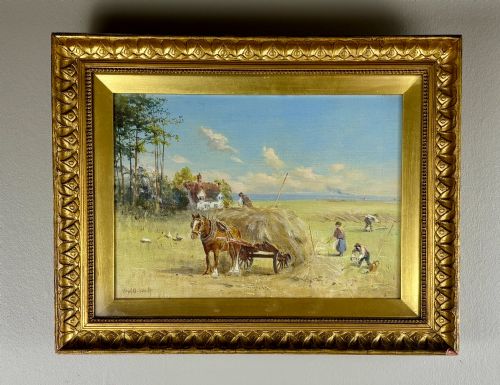
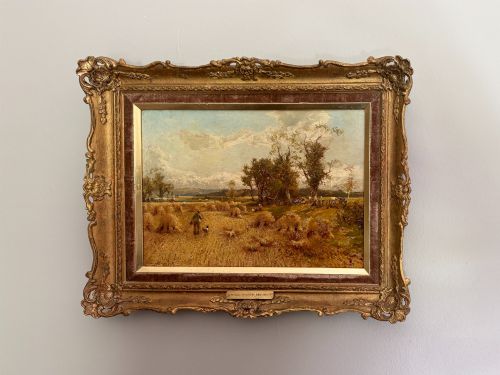
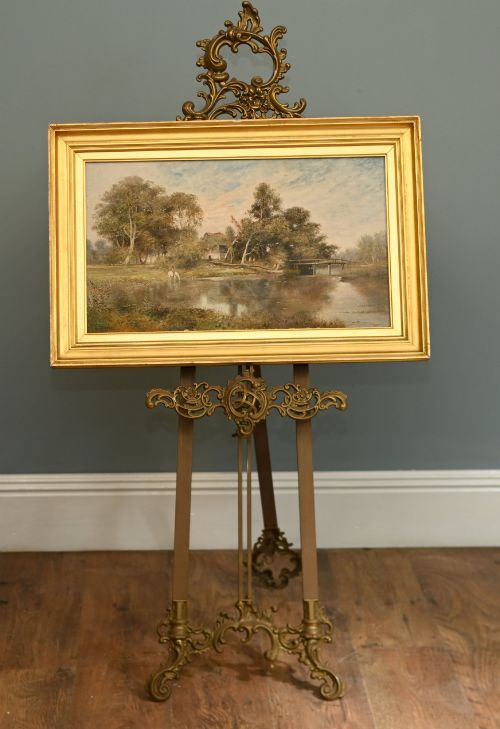
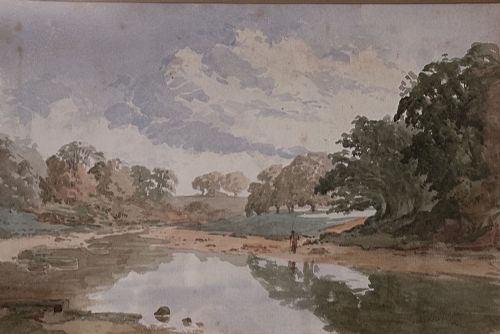
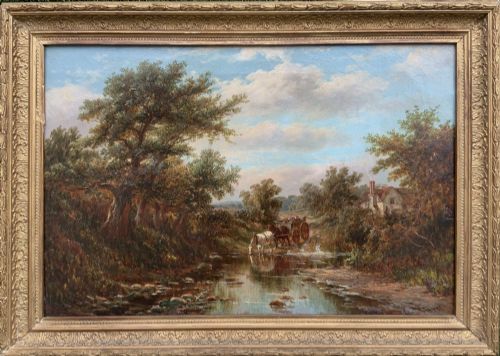
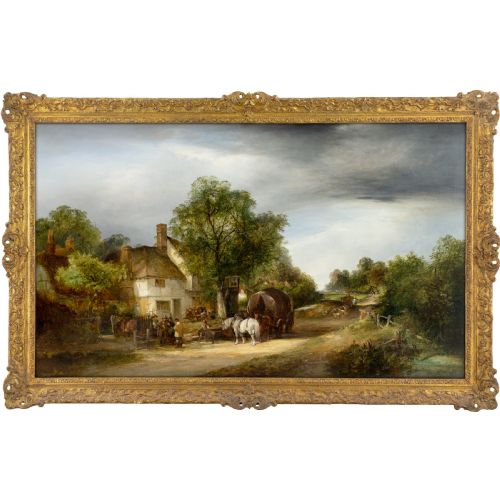
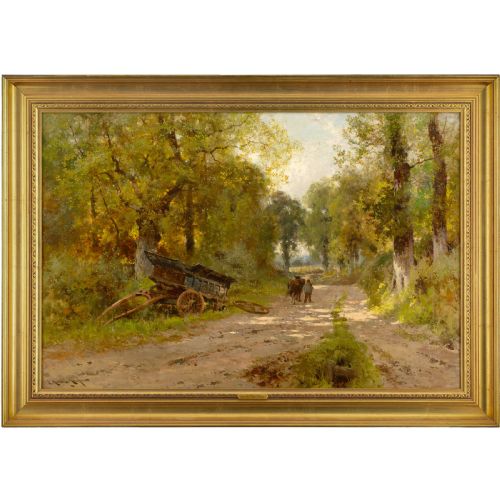
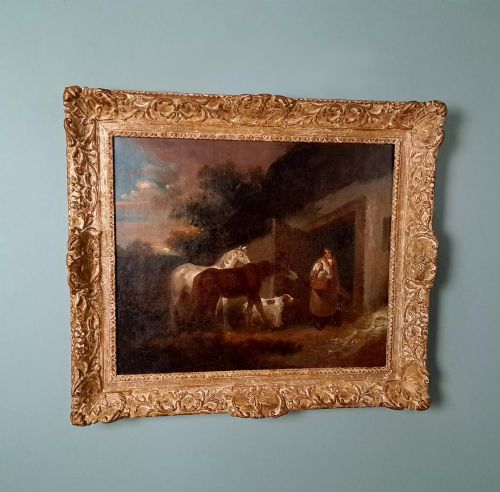
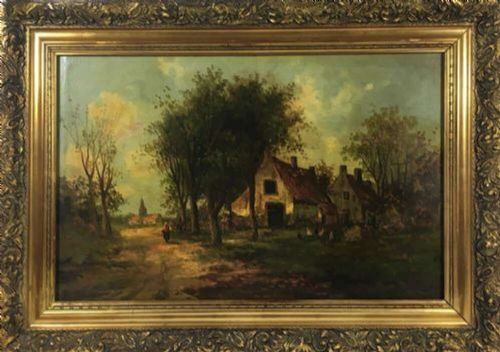
When you search for 19th century pastoral oil, you uncover canvases capturing rural life, farmyard scenes, and grazing livestock across Britain and Europe.
19th Century Pastoral Oil
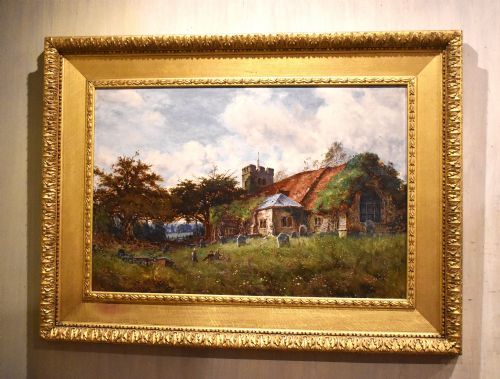
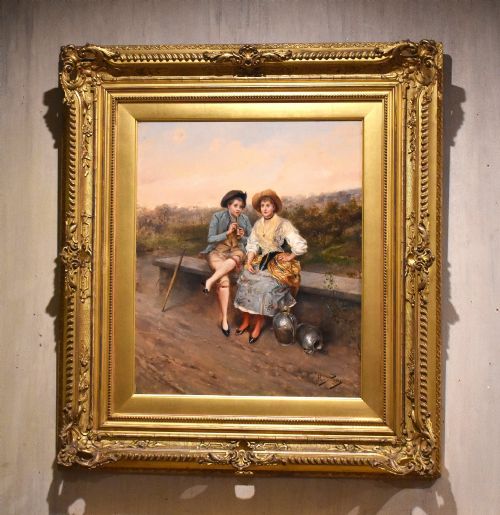
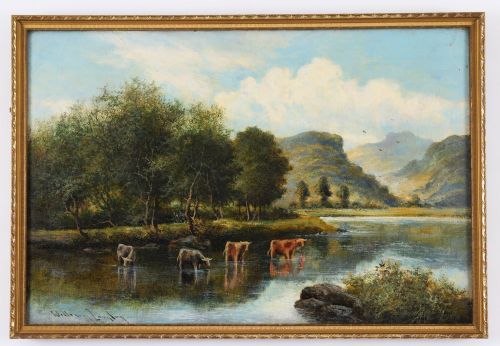
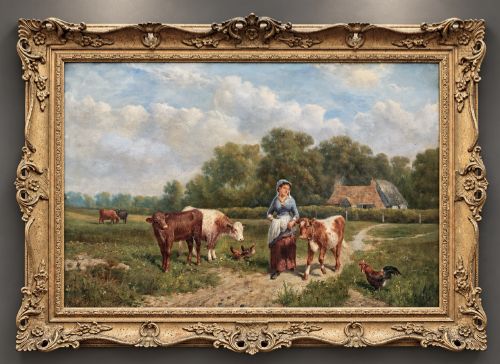
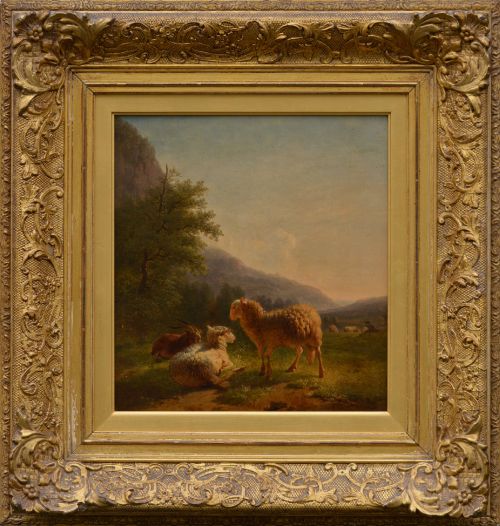
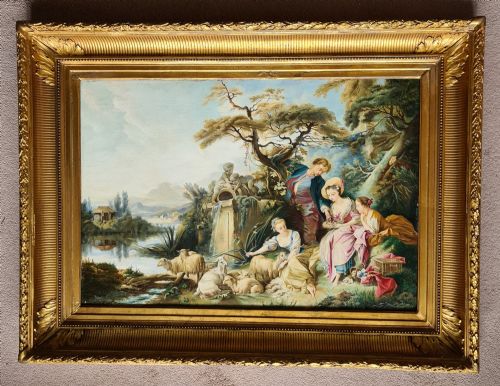
A 19th century pastoral oil portrays rural landscapes populated by shepherds, milkmaids, cattle, sheep, and horses, reflecting the era's fascination with agrarian life.
The works span British, French, Dutch, and Belgian schools, moving between romantic ideals and observed realism.
Most examples found here date from the Victorian era and adopt standard canvas, wood panel, or board supports.
How They Were Made
Artists applied rich oil paint primarily onto stretched canvas or wooden boards, frequently building texture with layered brushwork.
Many surviving pieces retain their original giltwood and gesso frames, often intricately moulded to complement the subject matter.
Cattle and sheep frequently steal the focus from human figures, often gazing directly at the artist with calm indifference.
What Varies in Quality
Quality rests in the handling of light, anatomical precision of animals, and atmospheric depth within the landscape.
Works by recognised regional schools or documented painters demonstrate superior command over composition and colour harmony.
Eugène Verboeckhoven·Thomas Sidney Cooper·William Watson Jnr·John Emms·Franz van Severdonck
The 19th Century Pastoral Oil Glossary
- Oil on Canvas
- A traditional painting medium where pigments bound in drying oil are applied to a woven fabric support.
- Wood Panel
- A rigid support base made from timber, commonly utilised for smaller compositions during the period.
- Giltwood
- Timber carved and coated with gold leaf, frequently forming the decorative frames of Victorian artworks.
- Barbizon School
- A French movement of landscape painters who worked directly from nature and influenced subsequent rural realism.
- Gesso
- A plaster-like mixture applied to wooden panels or frames to prepare a smooth surface for painting or gilding.
19th Century Pastoral Oil: Frequently Asked Questions
How do I identify a pastoral painting?
Look for rural motifs such as shepherds, herdsmen, cattle, and sheep set against open countryside or river landscapes.
These subjects celebrate agrarian simplicity, a dominant theme in nineteenth-century European art.
Were these artworks originally framed?
Most high-quality nineteenth-century canvases were paired with ornate giltwood and gesso frames designed to enhance the display.
Original frames provide important contextual clues regarding the age and provenance of the painting.
What is the Barbizon influence?
The Barbizon school championed naturalistic observation, focusing on unidealised rural scenes and atmospheric landscape effects.
Artists adopting this approach prioritised direct engagement with the countryside over theatrical studio compositions.
How should I care for an oil painting?
Keep paintings away from direct sunlight, excessive moisture, and rapid temperature fluctuations to protect the canvas and paint layers.
Dust surfaces gently with a soft, dry brush and avoid liquid cleaners.