
19th Century Pastoral Oil Painting
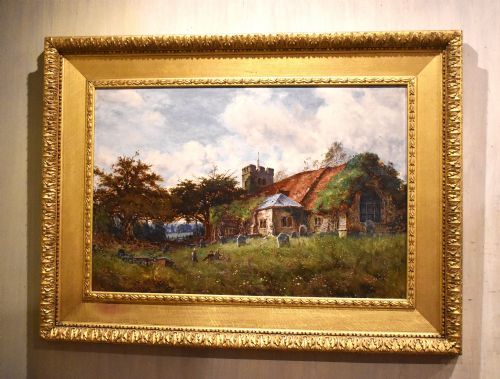
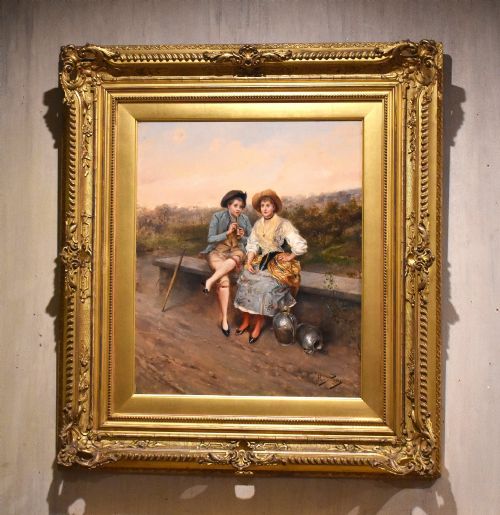
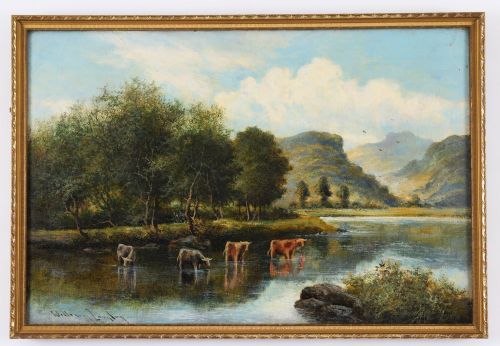
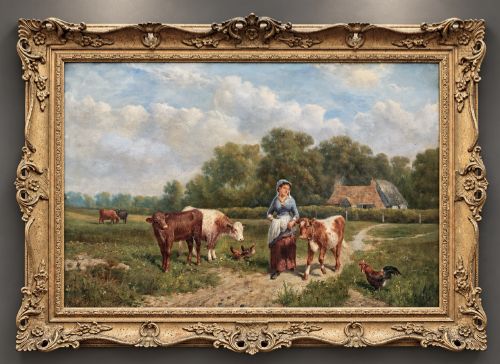
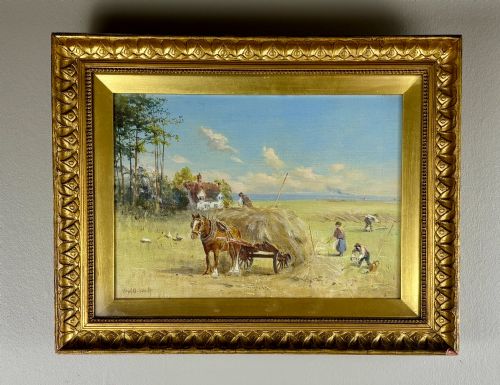
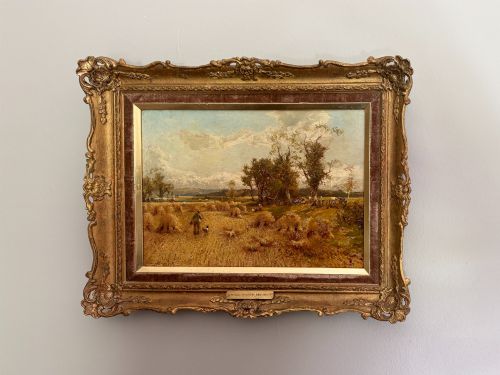
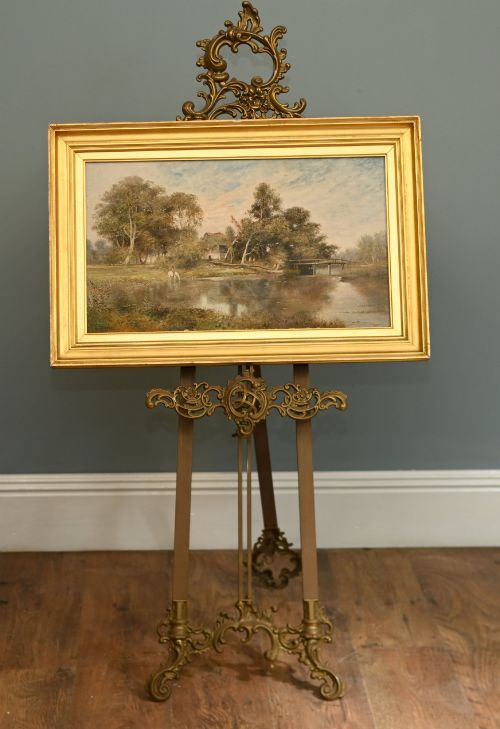
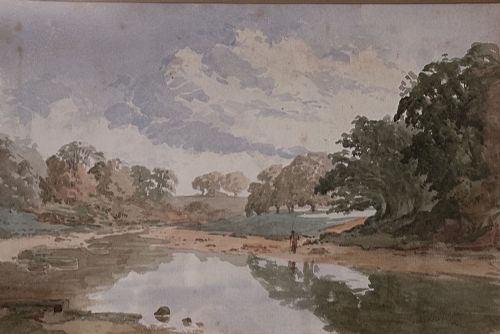
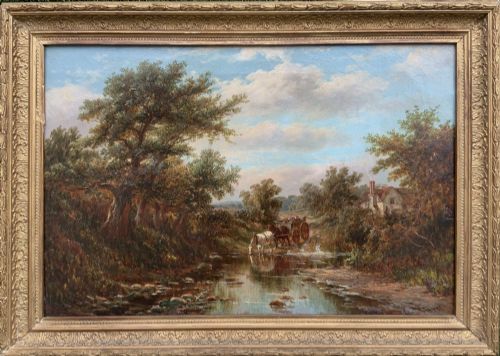
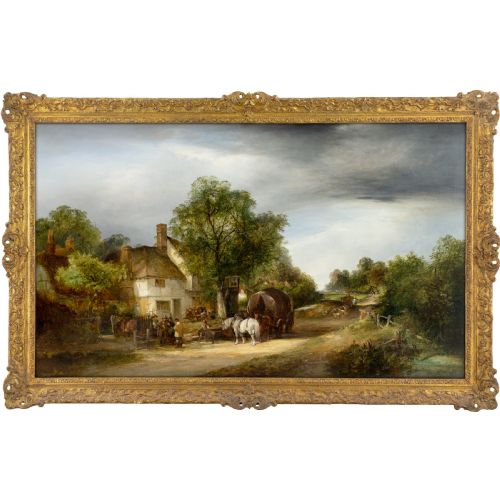
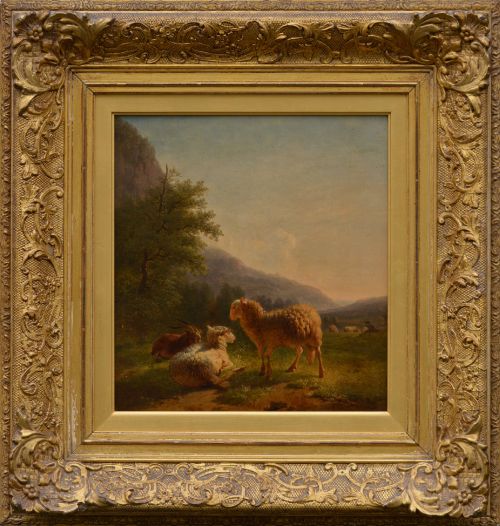
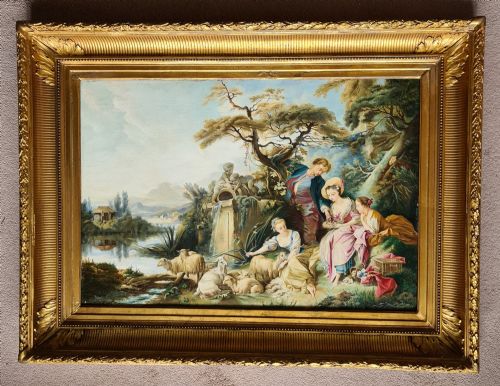
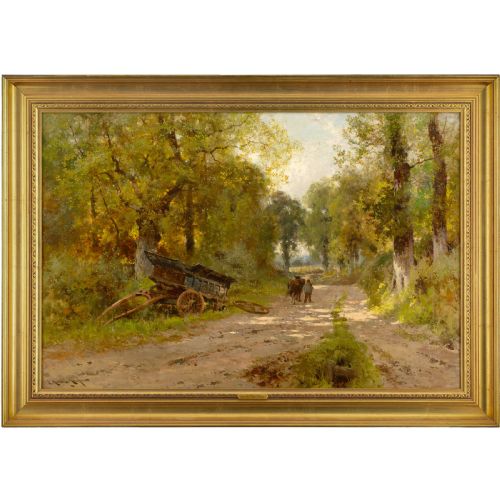
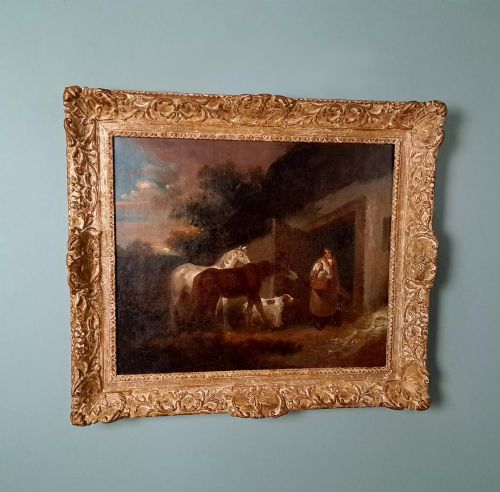
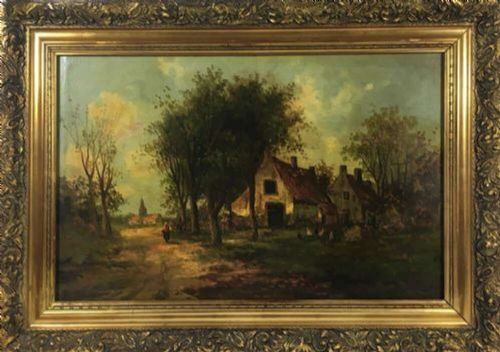
A 19th century pastoral oil painting brings the quiet countryside, grazing livestock and rural figures into a room.
19th Century Pastoral Oil Painting
A 19th century pastoral oil painting depicts rural life, agricultural landscapes, riversides, and herds of cattle or sheep tended by shepherds and milkmaids. These works capture idealized countryside scenes from the Victorian era across Britain, France, Belgium, and the Netherlands.
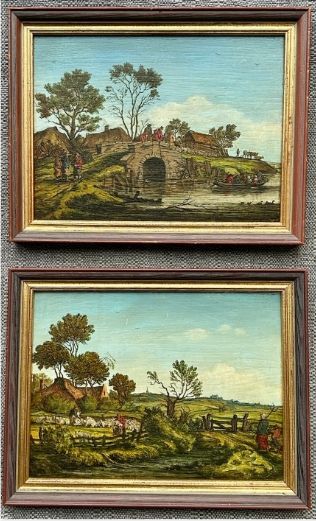
The dominant forms on this page include framed artwork on canvas and wooden boards, often created by regional schools such as the English School or the French Barbizon School. Canvas and wood panel supports house scenes ranging from quiet riverbanks to bustling harvest fields.
Buyers will encounter framed pieces displaying distinct national styles, from Victorian realism to continental romanticism and Flemish influences. The subjects focus squarely on pastoral harmony, depicting animals and figures integrated into natural light.
What varies in quality
Quality rests on the sureness of the brushwork, the handling of natural light, and the anatomical accuracy of rendered animals and figures. Master hands capture texture in wool, cattle hide, and foliage with distinct economy and precision.
The depth of the composition and the integrity of the original support surface distinguish finer regional works from standard decorative pieces. Provenance and clear artist attribution elevate specific canvases within the wider spectrum of nineteenth-century output.
Regional styles represented include the English School, French Barbizon movement, and 19th Century Flemish and Dutch schools.
Eugène Verboeckhoven·W Klombeck·John Horace Hooper·William Joseph Shayer Senior·Mark William Langlois·David Bates·Walter Heath Williams·Thomas Sidney Cooper·Richard Redgrave·Robert Watson·Albert Rieger·William Watson Jnr·Douglas Cameron·T C Hofland·Henry H Parker·Miles Birkett Foster·Henry Schouten·Johannes de Haas·John Emms·A M Gauci·Charles Clair·Charles Zacharie Landelle·William Henry Mander·Thomas Baker of Leamington·Franz van Severdonck
The 19th Century Pastoral Oil Painting Glossary
- Barbizon School
- A group of French landscape painters who worked from nature and influenced mid-century pastoral art. Their focus on realism shifted outdoor painting toward naturalistic observation.
- Giltwood
- Wood that has been covered with a thin layer of gold leaf or gilt. It frequently forms the ornate borders of nineteenth-century frames.
- Gesso
- A plaster-like mixture applied to wood panels or frames as a base for paint or gilding. It creates a smooth, durable surface for decorative details.
- Wood Panel
- A rigid wooden support used by artists before or alongside canvas. Panels preserve fine detail particularly well in Flemish and Dutch works.
- Realism
- An artistic movement focused on depicting subject matter truthfully without artificiality. In pastoral works, this appears in the unembellished rendering of rural laborers and farm animals.
19th Century Pastoral Oil Painting: Frequently Asked Questions
What defines a pastoral oil painting?
These works focus exclusively on rural and agricultural subjects, including shepherds, cattle, riversides, and harvest fields. They reflect nineteenth-century romantic or realistic interpretations of country life.
The compositions usually balance human figures and domesticated animals within an expansive natural landscape, emphasising quiet harmony over dramatic events.
How do I identify the period of the painting?
Dates are typically confirmed through artist signatures, exhibition records, framing styles, and the specific characteristics of canvas or wood panel supports. Nineteenth-century works often carry distinct school traits, such as Barbizon or Victorian realism.
Clothing styles on figures and the specific handling of landscape backgrounds also help narrow down the decade of creation.
Where were these pastoral scenes painted?
Artists worked across Britain, France, Belgium, and the Netherlands, capturing local agricultural landscapes and regional livestock. British and continental schools developed distinct approaches to light and atmosphere.
French artists often leaned toward Barbizon realism, while British and Belgian painters frequently focused on detailed animal portraits within countryside settings.
How should I care for an oil painting on wood?
Wood panels require stable indoor humidity and temperature to prevent the wood from warping or splitting over time. Keep paintings away from direct sunlight and heavy heat sources.
Dust the surface gently with a soft, dry brush and avoid using liquid cleaners or chemical solvents on the paint or gilt frame.