


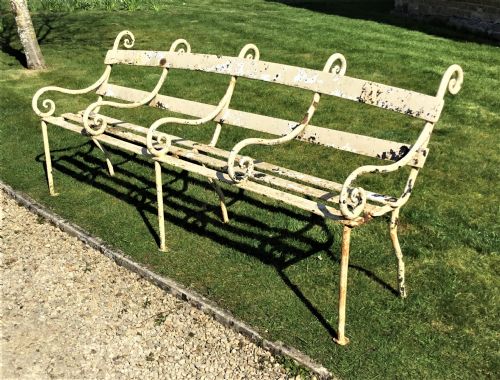
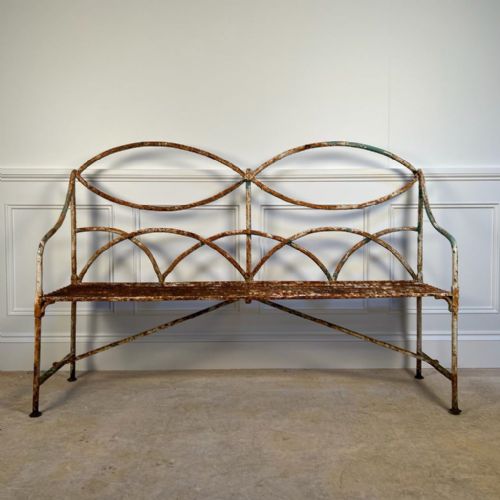
19th Century Park Bench
A 19th century park bench brings lasting structure to a garden path or terrace, offering robust metalwork and aged timber that endure beneath open skies.
19th Century Park Bench
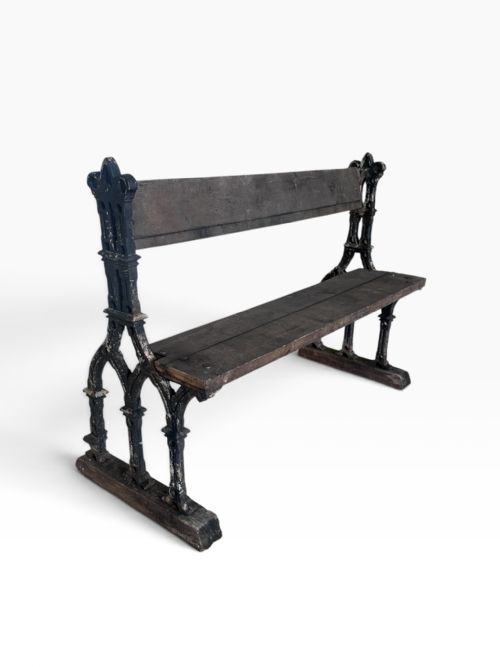
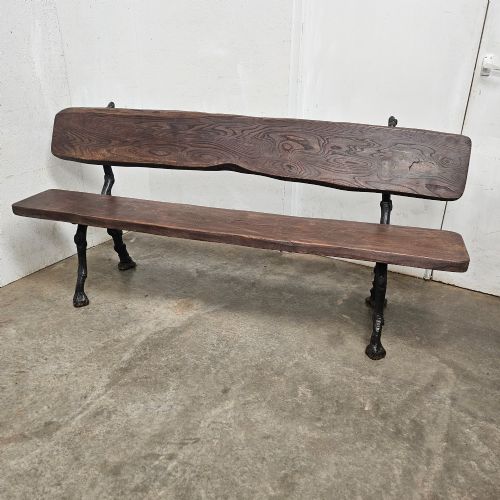
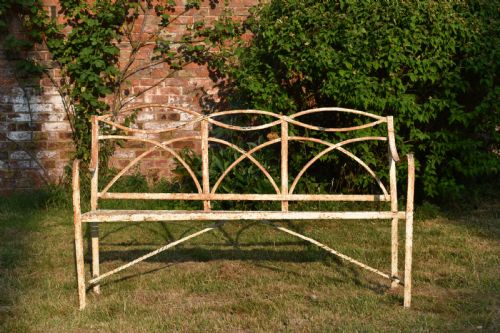
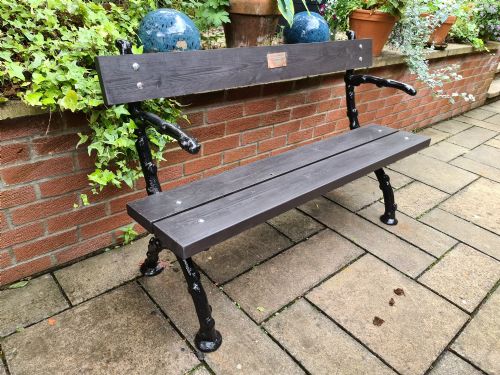
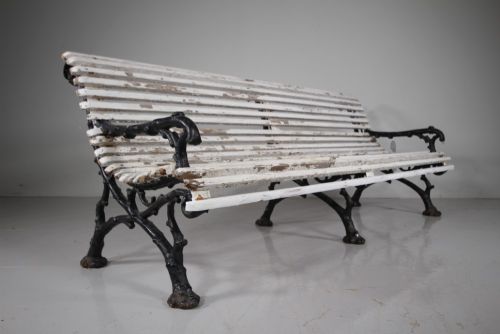
A 19th century park bench combines utilitarian strength with period design, emerging from workshops across England and France during the Regency and Victorian eras. These garden seats range from simple strapwork frames to elaborate rustic patterns modelled on natural branches.
The versions most frequently met on this page rely on durable metals paired with wooden slats or formed entirely as single metal castings. Forms vary from compact two seater benches to longer four seater garden seats built for extensive lawns.
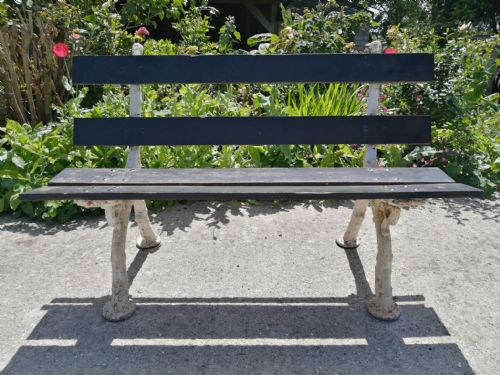
Stylistic variations span the austere geometry of Regency strapwork, the ornate motifs of Victorian Gothic, and the playful realism of French faux bois designs. Each piece reflects the specific manufacturing ambitions of its decade, from the early 1850s forward.
Materials and construction methods
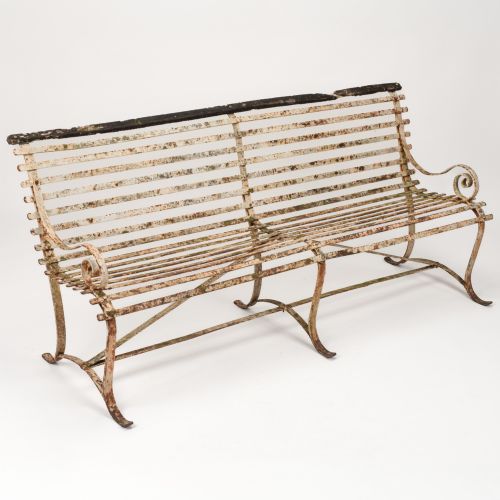
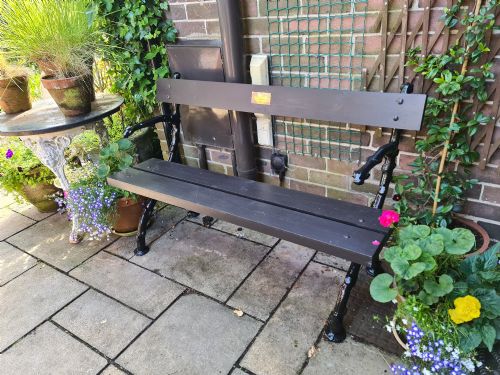
Foundries utilised cast iron and wrought iron to form the structural ends and intricate backs of these garden seats, pouring molten metal into detailed moulds or hammering hot bars into geometric strapwork. These iron components provide the heavy support necessary for outdoor placement.
Timber elements, including seasoned elm and assorted local hardwoods, form the slatted seats and backrests secured directly to the metal frames. Protective layers of paint often coat both the timber and iron to guard against weathering.
19th Century Park Bench Retail Price Guide 2026
Typical asking prices for 19th century park bench among the pieces listed under this phrase on Sellingantiques today, from the lower quarter to the upper quarter. They describe what is for sale here now, not the wider market.
Listings feature periods spanning the Regency and Victorian eras, utilising cast iron, wrought iron, elm, paint and timber.
Assessing quality in period garden seating
Superior examples of a 19th century park bench display crisp casting detail in the ironwork, where foliage, strapwork or branch patterns remain sharp and well defined rather than blurred by successive layers of paint. The integration between the metal frame and the wooden slats demonstrates careful carpentry that accommodates natural wood movement.
The integrity of the original construction separates standard utilitarian seating from finer artistic commissions. Pieces retaining their early painted surfaces or bearing maker attribution possess greater historical cohesion.
The 19th Century Park Bench Glossary
- Cast iron
- Molten iron poured into a mould to create rigid, highly decorative components. This technique allows for complex patterns such as Victorian Gothic tracery and naturalistic foliage.
- Wrought iron
- Iron heated and hammered by hand into shape, producing strong, flexible structural elements. It appears frequently in the linear geometry of Regency strapwork.
- Faux bois
- A decorative technique mimicking the texture and appearance of real wood. Makers applied this style in iron or concrete to evoke natural tree branches.
- Strapwork
- An ornamental motif composed of flat, interwoven bands resembling leather straps. This style defines many Regency period garden designs.
- Regency
- An architectural and design period spanning the early decades of the nineteenth century. It favours classical restraint, clean lines and disciplined metalwork.
19th Century Park Bench: Frequently Asked Questions
How do I care for an iron and wood garden bench?
Keep the timber clean and dry during winter months to prevent moisture damage. Apply appropriate exterior treatments to the wooden slats while maintaining the protective painted coating on the iron framework.
Position the bench on firm, level ground to avoid undue stress on the joints. Regular gentle washing removes dirt and debris that can trap moisture against the metal and wood.
Can I leave my 19th century bench outside all year?
Cast iron and wrought iron withstand outdoor elements effectively, though prolonged exposure to standing water accelerates corrosion. Protecting the metal with suitable paints prevents active rusting.
Moving timber slatted seats under cover during harsh winter weather prolongs the life of the wood. Storing the bench properly preserves the original materials through changing seasons.
What is the difference between Regency and Victorian garden benches?
Regency designs lean towards restrained linear patterns and geometric strapwork. They emphasise classical elegance and lighter structural profiles.
Victorian pieces embrace heavier ornamentation, incorporating gothic tracery, rustic branch motifs and robust cast iron frames. The later nineteenth century valued elaborate detailing and naturalistic forms.
How do I identify faux bois garden seating?
Faux bois benches feature surfaces sculpted or cast to resemble knotted tree bark and branching timber. This French style imitates natural wood growth using hard materials.
The clever imitation creates a playful rustic effect that fools the eye from a distance. Inspecting the material reveals the heavy metal or composite structure beneath the bark texture.