







19th Century Ormolu Inkwell
A 19th century ormolu inkwell brings tactile desktop elegance to a study, combining cast gilt metal with stone or wood.
19th Century Ormolu Inkwell
A 19th century ormolu inkwell is a refined desk accessory designed to hold writing ink while embellishing a Victorian or French interior. These objects frequently take the form of inkstands, desk sets, or encriers that combine functional glass or ceramic reservoirs with decorative metal mounts.
Buyers exploring this selection will most often encounter French Empire, Neoclassical, and Napoleon III designs originating from the nineteenth century. These pieces range from simple marble bases mounted in gilt bronze to elaborate figurative groups involving lions or domestic animals.
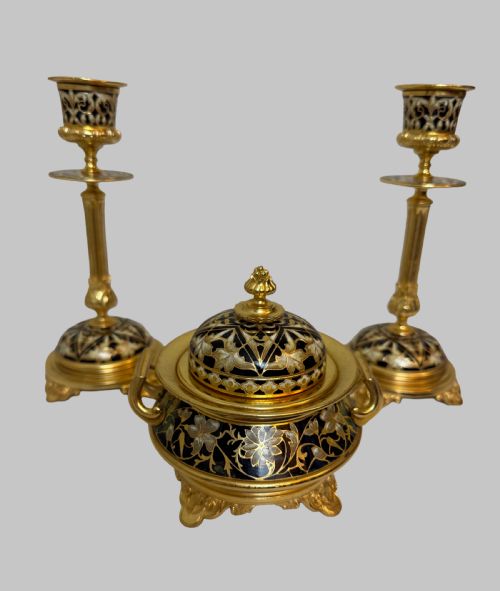
Formats vary from single lidded vessels to extensive desk sets featuring matching candlesticks or multiple compartments. The overriding purpose remains the provision of a stable, ornamental writing station for the Victorian or continental desktop.
What varies in quality
The crispness of the bronze casting and the depth of the gilding set superior examples apart from standard production pieces. Finer items exhibit hand-chased surface details on the ormolu mountings and use dense, high-grade marbles or richly figured woods for the bases.
Complexity of form and completeness of the desk accessories also dictate the standard of the piece, particularly where original glass liners and matching candlesticks remain intact. Cohesion between the patinated figures and the architectural marble plinths determines the overall visual balance.
19th Century Ormolu Inkwell Retail Price Guide 2026
Typical asking prices for 19th century ormolu inkwell among the pieces listed under this phrase on Sellingantiques today, from the lower quarter to the upper quarter. They describe what is for sale here now, not the wider market.
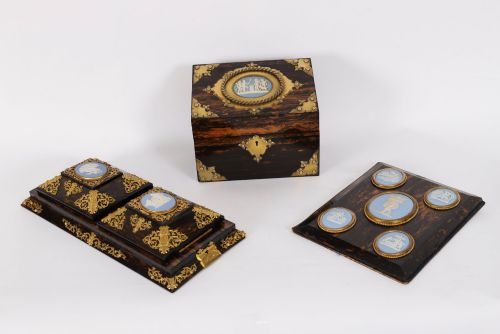
Listings for 19th century ormolu inkwells frequently pair gilded bronze with Sienna marble, onyx, and coromandel-wood bases.
The 19th Century Ormolu Inkwell Glossary
- Ormolu
- Gilded bronze, where a layer of gold is applied to a base metal object. This technique was widely utilised across the nineteenth century for decorative furniture and desk accessories.
- Encrier
- A French term for an inkstand or inkwell. These portable writing vessels often incorporate trays for pens and multiple lidded compartments.
- Champleve
- An enamelling technique where troughs are dug into a metal surface and filled with vitreous enamel before firing. It appears on decorative metalwork and desk sets.
- Animalier
- A nineteenth-century artistic style focusing on realistic depictions of animals. Pieces in this category often feature cats, lions, or emus integrated into the bronze casting.
- Coromandel
- A dense, dark timber imported from Asia, frequently utilised for nineteenth-century luxury desk stands and boxes. It provides a heavy, figured contrast to ormolu mounts.
19th Century Ormolu Inkwell: Frequently Asked Questions
What is an encrier?
An encrier is simply a French desk stand or inkwell designed to hold writing equipment.
These pieces often include integrated pen trays and glass ink inserts housed within a decorative ormolu and marble framework.
How were these inkwells used?
They served as functional desk accessories in private studies and offices during the nineteenth century.
Ink was stored in internal glass reservoirs, ready to be accessed with a dip pen while the heavy base kept the stand stable.
Are original glass inserts common?
Original glass or ceramic ink liners do survive in many pieces, though replacements are sometimes found.
They sit snugly inside the metal collars beneath the hinged lids of the ormolu mountings.