




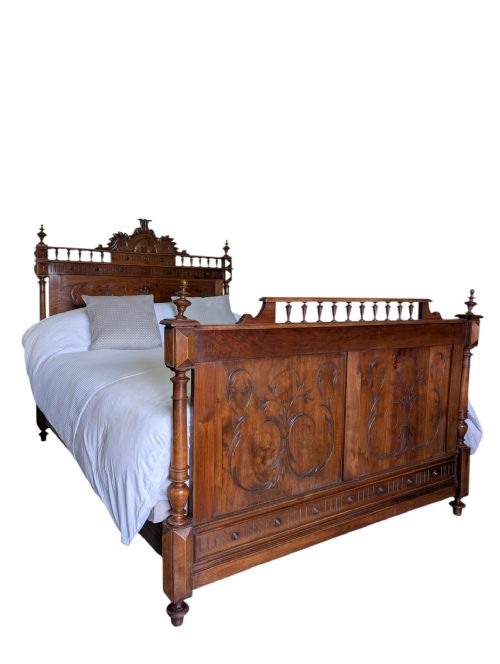

19th Century Oak Bed
When you search for a 19th century oak bed, you are looking at solid timber frames shaped by Victorian and French provincial hands.
19th Century Oak Bed
A 19th century oak bed encompasses full-sized frames, daybeds, and dramatic carved canopies originating from English workshops and French regions like Brittany and Normandy. These pieces arrive in various formats, from Gothic Revival designs to simple country bedsteads.
How they were made
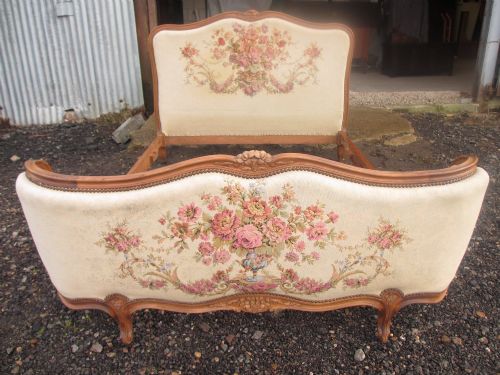
Cabinetmakers built these frames primarily using solid oak, sometimes combining secondary woods like walnut, ash, or mahogany, and occasionally incorporating brass hardware. Upholstered elements utilised textiles such as velvet, silk, and general fabric.
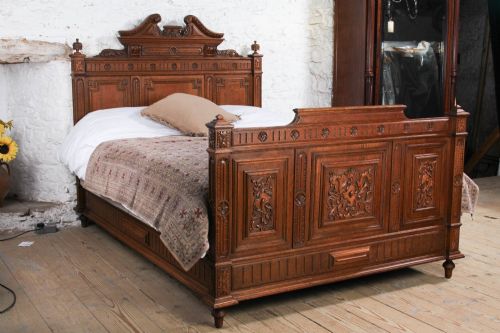
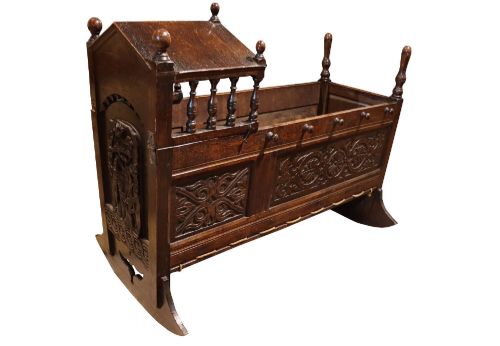
Construction relied heavily on traditional joinery, panelled building techniques, and detailed hand-carving. French and English makers applied distinct regional styles, ranging from Breton folk art motifs to Gothic Revival tracery.
19th Century Oak Bed Retail Price Guide 2026
Typical asking prices for 19th century oak bed among the pieces listed under this phrase on Sellingantiques today, from the lower quarter to the upper quarter. They describe what is for sale here now, not the wider market.
Listings feature oak alongside walnut, chestnut, brass, and velvet across Victorian, French Chateau, and Breton Folk Art styles.
What varies in quality
The standard of a 19th century oak bed rests upon the depth and precision of the hand-carving on the headboards, footboards, and panels. Finer examples display crisp architectural moulding and well-balanced proportions rather than plain, utilitarian surfaces.
Material selection also dictates overall merit, with dense, scrubbed, or figured oak commanding attention alongside matching suites of side cabinets. The integrity of the original joints and timber seasoning determines how solidly the structure survives.
Howard And Sons·Clare And Son Bedford
The 19th Century Oak Bed Glossary
- Lit-clos
- A traditional enclosed box bed originating from regions like Brittany in France. These structures often feature sliding doors or panelled fronts that conceal the sleeping space.
- Daybed
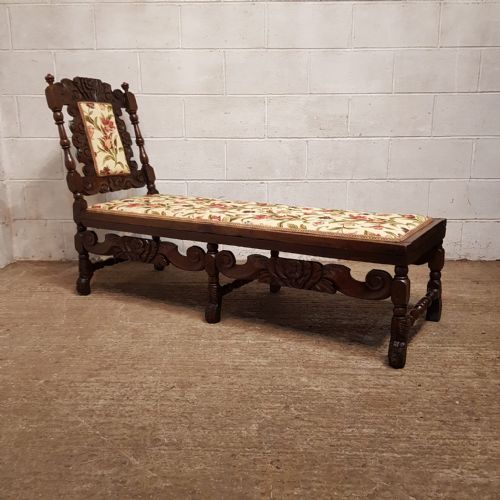
- A multifunctional piece designed for both seating and lying down during the day. Examples from this era frequently incorporate carved wooden backs and ends.
- Coffer
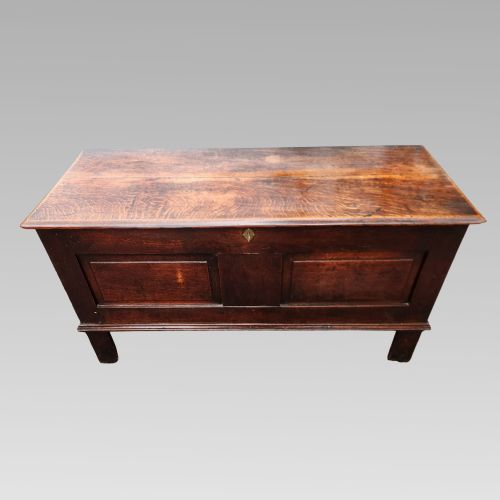
- A large wooden chest used historically for storage. Many examples share the heavy oak construction and panelled detailing found on contemporary bed frames.
- Bedstead
- The structural framework of a bed designed to support a mattress and base. These frames range from simple country forms to elaborate Gothic Revival and French styles.
- Gothic Revival
- An architectural and decorative style popular during the 19th century. It draws inspiration from medieval design, featuring pointed arches, tracery, and heavy carved oak.
19th Century Oak Bed: Frequently Asked Questions
What is a 19th century oak bed?
A 19th century oak bed is a solid timber sleeping frame or daybed produced during the 1800s in England or France. These pieces utilise durable oak and often feature regional carving styles.
They serve as functional bedroom furniture while bringing historical character and traditional joinery into a modern home.
How were 19th century oak beds used?
These beds served primarily for sleeping in domestic chambers, farmhouses, and chateaux across Europe. Daybeds and window seats provided daytime lounging in libraries and withdrawing rooms.
Enclosed lit-clos variations offered privacy and warmth in colder regional climates by enclosing the sleeper behind wooden panels or doors.
How do I live with an antique oak bed?
Living with these pieces involves pairing the robust wooden frames with modern mattresses adapted to fit historical dimensions. Keeping them away from direct heat sources protects the timber from drying out.
Matching bedside cupboards, chests, and benches in similar oak finishes help create a cohesive bedroom layout.
How do I tell periods apart?
Distinguishing periods relies on observing stylistic markers such as Gothic Revival arches, Arts and Crafts simplicity, or ornate French provincial carving. Dates span from early 1800s traditional items to late-century Victorian and Art Nouveau influences.
Material combinations, such as the addition of brass hardware or marble tops on associated bedside cabinets, also point to specific decades within the nineteenth century.