



19th Century Oak Armoire
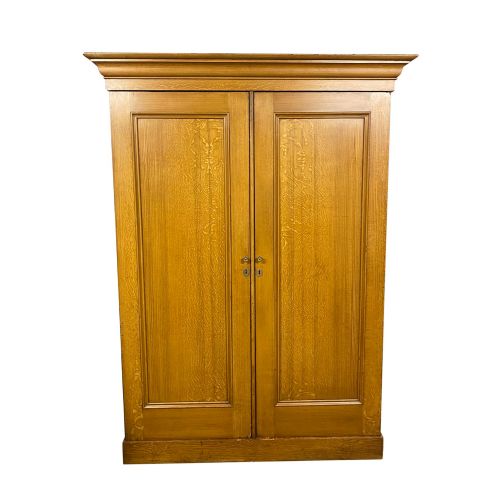
A 19th century oak armoire brings heavy French Provincial presence and substantial timber storage into a modern bedroom.

19th Century Oak Armoire
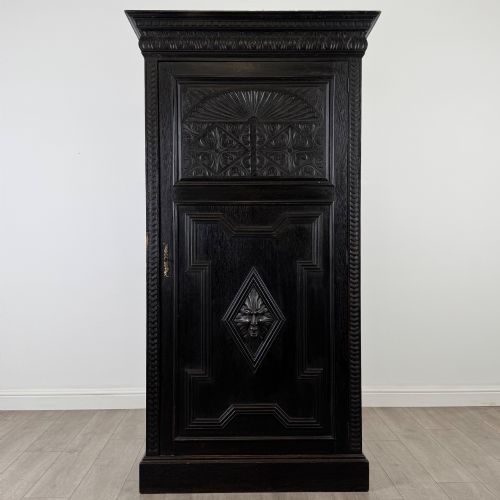
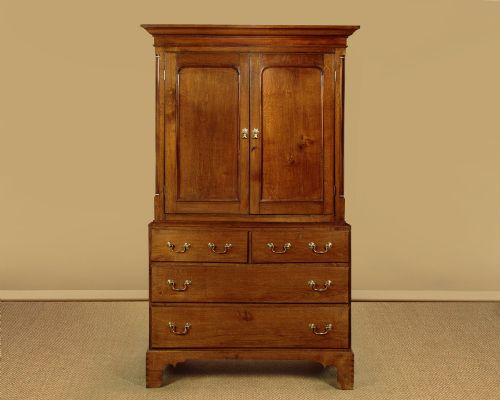
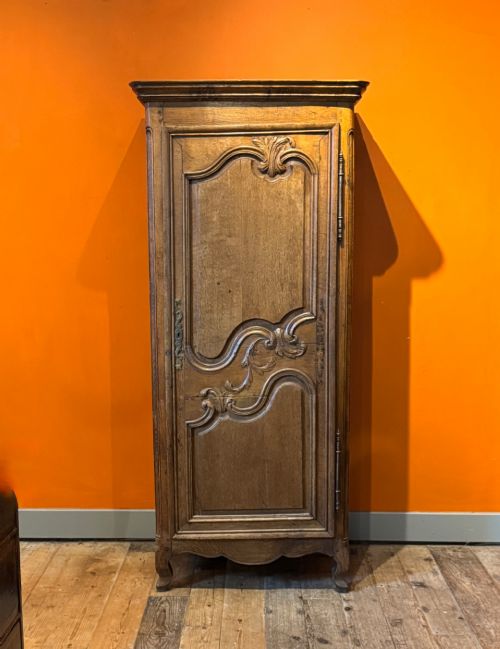
A 19th century oak armoire is a large freestanding storage piece originating primarily from French and Welsh domestic traditions. These pieces include regional variations such as bonnetieres, marriage armoires, and two-stage press cupboards.
The inventory on this page draws heavily from French Provincial workshop styles alongside Welsh vernacular forms. Buyers will encounter both grand carved architectural facades and simpler painted country surfaces.
Most examples function as wardrobes or linen presses, utilising internal hanging rails, shelves, or sliding trays. Their robust timber construction ensures they remain practical for heavy domestic use.
Materials and construction
The primary structural timber is solid oak, frequently supplemented with secondary woods such as chestnut, pine, and fruitwood in internal framing or panel backing. Regional French pieces often utilise fruitwood accents alongside the main oak body.
Joinery relies on traditional pegged mortise and tenon construction for the primary frame, paired with heavy panelled doors. Iron and brass hardware, including decorative hinges and large escutcheons, secure the heavy timber doors.
Certain cabinets preserve their past entirely by recycling closed Breton bed panels into functional parlour storage.
Quality variations
Quality rests upon the depth of regional carving and the integrity of the original timber. Pieces executed in the Louis XV taste or featuring detailed architectural mouldings demonstrate superior workshop hand execution.
Surface preservation marks the distinction between untouched originals and heavily restored examples. Scumble paint finishes and patinated raw oak surfaces command different architectural interests depending on the chosen interior context.
The 19th Century Oak Armoire Glossary
- Armoire
- A tall cupboard or wardrobe with doors enclosing shelves or hanging space. Originating in France, these pieces served historically for storing weapons, garments, or household linens.
- Bonnetiere
- A single-door narrow cupboard traditionally used for storing hats and headwear. These tall, compact forms are common within French provincial production.
- Press cupboard
- A two-stage storage piece featuring enclosed shelving in the upper section and drawer storage below. Welsh vernacular examples frequently employ this substantial two-part arrangement.
- Scumble paint
- A decorative paint technique applied to simulate the grain of more expensive timbers such as oak. Workshops utilised this method on alternative woods during the period.
- Lit-clos
- A closed box bed from Brittany whose front timber panels were later repurposed into cabinets. This regional form yields distinct architectural cupboard fronts.
19th Century Oak Armoire: Frequently Asked Questions
How do I fit a large armoire?
Most antique armoires dismantle completely into separate panels, cornices, and base sections for transport and assembly. Professional installation ensures the heavy frame squares correctly on uneven floors.
Measure your ceiling height and stair clearance carefully before delivery, as these wardrobes often exceed standard domestic dimensions.
Can I use an armoire as a modern wardrobe?
Many examples feature internal hanging rails or can easily accommodate them without altering the antique timber frame. Deeper models readily accept modern coat hangers and garment bags.
Shallower regional variants, such as single-door bonnetieres, suit folded garments, linens, or shelving configurations better than full-length hanging.
How do I care for nineteenth century oak?
Maintain a stable room temperature away from direct heat sources and radiators to prevent timber splitting or panel shrinkage. Apply a natural beeswax polish occasionally to nourish the dry grain.
Avoid synthetic sprays or silicone products, which build up on historical waxed surfaces and attract dust.
How do I tell French and Welsh styles apart?
French armoires frequently display Louis XV scrollwork, carved floral motifs, and pronounced serpentine cornices. They often utilise lighter fruitwood highlights alongside the structural oak.
Welsh vernacular press cupboards lean towards rectilinear proportions, pegged panel construction, and utilitarian country utility rather than elaborate court carving.