
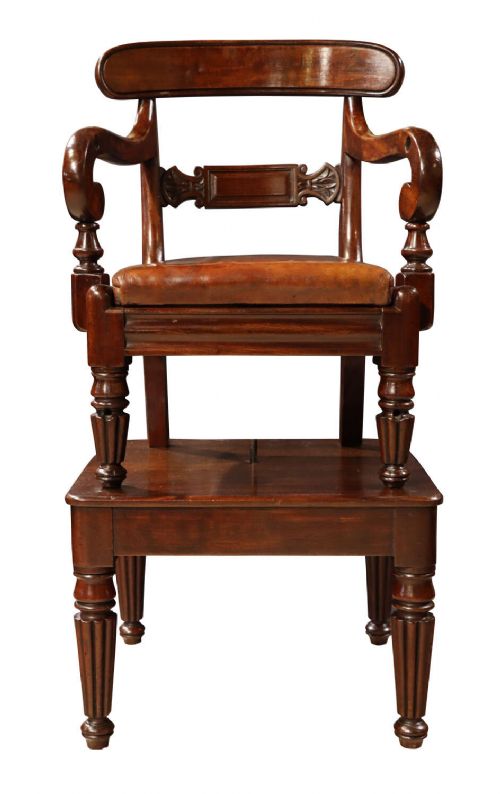


19th Century Nursery Furniture
These pieces of 19th century nursery furniture bring small scale domestic history into rooms today through surviving high chairs, cribs, and miniature armchairs.
19th Century Nursery Furniture
When you search for 19th century nursery furniture, you encounter seating and sleeping quarters built specifically for children across the Georgian, Regency, William IV, and Victorian eras. The most frequent survivors on this page are small chairs, high chairs, and rocking cribs made for domestic use.
The selection ranges from rustic vernacular pieces in elm and ash to formal mahogany tub highchairs and caned bergere designs. Alongside British country and city pieces, Scandinavian country benches and highchairs appear, reflecting broader European domestic traditions of the period.
Objects include specialised items such as rocking horses, metamorphic chairs, and pushchairs alongside simple pine cradles and low stools. Each form reveals how domestic spaces accommodated children, combining practical utility with the prevailing style of the maker's local workshop.
Craft and Proportion
Quality rests upon the proportion and ambition of the design, separating simple utilitarian village work from sophisticated urban cabinet making. A high chair with clever mechanical conversion or refined turning displays greater skill than a purely functional peg jointed stool.
The survival of original surfaces alters the standing of a piece, as untouched paint or patinated mahogany holds more integrity than later scraping or refinishing. Finer items integrate delicate materials like cane work or carved rosewood smoothly into miniature scale without losing structural sense.
Listings feature periods spanning from the 18th century through the Georgian, Regency, and Victorian eras.
Liberty of London·Ford Maddox Brown
The 19th Century Nursery Furniture Glossary
- Metamorphic
- A piece designed to transform its function, such as a high chair that converts into a low chair and play table. This clever duality saved space in period homes.
- Bergere
- An enclosed upholstered armchair with cane work panels on the back and sides. It offers a lighter aesthetic than solid wood upholstery.
- Windsor
- A chair built with a solid wooden seat into which the legs and back spindles are wedged directly. This technique creates a sturdy and resilient rustic form.
- Bobbin turned
- Timber shaped on a lathe into a series of rounded knobs resembling reels of thread. It is a decorative turning style popular across several periods.
- Vernacular
- Objects made by local rural craftsmen using regional traditions and readily available materials rather than high style urban pattern books.
19th Century Nursery Furniture: Frequently Asked Questions
What is a metamorphic child's high chair?
A metamorphic high chair is a dual purpose piece built to change form, usually dropping down from a tall dining height into a low chair and wheels or a play desk.
This ingenious mechanism allowed families to get multiple years of practical daily use from a single item of furniture as the child grew.
How do I tell a Georgian child's chair from a Victorian one?
Georgian children's chairs typically display lighter proportions, simpler lines, and timbers like elm or early mahogany reflecting classical restraint. Victorian examples often lean towards heavier turning, darker ebonised finishes, buttoned leather, or more elaborate carving.
Looking at the construction methods and secondary woods helps confirm the period alongside the primary design style.
Are these pieces safe for daily modern use?
Most antique nursery items were built over a century ago for domestic use, but their primary value today is historical and decorative. Structural joints may require careful checking before any child sits in them.
Many collectors prefer to display these chairs and cradles as decorative objects rather than putting them back into active service.
What woods were commonly used for nursery furniture?
Makers relied on strong domestic hardwoods that could withstand rough treatment by children. Elm, oak, ash, and fruitwood appear frequently in country pieces.
More formal urban workshops utilised mahogany and rosewood, often turning or carving the timber to mirror adult furniture of the same decade.