
Georgian Caned Seat
Georgian caned seat examples offer woven tension and timber frames, combining lightness with structural support for everyday seating.
Georgian Caned Seat
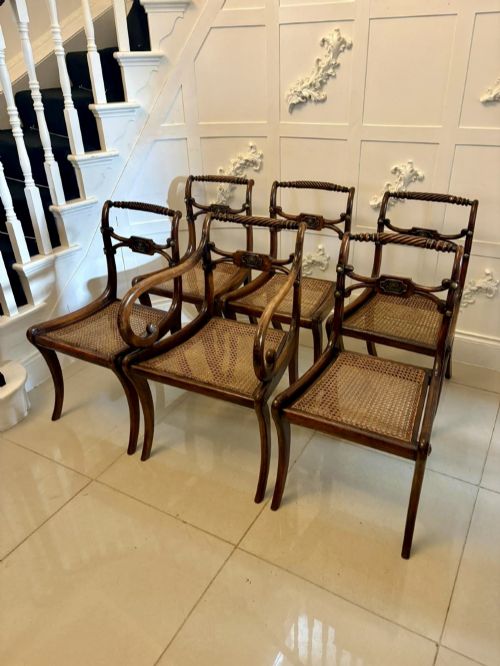
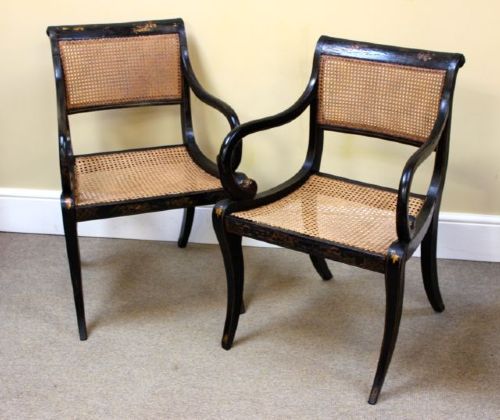
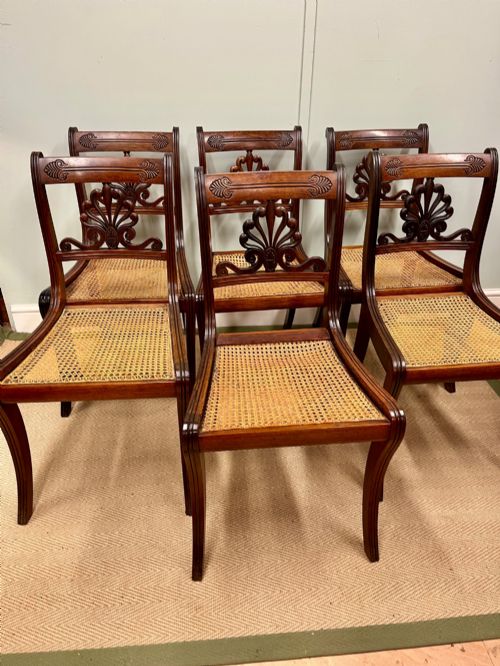
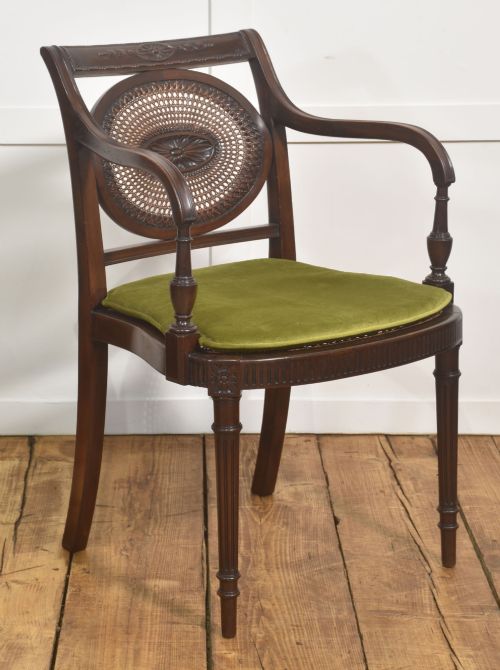
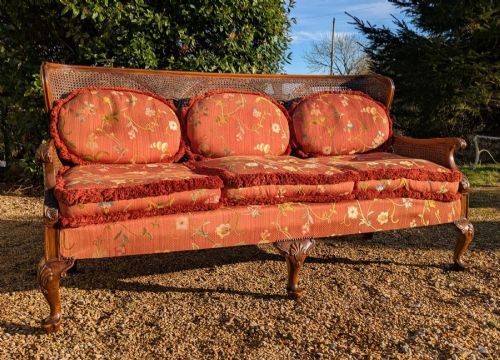
A georgian caned seat brings together flexible woven plant fibres and solid timber frames designed for sitting, lounging or resting feet. Buyers searching for a georgian caned seat most frequently encounter dining chairs, armchairs, and library bergères spanning the eighteenth and nineteenth centuries.
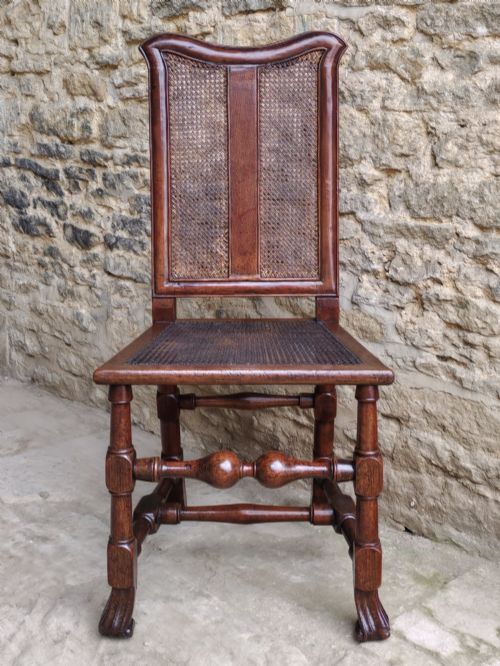
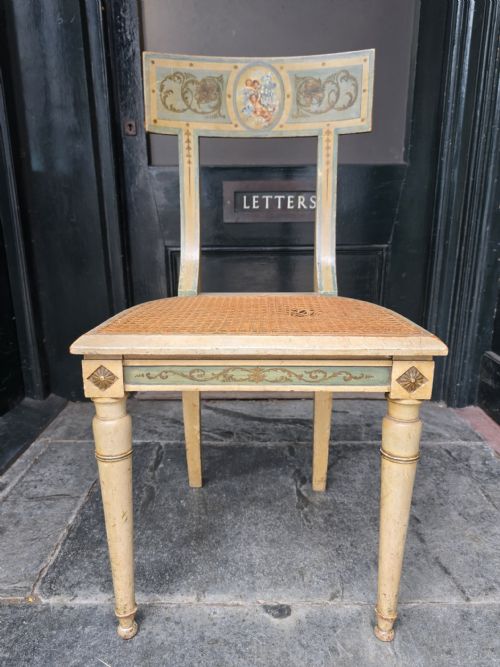
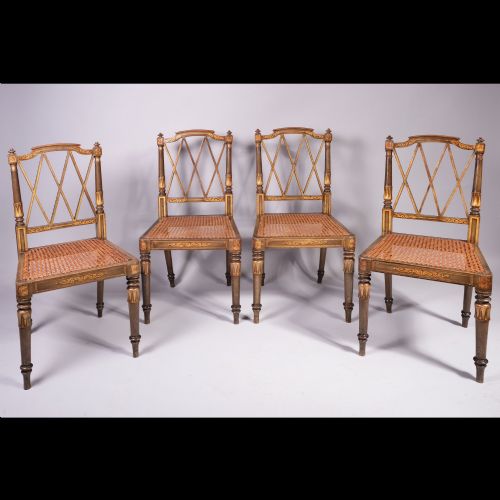
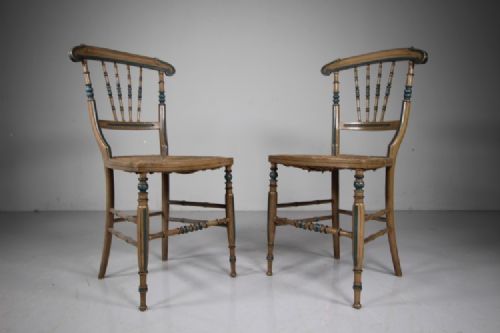
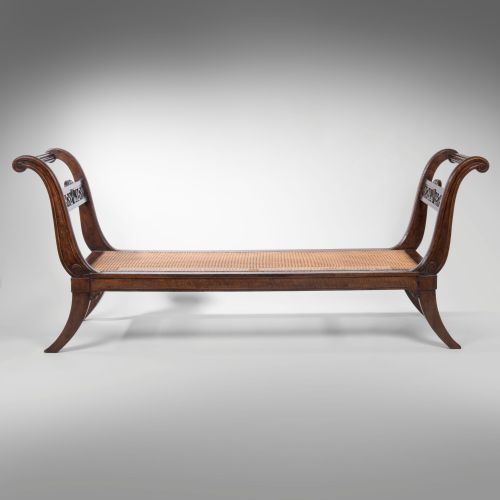
The selection ranges from single side chairs to sets of dining chairs, alongside occasional window seats, benches, and child highchairs. Pieces appear across periods including Regency, Georgian, and later revivals, executed in forms from simple stickbacks to library armchairs with generous proportions.
How they were made
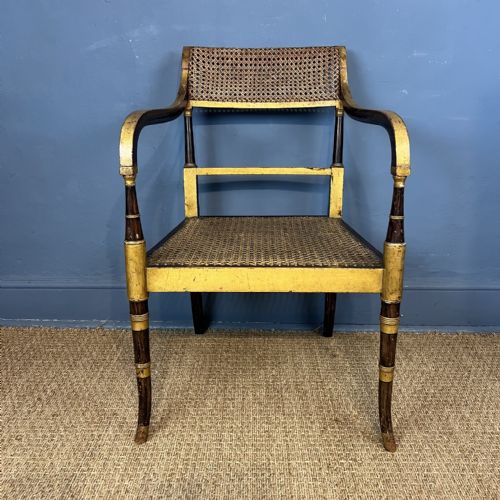
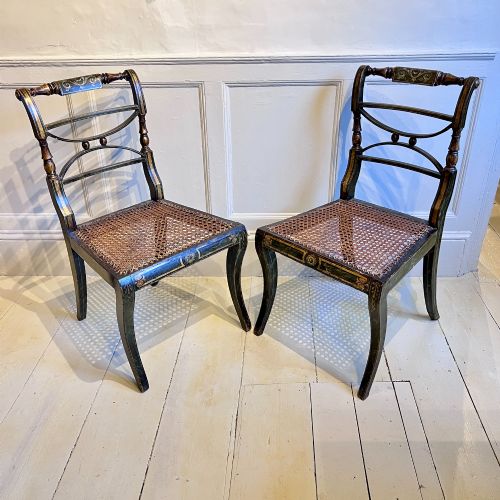
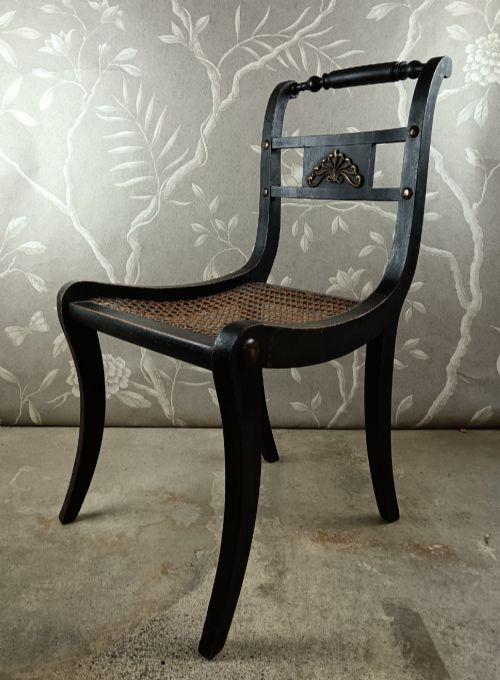
Maker workshops utilised solid timbers such as mahogany, walnut, rosewood, and ebonised wood to construct the rigid load-bearing frames. Surfaces frequently received decorative treatments including paint, parcel gilt, or simulated graining to imitate exotic woods like rosewood and bamboo.
Caning material, derived from slender rattan stems, was threaded by hand through drilled holes along the seat rails in repetitive open mesh patterns. This technique yielded a resilient, flexible surface that supported weight while allowing air circulation.
Materials documented across these listings include mahogany, rosewood, brass, leather, and painted or ebonised wood.
What varies in quality
Quality rests in the harmony of the timber frame's proportions and the crispness of any carved elements along the back rails or sabre legs. Well-drawn examples display confident lines and balanced framing, whereas lesser pieces feel heavier or clumsily proportioned.
The integrity and tightness of the woven cane mesh also separate fine examples from routine workshop output. Original undisturbed weaving tension indicates superior preservation, while replacement panels vary according to the precision of the hand-threading.
The Georgian Caned Seat Glossary
- Bergère
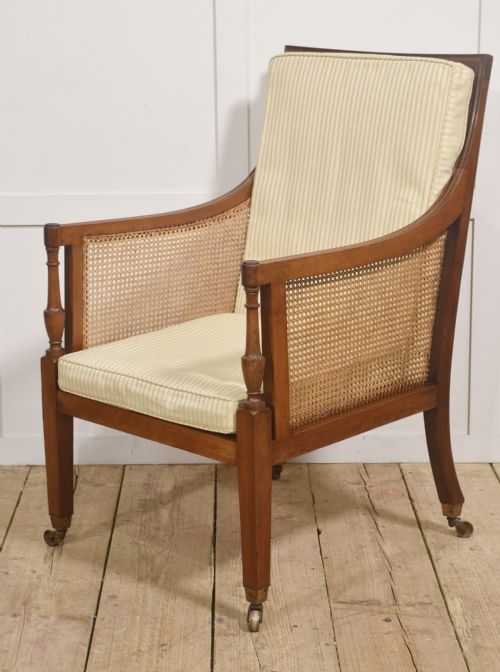
- An enclosed upholstered or caned armchair with solid sides, often fitted with loose cushions for seat comfort.
- Sabre leg
- A concave curving chair leg that tapers towards the foot, characteristic of the Regency period and classical revival styles.
- Carver
- An armchair designed with open elbows, traditionally placed at the head of a dining table alongside matching single side chairs.
- Simulated rosewood
- Timber painted or stained to imitate the rich dark grain and figuring of genuine rosewood.
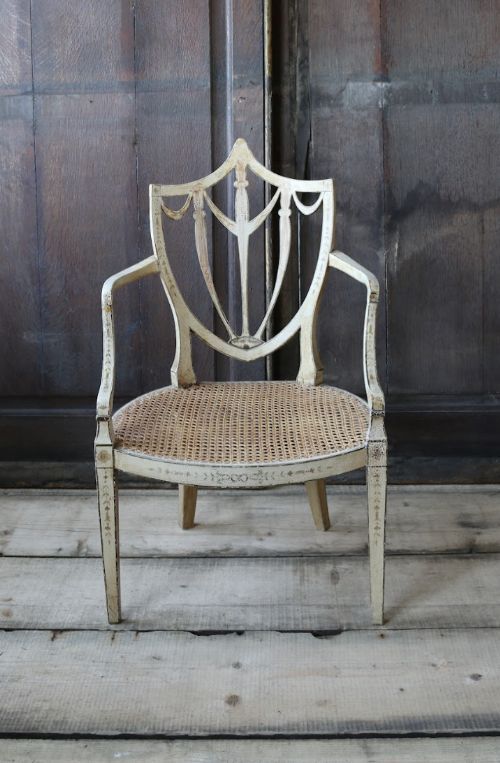
- Shield-back
- A chair back shaped in the outline of a heraldic shield, popular during the late eighteenth century.
Georgian Caned Seat: Frequently Asked Questions
How do I care for antique cane?
Keep the woven surface lightly dusted and occasionally wipe with a damp cloth to prevent the rattan fibres from drying out.
Avoid placing these chairs near direct heat sources or in overly dry rooms, which makes the natural material brittle.
Can I use these chairs daily?
Most sturdy frames support normal sitting, but original historic weaving requires gentle treatment compared to modern synthetic substitutes.
Consider the structural condition of both the timber joints and the cane mesh before assigning heavy daily use to a delicate antique.
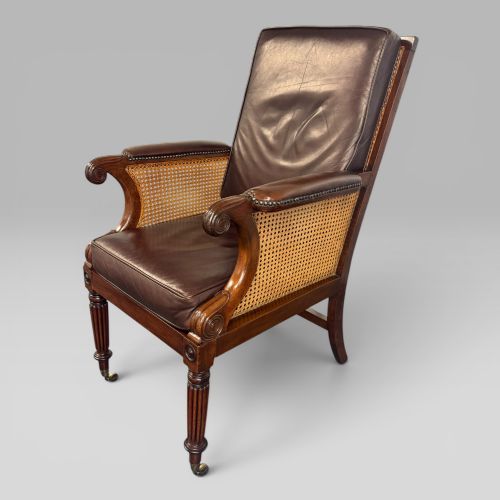
What is a library bergere?
A library bergere is a deep, enclosed armchair designed for comfortable reading, typically featuring caned panels on the back and sides.
These generous seats often include upholstered drop-in or feather cushions for added comfort during extended sitting.
How do I spot a revival piece?
Revival pieces often replicate earlier eighteenth-century designs using nineteenth or early twentieth-century manufacturing techniques and timber preparation.
Examining the tool marks, joinery methods, and wood ageing helps distinguish original period production from later stylistic revivals.