





19th Century Night Tables
These 19th century night tables bring practical storage and period character to the bedroom.
19th Century Night Tables
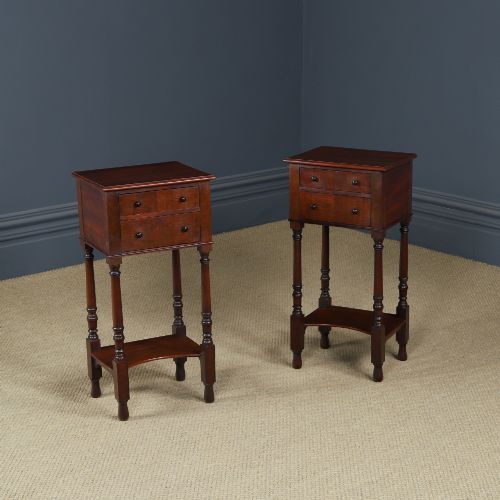
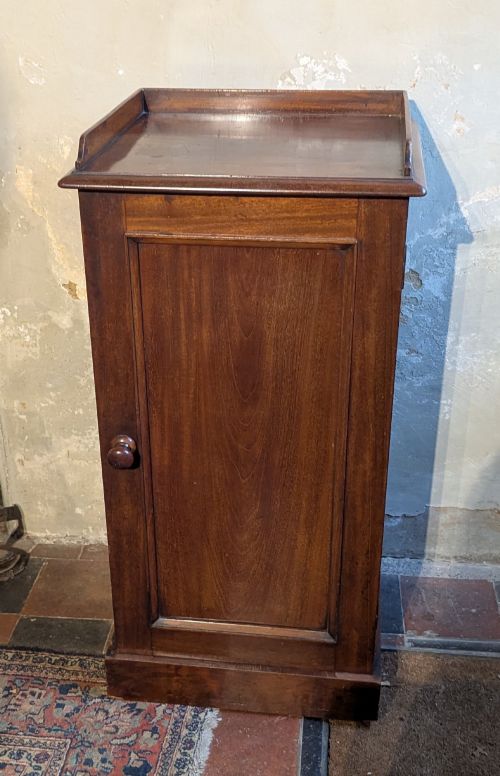
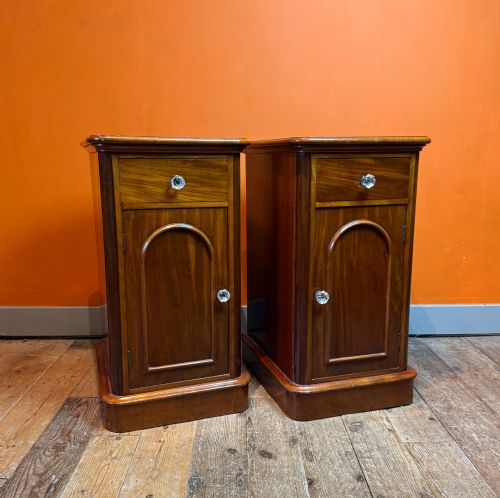
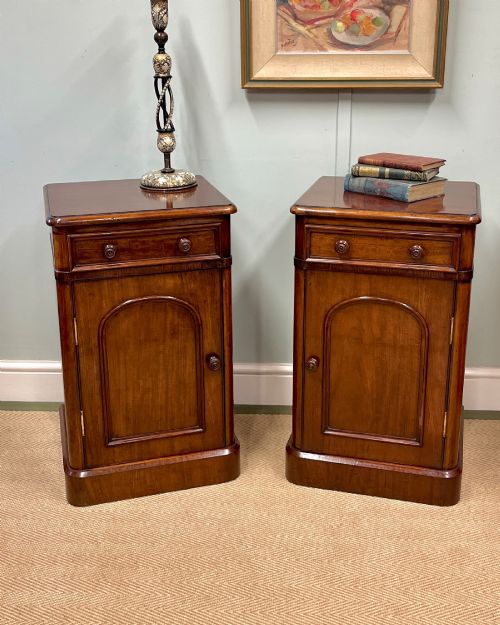
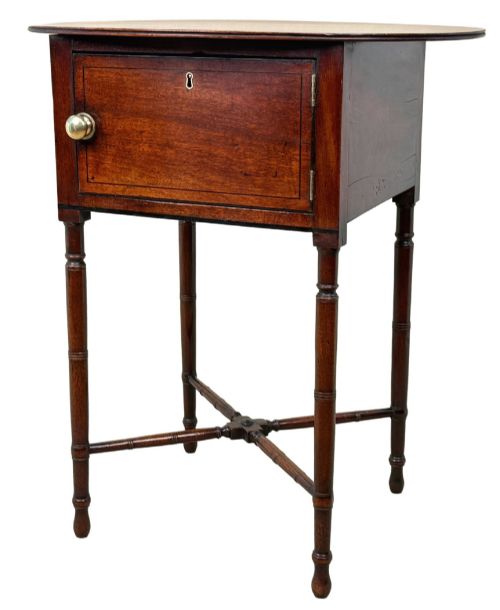
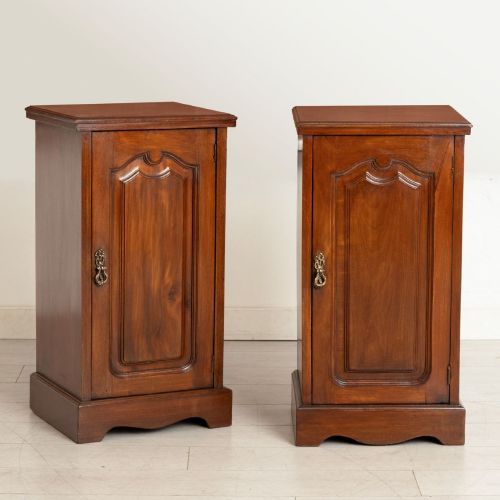
When you search for 19th century night tables, you encounter practical bedroom furniture designed to hold chamber lighting, water pitchers and personal items close to the bed. The selection spans compact cupboards, open bedside tables, tray-top stands and diminutive chests from various decades.
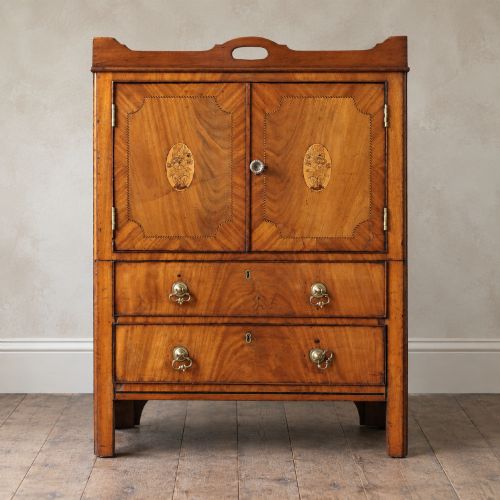
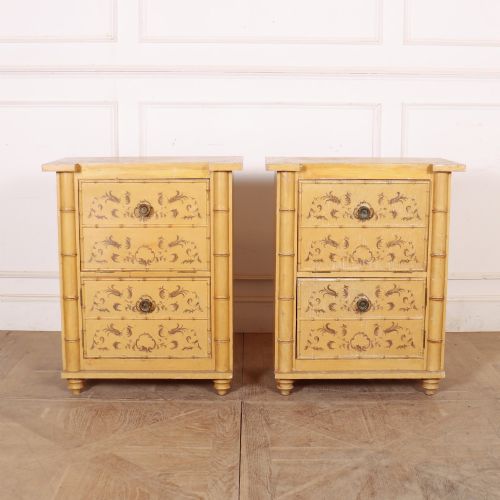
Mahogany forms the dominant timber across the pieces on this page, often enriched with subtle inlay or simple panel doors. You will also find walnut, satin birch, and occasional painted finishes such as faux bamboo.
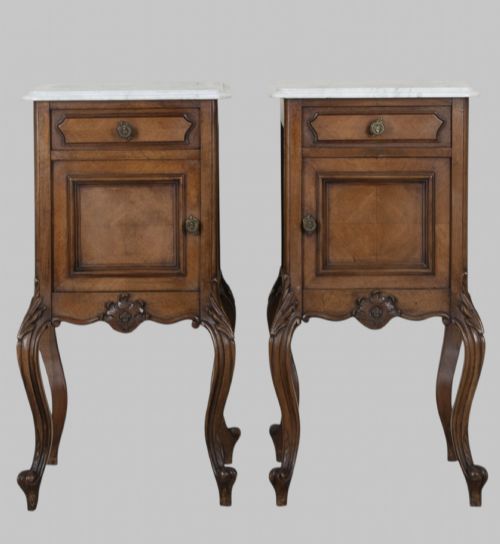
The styles range from restrained Georgian and Regency designs to ornate French chateau, Victorian, and Aesthetic Movement pieces. Pairs appear alongside single cabinets, offering flexibility for differing bedroom layouts.
How they were made
Cabinet makers relied principally on solid mahogany and walnut, employing sturdy frame and panel construction for doors and carcass frames. Turned legs, bracket feet, and brass hardware provide structural support and functional detail.
Finer examples incorporate decorative wood veneers such as satinwood, kingwood, and tulipwood, secured with traditional animal glues. Marble tops appear on several continental pieces, providing a durable and hygienic surface for nighttime use.
19th Century Night Tables Retail Price Guide 2026
Typical asking prices for 19th century night tables among the pieces listed under this phrase on Sellingantiques today, from the lower quarter to the upper quarter. They describe what is for sale here now, not the wider market.
What varies in quality
The distinction between standard and superior pieces rests on timber selection and secondary wood usage. Higher quality examples utilise dense, well-figured mahogany or walnut throughout the primary carcase and drawer linings, avoiding thin secondary veneers.
Joinery execution dictates longevity, visible in hand-cut dovetails on drawer construction and tightly fitted panel joints. Finer hardware, such as original brass handles and working locks with keys, elevates the standing of an individual cabinet.
Holland & Sons
The 19th Century Night Tables Glossary
- Tambour
- A flexible sliding shutter formed of narrow vertical strips of wood glued to canvas backing. This mechanism conceals the upper compartment of select bedside tables.
- Tray-top
- A raised moulded rim around the perimeter of the upper surface. This feature prevented water jugs and small items from sliding off the table.
- Night locker
- An alternative term for an enclosed bedside cupboard or cabinet. These pieces typically feature a single door above a small storage space.
- Old Sheffield Plated
- An early fused method of layering a thin sheet of silver over a copper base. It appears on chamber candlesticks associated with the period.
19th Century Night Tables: Frequently Asked Questions
What is the difference between a bedside table and a cabinet?
Cabinets typically feature an enclosed cupboard door or drawer to conceal chamber pots and personal items out of sight.
Open tables offer a lower shelf or open surface space without doors, prioritising quick access over concealment.
How do I distinguish Regency from Victorian pieces?
Regency pieces lean towards cleaner architectural lines, classical proportions, and restrained brass mounts inspired by antiquity.
Victorian pieces often display heavier proportions, more robust mouldings, and varied timber treatments reflecting the later industrial revival styles.
Were night tables originally sold in pairs?
Many higher status bedrooms utilised matching pairs of bedside cabinets placed on either side of the bed.
Single tables also circulated widely, reflecting smaller room dimensions or beds pushed against bedroom walls.
How do I care for a polished mahogany surface?
Maintain the finish using traditional beeswax applied sparingly and buffed gently with a soft lint-free cloth.
Protect the timber from direct sunlight and moisture by using coasters under glasses or bedside lamps.