



19th Century Needlepoint Picture
A 19th century needlepoint picture brings domestic craft and narrative charm to walls through tactile wool and silk threadwork.
19th Century Needlepoint Picture
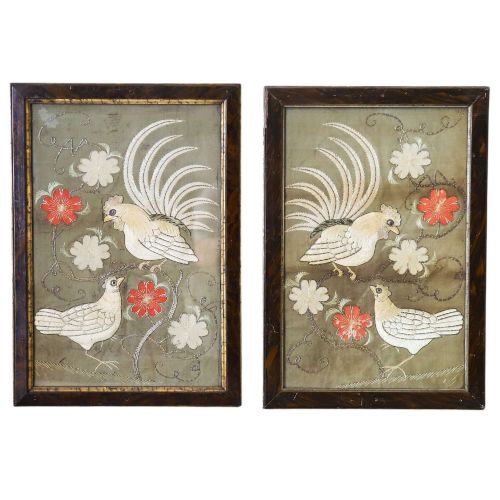
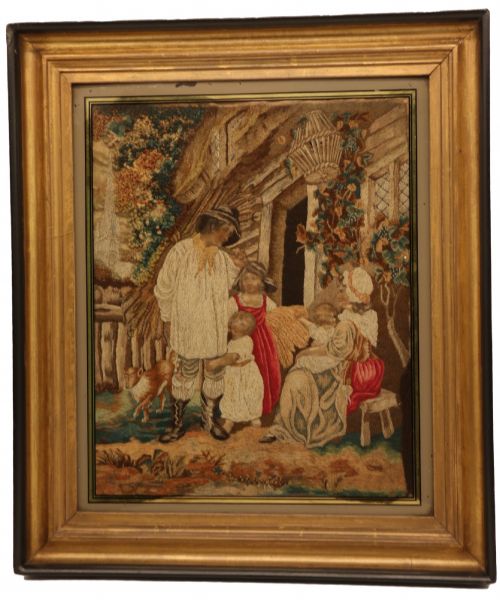
A 19th century needlepoint picture comprises framed textile artworks worked in wool, silk, and canvas, capturing scenes of animals, figures, and landscapes. These domestic creations range from geometric samplers to pictorial woolwork panels designed for wall display.
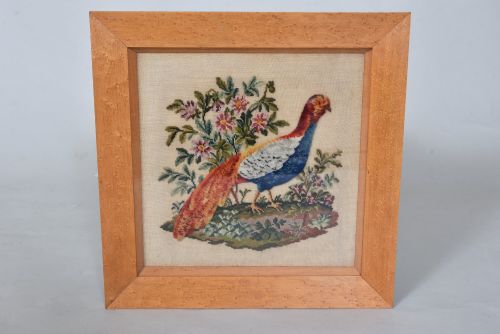
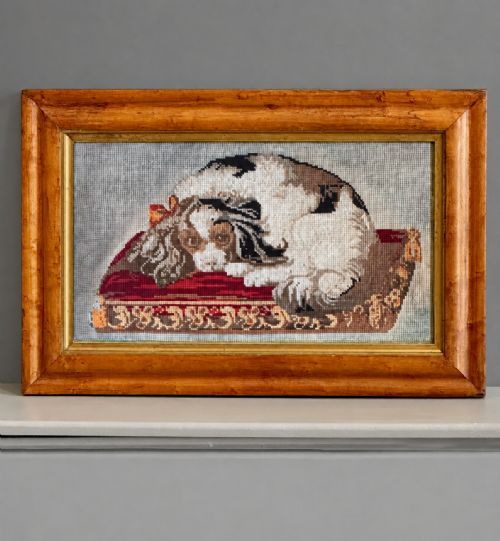
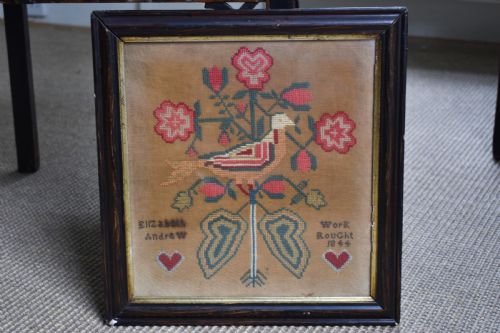
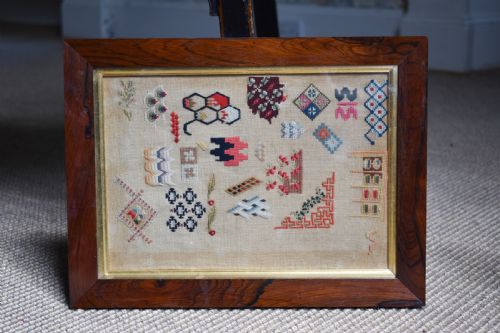
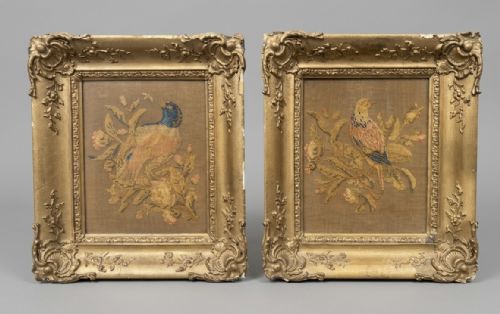
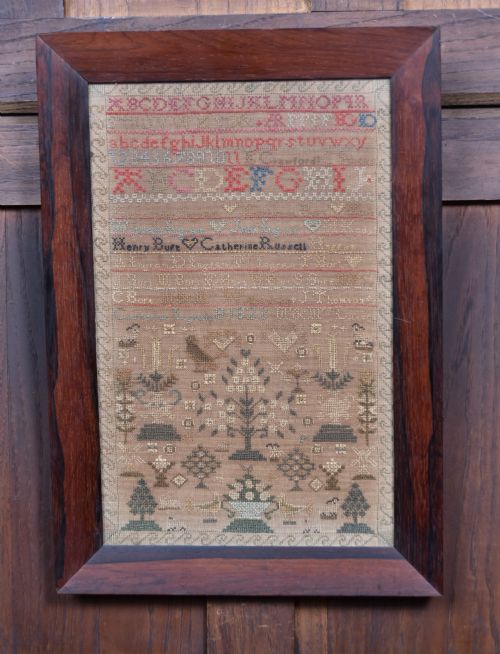
Buyers frequently encounter Victorian wool work panels and Berlin wool work depictions of animals like spaniels and pheasants, alongside Scottish and English samplers bearing alphabets or dates. Many pieces retain their original burr maple, rosewood, or giltwood frames.
Originating across Britain, continental Europe, and America, these works encompass diverse regional styles including French silk embroideries, German tapestries, and Scottish mourning pieces. The grouping spans decorative wall art executed in crewel work, plushwork, and gros point.
Materials and Techniques
Needlepoint and embroidery pictures rely on a foundation of linen, canvas, or wool mesh stitched with wool yarn, silk thread, and occasionally beads. Hand-painted silk backgrounds sometimes combine with raised wool work or plushwork to create texture and depth in animal and human figures.
Makers utilised petit point and gros point stitches alongside crewel work to build intricate pictorial compositions. Watercolours occasionally augmented the painted silk elements within the framed textile design.
Glazing with glass protected the delicate threads, housed within timber frames formed from burr maple, rosewood, oak, or giltwood, often utilising verre églomisé glass mats.
Several Victorian pieces capture specific animals, from King Charles spaniels and pheasants to a swan being fed by a girl.
Assessing Quality
Quality rests in the precision of the stitching and the complexity of the design, where fine petit point execution yields sharper facial expressions and botanical detail than coarse wool work. The cohesion between the needlework subject and its period frame contributes significantly to the integrity of the piece.
Condition involves the vibrancy of the surviving wool and silk threads against fading, alongside the stability of the canvas and the preservation of the glass and wooden frame.
Pictorial originality and the inclusion of documented maker details or dates elevate individual samplers and tapestries above standard decorative production.
The 19th Century Needlepoint Picture Glossary
- Berlin Work
- A style of needlepoint popular in the 19th century that used coloured pattern charts and brightly dyed wools. It allowed stitchers to create vivid pictures of animals and figures.
- Samplers
- Practice pieces worked in thread on linen or canvas to demonstrate stitch proficiency, often recording alphabets, numerals, and maker names. They frequently include dates and family lineages.
- Gros Point
- A coarse needlepoint stitch worked on canvas that provides texture and covers large areas quickly. It often appears alongside finer petit point in 19th-century pictorial panels.
- Verre Églomisé
- A process of applying gold leaf and painting on the reverse side of glass to create a decorative border. It often frames portrait miniatures and needlework pictures from the period.
19th Century Needlepoint Picture: Frequently Asked Questions
How were needlepoint pictures displayed?
Nineteenth-century needlework pictures were mounted behind glass within wooden frames made of rosewood, maple, or giltwood for wall hanging.
They served as domestic ornaments in parlours and drawing rooms, often grouped with other framed artworks and wall textiles.
What is Berlin work?
Berlin work refers to a popular 19th-century needlepoint method utilising printed grid patterns and dyed wools.
It enabled stitchers to produce detailed pictorial compositions of dogs, birds, and narrative scenes.
How do I date a sampler?
Many samplers include embroidered dates, maker names, and ages, which provide a direct guide to their creation.
Stylistic shifts in alphabets, motifs, and framing materials also help narrow down the period from the early 19th century to the Victorian era.
What is the difference between a sampler and a picture?
Samplers primarily record alphabets, numbers, and practice stitches, serving as a display of technical proficiency by the maker.
Needlepoint pictures focus entirely on pictorial scenes, landscapes, or figures designed purely for decorative wall display.