
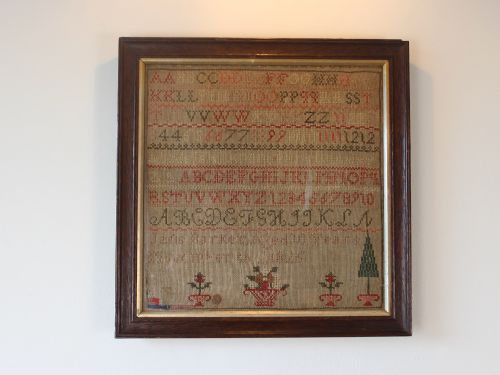
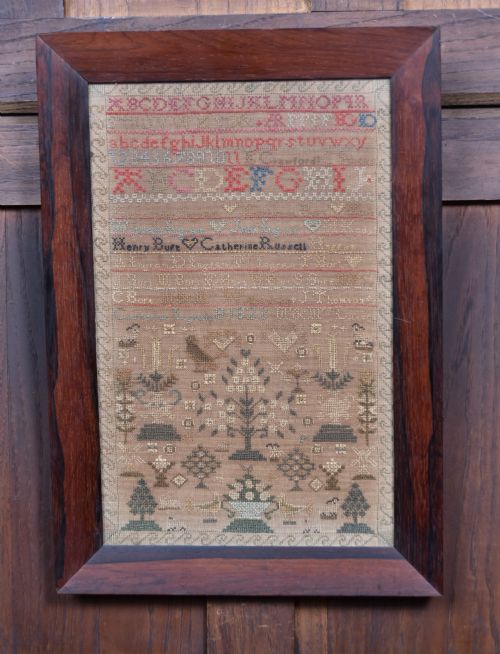


Antique Cross Stitch Picture
An antique cross stitch picture is a hand-worked textile panel preserving centuries of domestic needle skill inside its original timber frame.
Antique Cross Stitch Picture
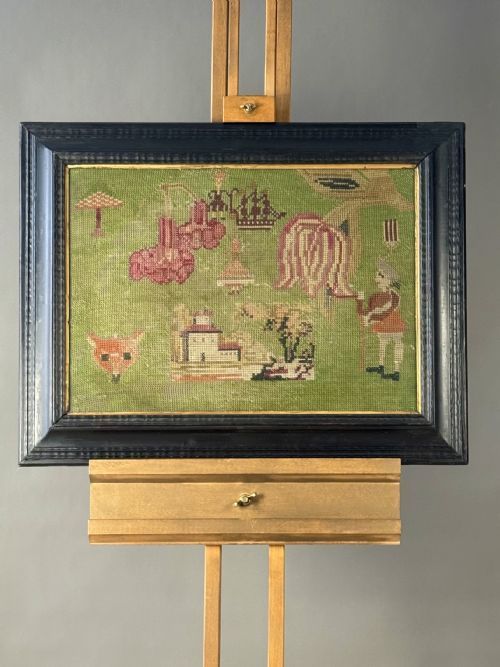
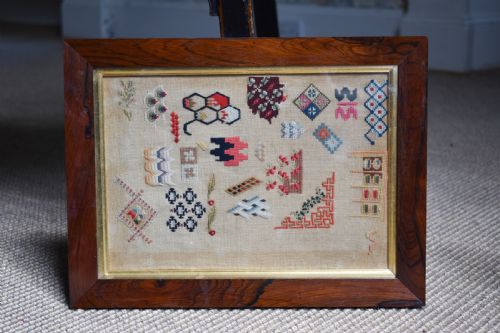
When you search for an antique cross stitch picture, you enter a world of textile art spanning the eighteenth and nineteenth centuries. These framed wall art pieces include alphabet samplers and pictorial wool work created by makers young and old.
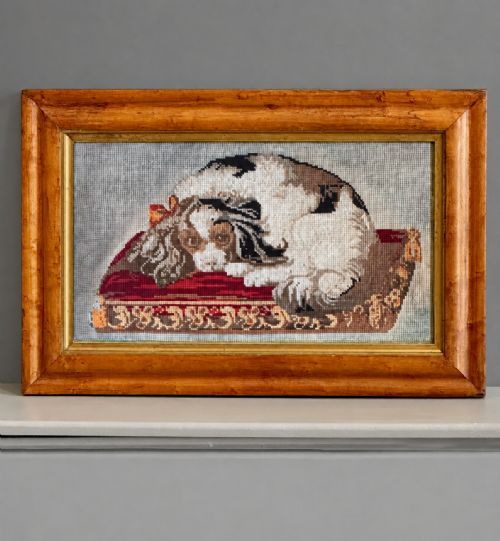
You are most likely to meet nineteenth-century Victorian samplers on this page, often worked in silk thread or wool on canvas or linen. Many preserve the original burr maple or rosewood frames that protect the delicate stitching within glass.
The assortment reaches back into the Georgian era and the eighteenth century, showing shifts in needlework techniques over generations. Pieces range from simple alphabet exercises to detailed depictions of animals like the King Charles spaniel and horses.
How they were made
Makers stitched onto grounds of linen, canvas, or woven cloth using silk thread and wool. The support material determines the fineness of the grid and the scale of the resulting design.
Workshops and home makers enclosed these textile artworks behind glass within wooden frames, frequently utilising burr maple or rosewood to finish the piece. This glazing preserved the fragile fibres from dust and atmospheric damage over the decades.
Listings feature linen, canvas, wool, and silk thread housed in burr maple and rosewood frames.
What varies in quality
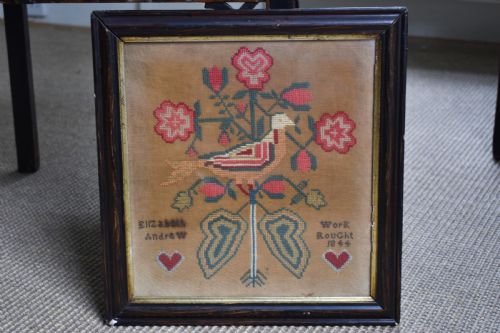
The sophistication of the design and the regularity of the stitching separate standard schoolroom exercises from exceptional needlework art. Pieces dated with the maker's name and age, such as those by Ann Hodson or Mary Mason, carry distinct documentary value.
The survival of original framing, specifically burr maple and rosewood enclosures with intact glass, elevates the integrity of the object. Condition remains paramount, with crisp wool and silk threads distinguishing well-preserved works from faded examples.
Ann Hodson·Mary Mason·Sarah Anne Hudson·Emma and Hannah Barnes
The Antique Cross Stitch Picture Glossary
- Sampler
- A piece of needlework produced as a demonstration or test of skill in various stitches and patterns. These often feature alphabets, numerals, and moral verses.
- Berlin Work
- A style of needlework popular in the nineteenth century using brightly coloured wool on a canvas grid. Charts guided the maker to follow counted thread patterns.
- Burr Maple
- A highly figured wood veneer taken from the burl growths of maple trees. It yields a mottled, swirling grain favoured for nineteenth-century picture frames.
- Rosewood
- A dense timber with a dark grain utilised for luxury framing during the Georgian and Victorian periods. It provides a strong contrast to lighter textile artworks.
Antique Cross Stitch Picture: Frequently Asked Questions
What is an antique cross stitch picture?
An antique cross stitch picture is a hand-stitched textile artwork created on linen or canvas during the eighteenth or nineteenth century. These pieces record domestic needlework skills, often displaying alphabets, names, dates, and pictorial scenes.
Most examples are framed behind glass to protect the delicate silk threads and wool from environmental degradation. They serve as historical records of personal labour and education from the Georgian and Victorian periods.
How were samplers used historically?
Makers originally stitched samplers as practical reference guides for storing complicated patterns and embroidery techniques. Young girls also worked them as schoolroom exercises to demonstrate proficiency in lettering and counting threads.
Over time, these textiles shifted from functional sewing references into decorative wall art meant for domestic display. Framed pieces commemorated milestones, family lineages, and individual patience.
How do I care for framed needlework?
Display your antique textile away from direct sunlight to prevent the silk threads and wool from fading. Stable indoor humidity levels protect both the fabric ground and the antique wooden frame.
Avoid hanging pieces in damp spaces or areas prone to temperature fluctuations. Leave the original glass and framing intact to maintain the structural preservation of the textile.
How do I date an antique sampler?
Many samplers include embroidered dates and the maker's age or name directly within the stitching, providing precise documentation. For unsigned examples, stylistic clues such as the alphabet typography, colour palette, and framing materials help indicate the period.
Nineteenth-century Berlin work employs brighter wools and heavier canvas grids compared to finer eighteenth-century linen grounds. The presence of specific timber frames like burr maple also points toward mid-nineteenth-century manufacture.