
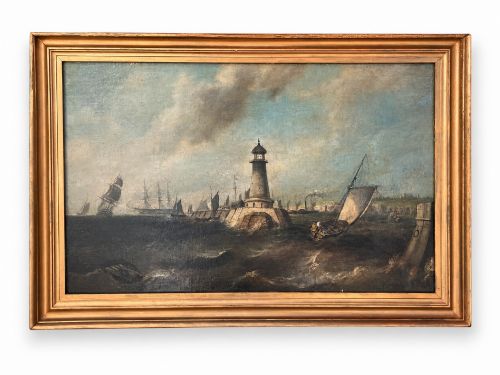


19th Century Naval Canvas
These 19th century naval canvas works capture historic maritime scenes, offering collectors authentic records of sailing ships and naval figures.
19th Century Naval Canvas
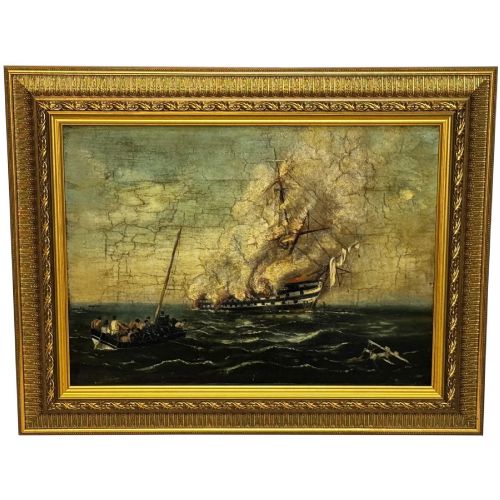
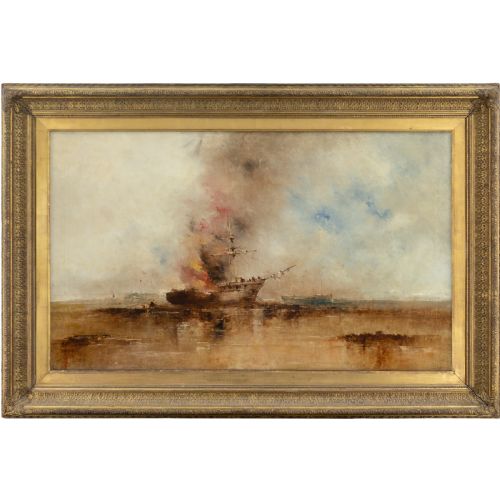
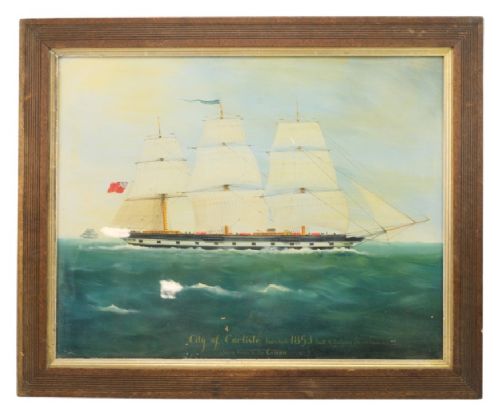
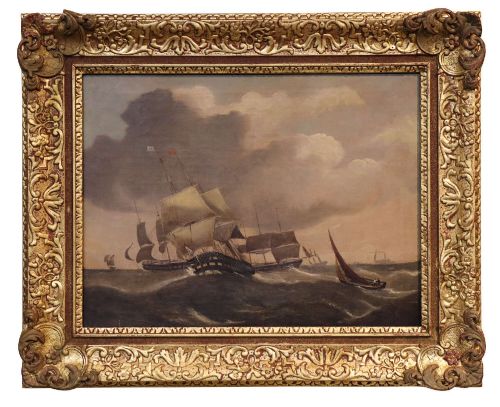
When you search for 19th century naval canvas, you encounter oil paintings on canvas depicting maritime scenes, coastal views, and portraits of naval officers. These works span the Regency, Georgian, and Victorian periods, capturing historic vessels such as frigates, schooners, and three-masted ships.
The most common pieces on this page are marine paintings and oil portraits created during the 19th century. Artists recorded specific vessels, naval battles, and coastal operations, producing works that document maritime history.
Subjects range from bustling harbour scenes and heavy seas to detailed depictions of named ships like the Thermopylae and the City of Carlisle. Alongside vessel portraits, the selection includes formal portrayals of admirals and gentlemen in naval jackets.
Materials and construction
These works are painted using oil paint applied to canvas supports, frequently mounted on wooden stretchers. Certain pieces are housed within giltwood frames finished with gold leaf.
Artists of the period utilised oil paints to achieve depth and texture in depicting water, smoke from naval battles, and the intricate rigging of ships. The combination of oil on canvas provided durability and allowed for rich colour variation.
Materials recorded across the selection comprise oil paint, canvas, wood, gold leaf, and giltwood frames.
Judging quality
Quality in these works depends on the precision of the maritime detail and the skill shown in rendering rigging, hull structure, and water movement. Superior pieces demonstrate a strong command of light and atmosphere, particularly in turbulent sea scenes.
Portraiture within this group varies according to the accuracy of the sitter's likeness and the handling of uniforms and insignia. Works by known artists or named circles tend to exhibit greater technical execution in composition and brushwork.
William McAlpine·Nicholas Condy·Marie-Edouard Adam·Ebeneezer Colls·Richard Brydges Beechey·William Langley·James Hardy·Samuel Lane·Robert Ker Porter·Ambrosini Jerome
The 19th Century Naval Canvas Glossary
- Oil on Canvas
- A painting medium where pigments suspended in oil are applied to a stretched canvas fabric base. This combination allows for blended tones and rich surface textures.
- Marine Painting
- Artwork depicting ships, coastal views, and naval engagements upon the sea. These pieces often serve as historical documents of specific vessels and maritime events.
- Regency
- The period in British history from 1811 to 1820, characterised by distinct stylistic developments in art and architecture. Works from this era often reflect the naval triumphs of the period.
- Victorian
- The period spanning the reign of Queen Victoria from 1837 to 1901. Marine art from this time frequently records industrial transitions in shipping alongside traditional sailing vessels.
- Giltwood
- Wood carved and coated with gold leaf or metallic powder to create a decorative surface. This material is standard for framing fine art of the period.
19th Century Naval Canvas: Frequently Asked Questions
What subjects appear in these paintings?
The works depict named ships, naval battles, harbour scenes, and portraits of admirals and officers.
Artists recorded historical events such as troop movements to the Crimea alongside studies of frigates and schooners in heavy seas.
How do I identify the period?
Dating relies on stylistic clues, artist signatures, and recorded historical subjects associated with the Regency and Victorian eras.
Clothing styles in portraits and the types of vessels depicted also help narrow the timeframe of creation.
Are these works original period pieces?
The selection consists of original oil paintings created during the 19th century and early 20th century.
Materials such as oil paint, canvas, and wooden stretchers align with the manufacturing methods of those periods.
How should I display them?
These oil paintings suit traditional wall display, typically housed in their original or period-appropriate giltwood frames.
Placement should avoid direct sunlight to protect the oil paint and canvas from degradation over time.