



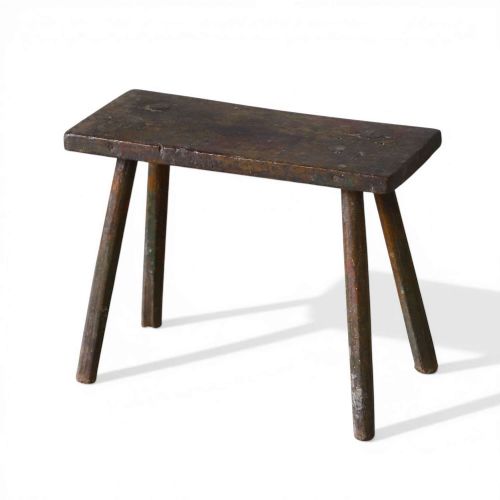
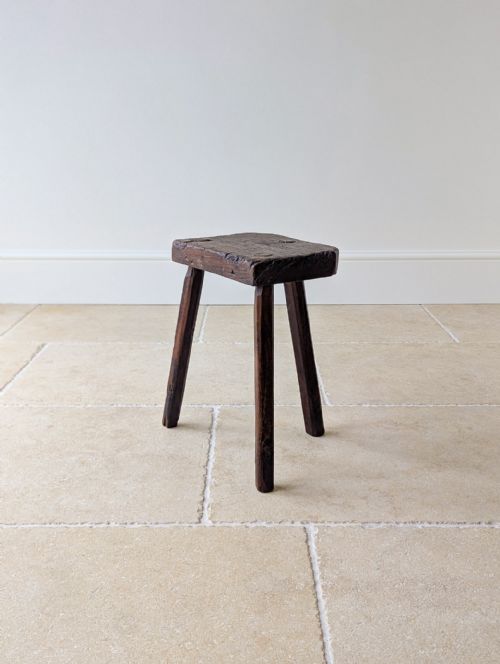
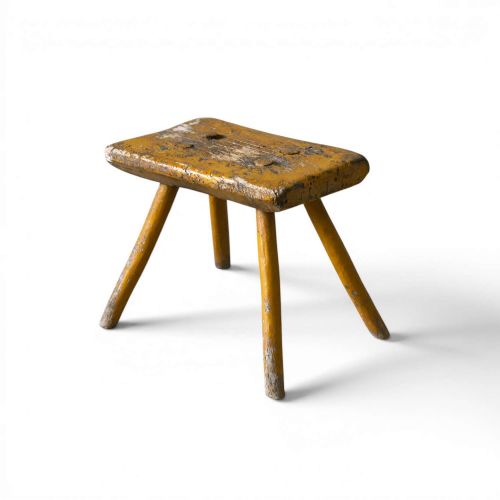

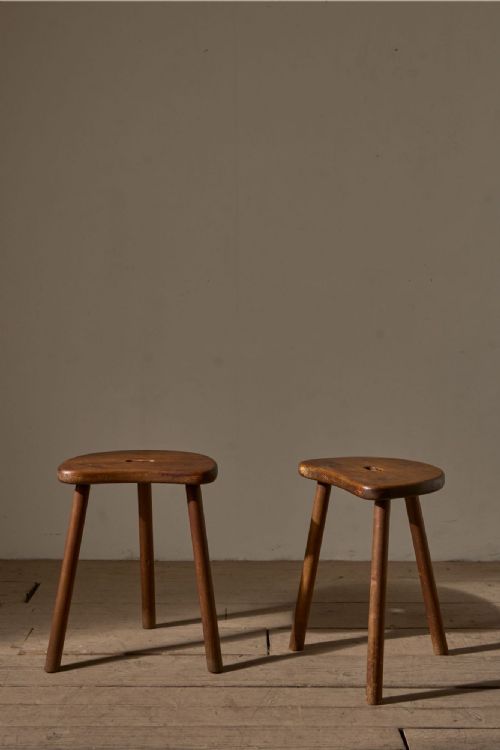

19th Century Milking Stool
These 19th century milking stool examples offer honest rural character, solid timber construction and practical utility for modern interiors.
19th Century Milking Stool
A 19th century milking stool is a low, sturdy seat designed originally for agricultural labour in dairies and farmyards. Buyers searching this phrase will find pieces spanning the Victorian period up to the early twentieth century, originating from English workshops, Scottish makers, and Eastern European sources.
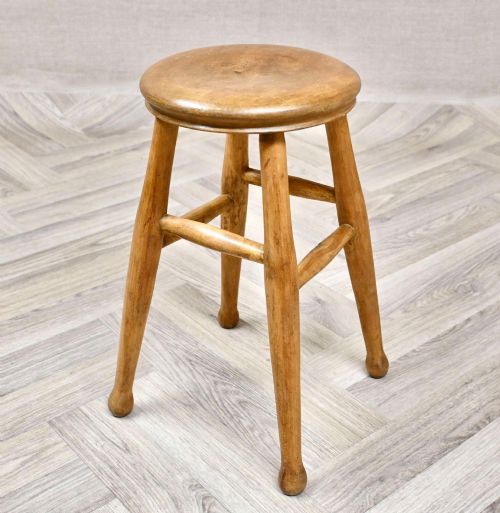
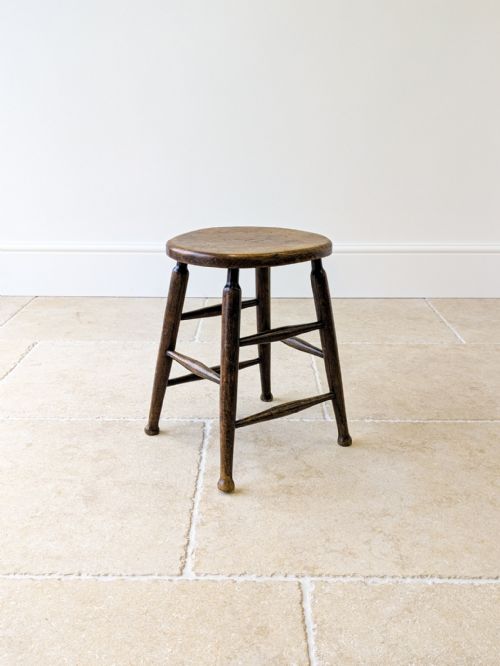
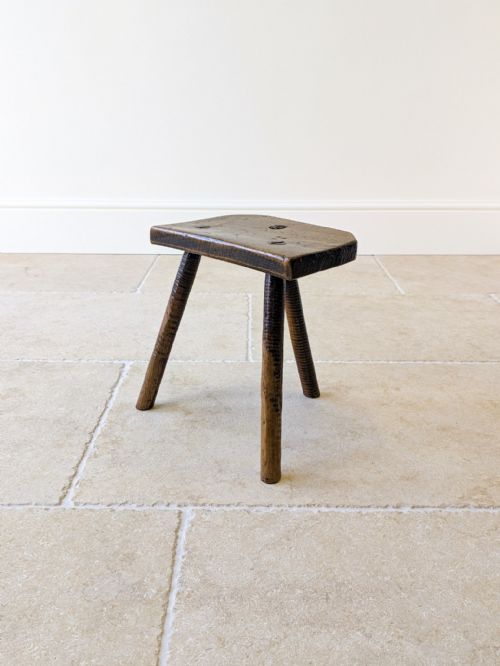
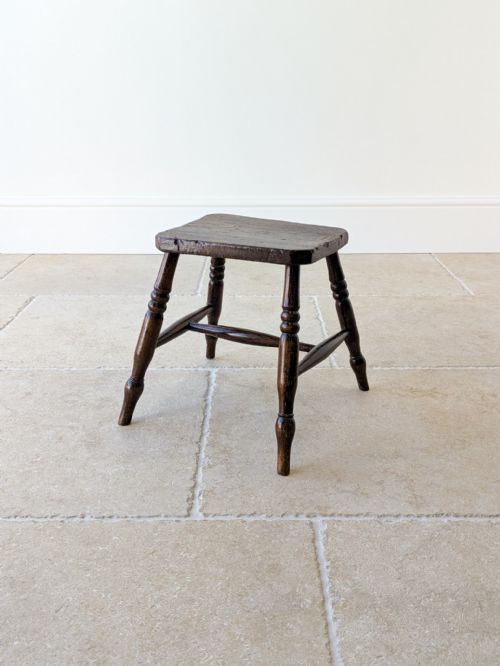
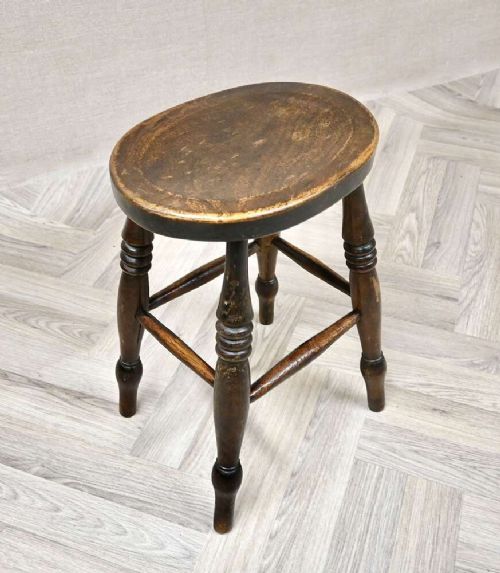
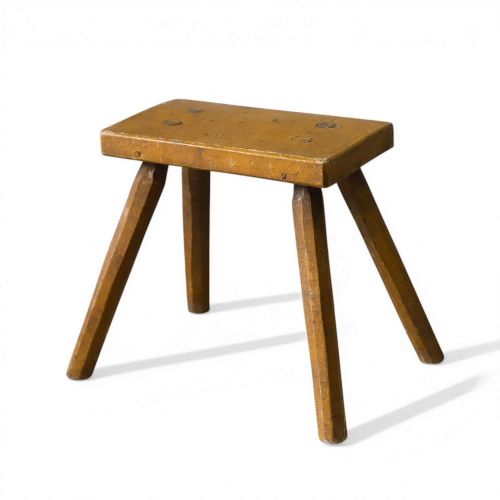
The most common versions met on this page feature three or four wooden legs joined to a solid seat, sometimes described in records as dairy stools, vernacular pieces, or specific trade seating like cutler's and jeweller's stools. Regional variations include French and Chinese hardwood examples alongside domestic British country furniture.
Materials and Technique
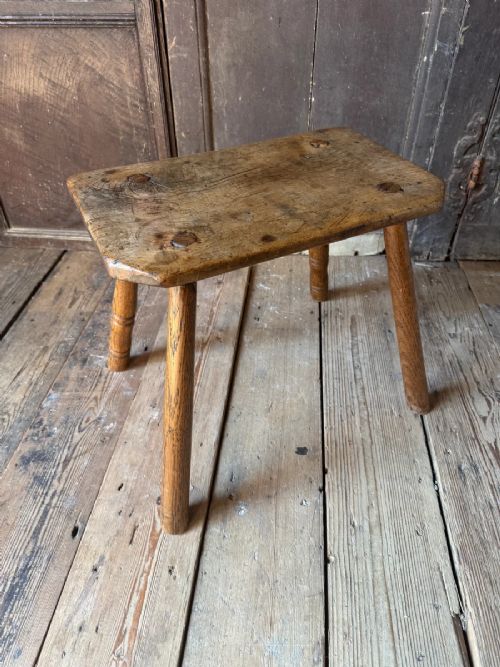
Construction relies heavily on native British and European hardwoods, with elm, ash, oak, sycamore and pine chosen for their strength and resilience. Seats are frequently shaped from a single solid timber slab, whilst legs are turned or shaved and joined using traditional peg or wedged mortise and tenon methods.
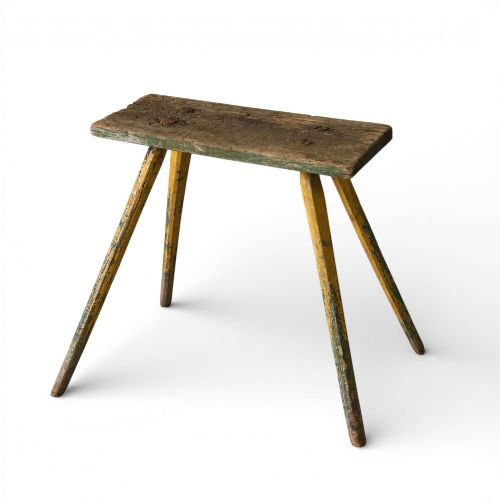
Surface finishes range from bare scrubbed timber showing natural grain to surviving coats of original paint in ochre, yellow, green or dark tones. Some specialised pieces incorporate pokerwork decoration or stick-back Windsor framing to add rigidity to the lightweight frame.
19th Century Milking Stool Retail Price Guide 2026
Typical asking prices for 19th century milking stool among the pieces listed under this phrase on Sellingantiques today, from the lower quarter to the upper quarter. They describe what is for sale here now, not the wider market.
Listings feature woods including elm, oak, ash, sycamore, walnut, pine and Chinese hardwood.
Judging Quality
Quality in these domestic items rests upon the harmony of proportion and the integrity of the original construction rather than elaborate decoration. Pieces that retain their original working height, un-replaced legs and untouched surface patination command greater interest from collectors.
The distinction between standard utility items and finer vernacular pieces lies in the sculptural quality of the seat carving and the balance of the tripod or four-legged base. Signs of honest period wear and untouched original paint finishes elevate a utilitarian object into a piece of folk art.
The 19th Century Milking Stool Glossary
- Vernacular furniture
- Items made by local craftsmen or rural carpenters for everyday use rather than following high-style metropolitan fashion. These pieces prioritize function and local material availability over academic design rules.
- Pokerwork
- A method of decorating wood by burning designs into the surface with a heated tool. Scottish and Victorian examples occasionally utilise this technique for inscriptions or decorative borders.
- Windsor construction
- A method where individual legs and back spindles are fitted directly into holes bored through a thick solid seat slab. This creates a remarkably strong joint without requiring an elaborate underframe.
- Patina
- The surface sheen and colour acquired by wood and paint over many decades of handling, cleaning and exposure to light. Untouched patination indicates a piece has escaped aggressive modern stripping.
19th Century Milking Stool: Frequently Asked Questions
What was a milking stool used for?
These low seats were built for farm workers to sit close to the cow during milking routines. Their compact size allowed milkers to carry them easily around the dairy or field.
Over time, these sturdy little seats found general utility around the farmhouse as infant seating, step-ups, or low side tables for candles and small objects.
How many legs did they have?
Three legs remain the traditional choice for agricultural seating because a tripod design sits stable on uneven farm floors, barns, and cobbled yards. Four-legged versions also appear frequently, offering broader support for indoor domestic tasks.
Both tripod and four-legged formats were shaped to withstand heavy daily use in vernacular environments.
Are original paint finishes common?
Surviving original paint is a prized feature found on specific regional examples, particularly Eastern European and continental pieces finished in ochre, yellow, or green. Many British country pieces were scrubbed down to bare wood over generations of cleaning.
When original pigment does survive, it provides a vivid record of the object's working life and decorative context.
How do I date a 19th century stool?
Dating relies on observing tool marks, timber selection, fastener types, and overall wear patterns consistent with Victorian and earlier hand-working methods. Lathe turning styles on the legs also offer clues to the decade of manufacture.
Comparing construction details with dated vernacular furniture helps establish the likely period of origin.