



19th Century Military Miniature
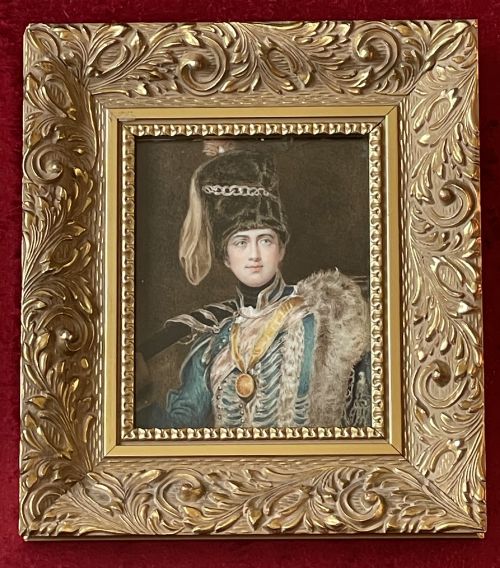
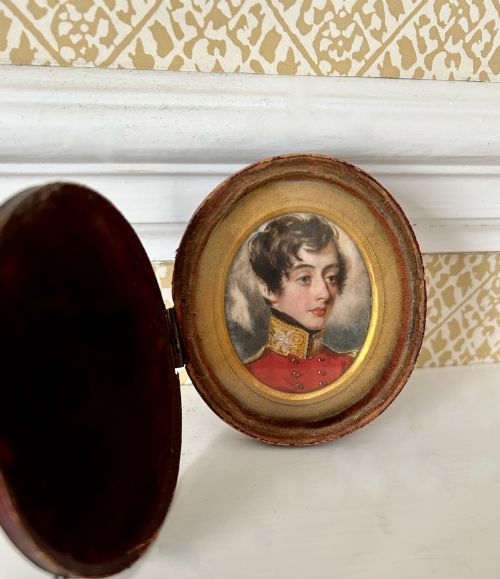
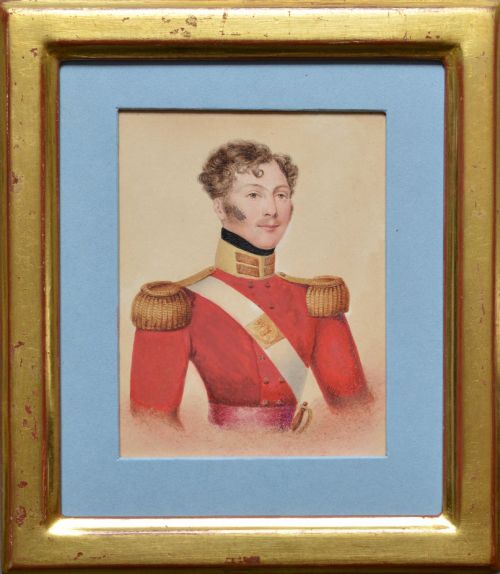
These 19th century military miniature pieces capture the likenesses of officers and the scale of artillery in compact forms.
19th Century Military Miniature
A 19th century military miniature brings together portrait paintings of officers and small-scale artillery models from the Georgian, Regency, and Victorian periods. Buyers seeking these items find framed watercolours and oil portraits depicting figures such as hussars and naval officers alongside cast iron field guns and desktop campaign chests.
The assortment on this page leans heavily toward framed paintings and portrait miniatures executed on paper or ivory, complemented by bronze and iron scale models. These objects originate from British and French makers, spanning styles from Regency to Victorian campaign and French Empire.
The selection ranges from intimate depictions of named commanders to decorative silkwork pictures and miniature artillery pieces. Each format offers a tangible connection to nineteenth-century military history within a domestic scale.
Materials and construction methods
Painters utilised watercolour on paper or pigment on ivory to execute detailed portrait miniatures, protecting the delicate surfaces beneath glass and within giltwood or wood frames. These works rely on fine brushwork to render uniform details, insignia, and facial likenesses accurately.
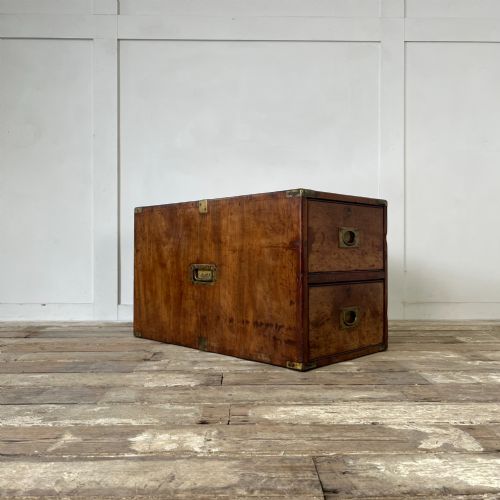
Makers cast field guns and artillery models in iron, bronze, and brass, combining metalworking techniques with turned wood elements for carriages and desktop storage pieces. The creation of campaign chests and scale models required precision joinery and metal shaping suited to portable military use.
19th Century Military Miniature Retail Price Guide 2026
Typical asking prices for 19th century military miniature among the pieces listed under this phrase on Sellingantiques today, from the lower quarter to the upper quarter. They describe what is for sale here now, not the wider market.
Napoleon Bonaparte shares space with British hussars and Staffordshire officers, proving miniature battle lines make peaceful roommates.
Distinctions in execution and preservation
Model artillery and desktop pieces differ in the crispness of metal casting, the fidelity to historical ordnance proportions, and the integrity of original wood components. Superior objects maintain their structural elements and surface patination without aggressive restoration.
Sir William John Newton·Leslie Moore
The 19th Century Military Miniature Glossary
- Watercolour
- A paint consisting of a pigment suspended in a water-based solution. This medium appears frequently on paper within framed portrait miniatures of officers.
- Campaign chest
- A split-carcase set of drawers designed for portability during military campaigns. These desktop pieces feature flush brass fittings for transport.
- Gribeauval
- A standardised system of French artillery developed by Jean Baptiste Vaquette de Gribeauval. Scale models of this artillery style utilise iron and bronze.
19th Century Military Miniature: Frequently Asked Questions
What subjects appear in these portrait miniatures?
The portraits depict military officers, naval commanders, and historical figures such as Napoleon Bonaparte. Artists recorded the likenesses of specific regiments and high-ranking commanders of the era.
These works frequently show subjects in red coats, hussar attire, or naval uniform. The identities range from named generals to unidentified officers of British and French regiments.
How were scale model cannons constructed?
Makers built these miniature artillery pieces using cast iron, bronze, and brass for the barrels. Wooden carriages and metal fittings completed the field gun models.
These pieces replicate muzzle-loaded ordnance used during the nineteenth century. They served as desktop display items or detailed scale representations of actual field artillery.
What periods do these pieces span?
The items encompass the Georgian, Regency, and Victorian periods of the nineteenth century. Styles range from French Empire to Victorian campaign.
This broad timeframe covers the early nineteenth-century conflicts through to the later Victorian era. The aesthetic reflects the prevailing military dress and decorative arts of each specific decade.
How should framed miniatures be displayed?
These framed works require placement away from direct sunlight to protect delicate watercolours and paper surfaces. Maintaining stable indoor humidity prevents damage to the paper and wooden frames.
Wall mounting or placement on dedicated surfaces allows these small-scale works to be viewed safely. Glass fronts protect the painted surfaces from dust and handling.