



19th Century Metamorphic Furniture
These pieces of 19th century metamorphic furniture shift from one form to another, offering practical ingenuity alongside period craftsmanship.
19th Century Metamorphic Furniture
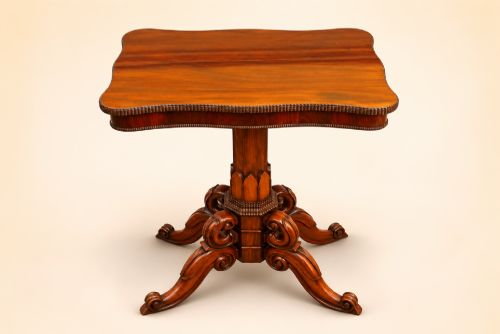
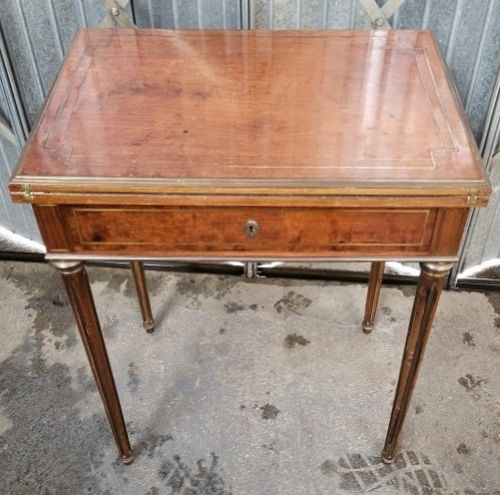
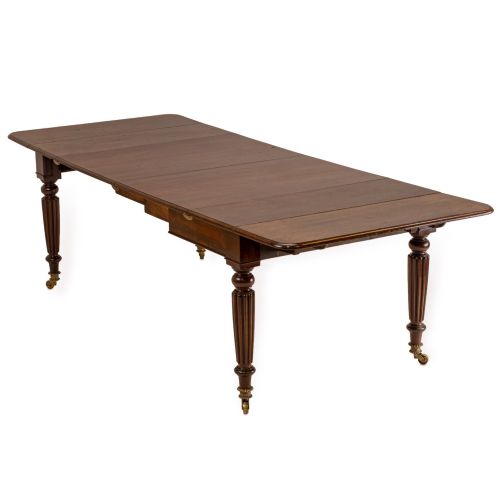
19th century metamorphic furniture transforms from one domestic object into another, such as a library steps chair or a console table that extends into a dining table. These dual-purpose designs served households seeking to save space or combine functions without sacrificing elegance.
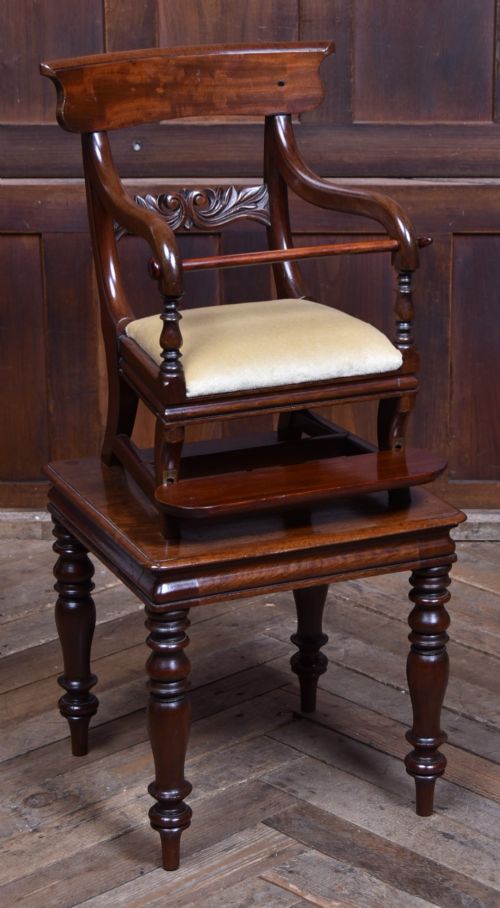
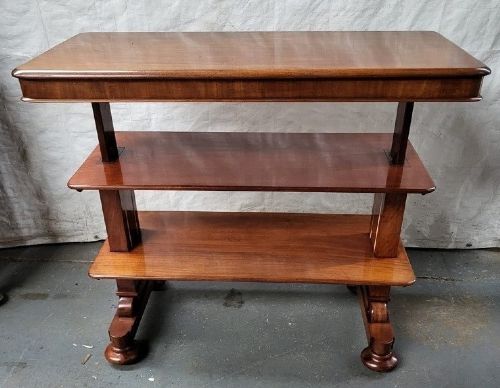
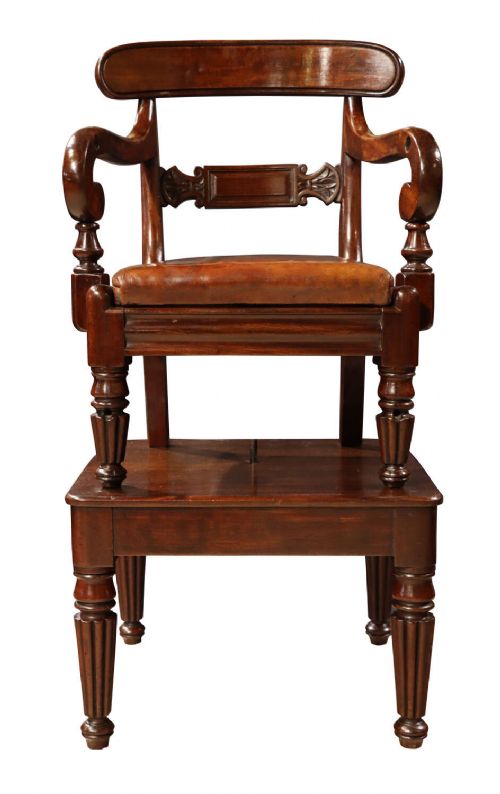
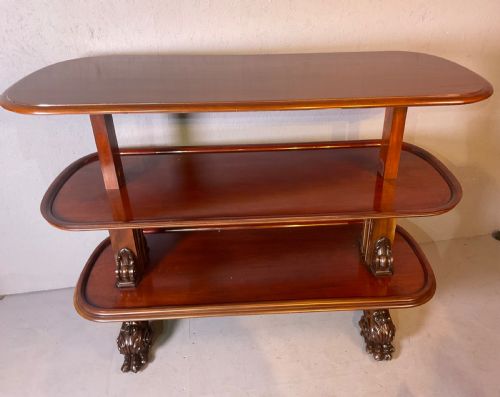
The selections available here lean towards larger dining and serving forms alongside seating. You will find extending dining tables, sideboards, dumb waiters, and buffet etageres alongside library steps that fold into chairs and children's high chairs.
Most pieces date from the Victorian and William IV periods, alongside Georgian and Regency examples, constructed primarily in mahogany and walnut. These origins reflect the high period of mechanical innovation in British and European cabinet making.
How they were made
Cabinet makers utilised dense timbers such as mahogany, figured mahogany, and walnut to build robust frames capable of withstanding regular mechanical adjustment. Secondary woods and supporting elements incorporated oak, beech, and boxwood for structural stability.
Concealed hinges, ratchets, and pivot mechanisms utilised brass to ensure smooth transitions between forms without excessive wear on the surrounding wood. Leather and velvet inserts frequently lined writing surfaces or fold-out tabletops.
Joinery combined traditional cabinet-making methods with clever concealed hardware, allowing moving parts to operate cleanly within the silhouette of a standard console, table, or chair.
19th Century Metamorphic Furniture Retail Price Guide 2026
Typical asking prices for 19th century metamorphic furniture among the pieces listed under this phrase on Sellingantiques today, from the lower quarter to the upper quarter. They describe what is for sale here now, not the wider market.
Some nineteenth-century diners preferred their sideboards to double as multi-tier dumb waiters for silent service.
What varies in quality
The sophistication of the internal mechanism dictates the mechanical standard of each piece. Smooth, reliable movement without sticking or excessive play separates superior engineering from crude alterations.
Timber selection and surface figure define the visual appeal, ranging from plain utility builds to highly figured mahogany and walnut veneers matched across extending leaves and folding tops. The integration of secondary materials like brass hardware, leather, and bone inlay marks the standard of execution.
J.Jarvis
The 19th Century Metamorphic Furniture Glossary
- Metamorphic furniture
- Furniture designed to transform from one functional object into another through hidden hinges, pivots, or sliding leaves.
- Dumb waiter
- A tiered serving table or revolving stand used to hold food and tableware during meals without servants present.
- Buffet etagere
- An open-shelving sideboard or serving unit used for displaying and serving food and plate.
- Library steps chair
- A dual-purpose piece that functions as a conventional chair and unfolds into a set of freestanding steps for reaching high bookshelves.
- Figured mahogany
- Mahogany timber cut to reveal decorative grain patterns such as flame, fiddleback, or curl.
19th Century Metamorphic Furniture: Frequently Asked Questions
How do metamorphic library steps work?
Library steps chair combinations typically pivot or unfold from an upright seating position into a stable flight of wooden steps.
They allowed users in nineteenth-century homes to reach high shelves before folding back into a compact chair for daily use.
What materials were used for these pieces?
Cabinet makers relied heavily on dense hardwoods like mahogany, figured mahogany, and walnut to support moving joints and weight.
Internal hinges and ratchets incorporated brass, while working surfaces frequently featured inset leather, velvet, or boxwood stringing.
How do I live with metamorphic furniture?
These pieces fit well in modern rooms where space-saving utility and antique character are both valued.
Operate hinges and extending mechanisms with care, avoiding forced movements that could strain original brass hardware and timber pivots.