
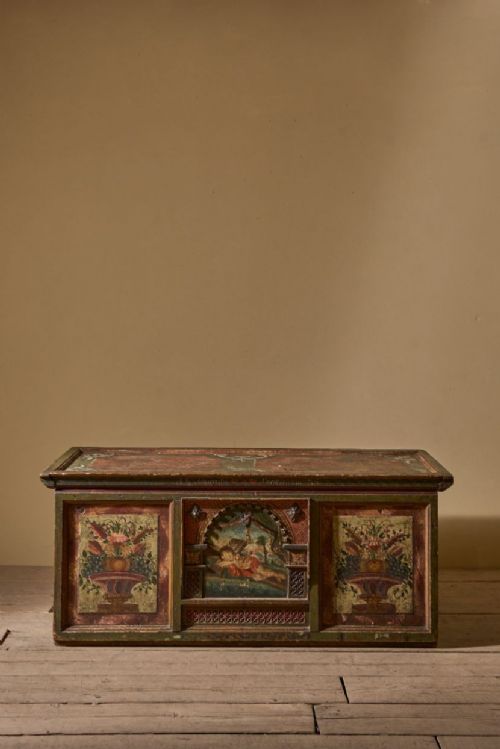


19th Century Marriage Trunk
A 19th century marriage trunk is a painted or decorated wooden chest made to mark a union, offering generous storage and distinct regional folk character.
19th Century Marriage Trunk
A 19th century marriage trunk is a substantial storage piece created to hold a bride's dowry and household linens. The examples seen here span from the Georgian era through to the late 1800s, reflecting domestic traditions across different regions.
Scandinavian folk art chests dominate the selection, often taking a dome top or flat lid form fashioned from pine. Alongside these Nordic pieces appear continental examples, including Spanish colonial blankets chests and alpine region coffers.
Makers shaped these boxes for practical use in rural homes, resulting in sturdy receptacles that doubled as benches. Their surfaces tell local stories through traditional pigments, dates, and regional motifs painted directly onto the wood.
How they were made
Carpenters constructed the primary structure from pine, oak, teak, or beech planks, joined securely to withstand heavy domestic demands. Wrought iron provided durable hinges, corner straps, and carrying handles, while leather sometimes reinforced edges and seams.
Artisans applied paint and mineral pigments directly to the timber, creating vibrant decorative schemes associated with Scandinavian, Alpine, and Spanish folk traditions. Some continental pieces relied on intricate inlay rather than paint to pattern the wooden surface.
Listings show pine as the primary timber, complemented by iron hardware and traditional mineral pigments.
What varies in quality
The sophistication of the painted decoration marks the main distinction between standard utility boxes and masterworks of folk art. Intricate brushwork, well-preserved original pigments, and dated inscriptions lift certain pieces far above simple household containers.
Construction methods also set pieces apart, from plain boarded pine boxes to sophisticated dome top coffers with robust wrought iron hardware. Walnut inlays and carved beech details on continental examples introduce another layer of craftsmanship.
The 19th Century Marriage Trunk Glossary
- Marriage chest
- A large storage box commissioned or decorated to celebrate a wedding and store the bride's dowry. These containers often bear initials, dates, or symbolic folk motifs.
- Dome top
- A rounded lid construction designed to shed water and increase interior storage capacity. This profile appears frequently on Scandinavian pine coffers.
- Folk art
- Traditional decorative painting and craftsmanship rooted in regional culture rather than academic styles. Artisans decorated these trunks using local pigments and inherited motifs.
- Wrought iron
- Hand-beaten ironwork used for structural reinforcement, hinges, and locks. Blacksmiths shaped these durable mounts to secure the heavy wooden lids and corners.
- Mineral pigment
- Natural earth and mineral-based colour used by folk artists to paint wooden furniture. These traditional mixtures produced the matte, opaque finishes seen on period pine.
19th Century Marriage Trunk: Frequently Asked Questions
What was a marriage trunk used for?
These large chests served to transport and store a bride's dowry, which typically included woven linens, garments, and domestic valuables.
In rural homes, they also functioned as everyday furniture, providing extra seating and a secure surface inside the household.
How do I identify a Swedish marriage chest?
Swedish pieces from this era typically feature hand-painted pine construction, often with a distinctive dome top or shaped box format.
Look for traditional folk art pigments, regional motifs, and occasional painted dates that reflect Scandinavian country aesthetics.
Where were these painted trunks made?
The selection includes strong representations from Scandinavian folk traditions, alongside alpine regional workshops and Spanish colonial contexts.
Other examples originate from traditional makers in places like India and Romania, each utilising local woods and regional decorative styles.
How should I care for painted pine?
Keep painted trunks away from direct sunlight and excessive heat fluctuations to protect the original mineral pigments from fading or flaking.
Maintain stable indoor humidity and dust the surface gently with a dry cloth rather than using harsh chemical cleaners.